
Comparison of Coated vs. Uncoated Calcium Carbonate in the Rubber Industry
An Introduction to the Importance of Calcium Carbonate in Rubber and Polymer Industries
Rubber and polymer industries are constantly seeking additives and fillers that can improve the mechanical, physical, and processing properties of finished products. Among these, calcium carbonate is recognized as one of the most widely used minerals, playing a key role in reducing final costs and improving the structural characteristics of parts. However, the choice of filler significantly affects final quality. In the rubber industry, the homogeneous distribution of particles and the compatibility of the filler with the polymer matrix are of paramount importance.
With technological advancements in mineral processing, a new generation of these fillers has been introduced, where the surface is coated with fatty acids or other organic substances. Understanding the structural differences between processed and conventional samples helps engineers and manufacturers make the best decisions for their production lines. To learn more about these products, you can check the Coated Calcium Carbonate page, where its details and technical specifications are listed.
In this specialized article, we intend to provide a comprehensive comparison between coated calcium carbonate and its uncoated counterpart in the rubber industry. Examining the behavior of these materials in various compounds, dispersibility, thermal stability, and their impact on the tensile and elastic properties of rubber will shed light on the hidden aspects of this important choice. Stay with us as we analyze the technical dimensions of this comparison in detail.
Structural and Chemical Differences Between Uncoated and Coated Calcium Carbonate
To better understand the performance of coated calcium carbonate compared to the uncoated type, we must first look at their chemical and physical structure. Simple precipitated or ground calcium carbonate has a polar and hydrophilic (water-attracting) surface. This feature causes particles to have a strong tendency to clump and aggregate, especially when used in organic and non-polar matrices such as rubbers and polymers.
In contrast, in the production of coated calcium carbonate, mineral particles are surface-modified with a thin layer of stearic acid or other coating materials. This process changes the nature of the particle surface from hydrophilic to hydrophobic (water-repelling). This vital surface modification prevents particle aggregation and significantly increases their compatibility with polymers. For additional information on this subject, reading the article Introduction to the Application of Coated Calcium Carbonate in the Plastic Industry is recommended, as it explores its practical dimensions.
These structural changes directly affect the rheological behavior of the compounds. When modified particles are added to rubber mixtures, due to the reduction of intermolecular forces and internal friction, the viscosity of the mixture decreases, and the curing and forming process is carried out more easily, which ultimately improves the quality of the final part.

Examining the Dispersibility and Anti-Clumping Behavior of Coated Calcium Carbonate in Rubber Mixtures
Uniform dispersion of fillers in the rubber matrix is the key to achieving desired mechanical properties and dimensional stability of parts. Uncoated calcium carbonate, due to having free surface hydroxyls and high surface energy, is difficult to disperse in rubber mixtures and usually requires a longer mixing time in a Banbury mixer or on rollers. This phenomenon sometimes leads to the creation of agglomerates or microscopic lumps in the rubber texture.
On the other hand, coated calcium carbonate, due to its surface coating, disperses rapidly and completely homogeneously in the polymer and rubber matrix. This feature increases mixing speed and reduces energy consumption in production units. Proper distribution of particles in the appropriate mesh range (450 to 3500 mesh) ensures that no weak points are created in the rubber structure due to particle accumulation.
Market research and comparison of various products show how much the right choice of filler is effective in reducing production waste. To explore available options further, reading the article Expert Guide to Comparing Various Types of Coated Calcium Carbonate in the Market will provide you with valuable information.
The Effect of Calcium Carbonate Type on Mechanical and Tensile Properties of Rubber
The use of fillers in rubber manufacturing is not only for cost reduction; improving mechanical properties such as tensile strength, elongation at break, and modulus of elasticity are also primary objectives. Uncoated calcium carbonate typically causes a severe drop in the mechanical properties of rubber at high percentages due to the weak bond between the filler and the rubber.
However, coated calcium carbonate shows much better performance due to the creation of stronger physical and chemical bonds between the mineral particles and the polymer chains of the rubber. The stearic acid coating on the particles improves stress transfer from the rubber matrix to the hard filler particles. This leads to increased tear resistance, improved wear resistance, and the preservation of the flexibility of rubber parts.
Therefore, when manufacturers are looking to produce high-quality rubber parts that are subjected to continuous mechanical stress, the use of coated calcium carbonate is preferred as a superior option and an engineering standard.

The Role of Coated Calcium Carbonate in the Formulation of Compounds, Granules, and Polymer Parts
In the formulation of polymer compounds and engineering granules, the presence of coated calcium carbonate is recognized as a multi-purpose filler. This material acts not only as a filler but also as a melt flow improver. This feature is vital for industries dealing with profiles, cables, flooring, and PVC parts.
Coated calcium carbonate products with appropriate mesh (in the 450 to 3500 mesh range) allow manufacturers to choose the best particle size based on the type of final application and the wall thickness of the part. For example, in the production of thin PVC parts or industrial cables, higher meshes are preferred to achieve a smooth surface without visual defects.
Furthermore, in some other related industries such as coatings, understanding the behavior of these materials has similar importance; as noted in the Comprehensive Guide to Using Coated Calcium Carbonate in Paint Manufacturing, which points out these practical equivalencies, showing the widespread application of this modified material in various industries.
Examining Resistance to Moisture, Air, and Thermal Stability
One of the biggest challenges in the rubber and polymer industries is the stability of parts against atmospheric factors, moisture, and temperature fluctuations. Uncoated calcium carbonate, due to its hydrophilic nature, easily absorbs moisture and is prone to creating bubbles or losing dielectric properties in humid environments (especially in the cable manufacturing industry).
In contrast, coated calcium carbonate, due to its hydrophobic surface layer, has the lowest moisture absorption rate. This feature increases the dimensional stability of rubber and polymer parts in various climatic conditions. Also, the surface coating used in this product prevents adverse reactions with other chemical materials present in the plastic or rubber mixture at high temperatures.
This improved thermal stability allows extruder and injection molding machines to perform the production process at optimal temperatures without worrying about material decomposition or discoloration, which ultimately increases production line efficiency.

Economic Benefits and Cost-Effectiveness Evaluation in Production Lines
From the perspective of production management and engineering economics, the choice between raw materials is always accompanied by a cost-effectiveness evaluation. Although the purchase price of coated calcium carbonate is slightly higher than uncoated calcium carbonate due to the additional processing (coating) process, examining total production costs presents a different picture.
Using this product leads to reduced mixing time, lower energy consumption in mixers and extruders, reduced waste caused by poor distribution, and improved production throughput. Also, due to improved mechanical properties, it is possible to increase the filler loading percentage without sacrificing final quality, which in turn reduces the consumption of expensive polymers.
Therefore, in the long run, using coated calcium carbonate not only does not increase costs but by optimizing processes and increasing the lifespan of rubber parts, it brings high economic justification for factories and industrial units.
Conclusion and Final Selection Guide for Rubber and Polymer Engineers
The choice between coated and uncoated calcium carbonate depends directly on the technical requirements of the final part, quality standards, and the project budget. Uncoated calcium carbonate is a more economical option for general products with low sensitivity and where strict mechanical properties are not required. However, for advanced engineering parts, profiles, cables, flooring, and specialized polymer compounds, the use of coated calcium carbonate is considered a technical necessity.
Given the wide mesh range (450 to 3500 mesh) and the extensive applications of this product in the rubber and plastic industries, engineers can achieve the best results in their production lines by accurately selecting the appropriate mesh. Particle surface modification, excellent dispersibility, moisture resistance, and improved tensile properties have made this material one of the main pillars of modern formulations.
Ultimately, consulting with technical experts and carefully reviewing material specifications before bulk purchasing will ensure success in the production process and final customer satisfaction.
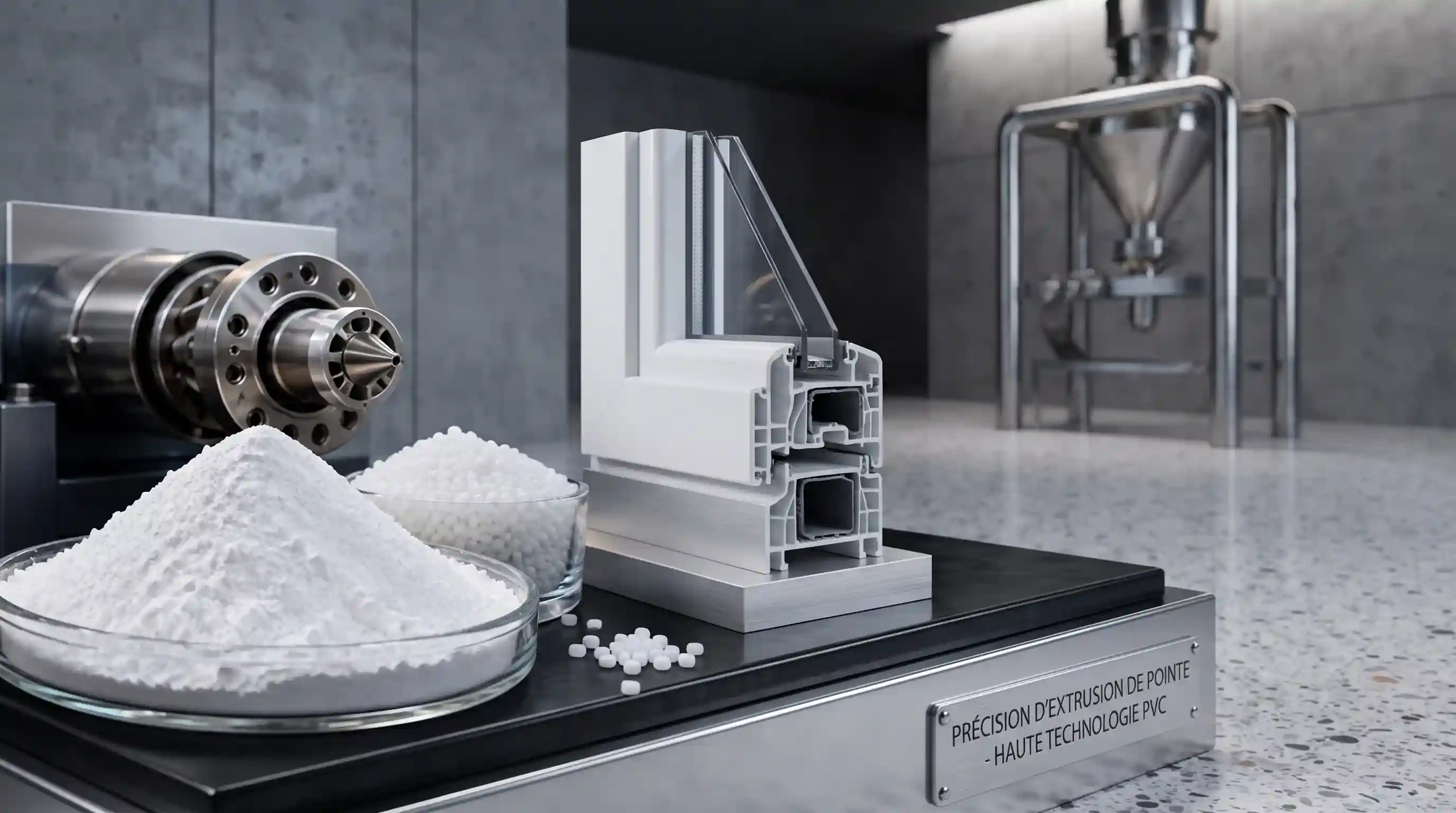
| Question |
Answer |
| What is coated calcium carbonate? |
It is a type of calcium carbonate whose particle surface has been modified and made hydrophobic with organic materials such as stearic acid. |
| What is the main difference between coated and uncoated calcium carbonate? |
The uncoated type is hydrophilic and prone to clumping, whereas the coated type is hydrophobic and has better stability and dispersibility. |
| What is the mesh range of coated calcium carbonate? |
This product is offered in the range of 450 to 3500 mesh. |
| What are the main applications of coated calcium carbonate? |
Compounds, polymer granules, profiles, cables, flooring, and PVC parts. |
| Why is coated calcium carbonate preferred in rubber manufacturing? |
Due to improved mechanical properties, increased tensile strength, and homogeneous distribution in the rubber matrix. |
| Does coated calcium carbonate absorb moisture? |
No, due to its hydrophobic surface coating, moisture absorption is minimized. |
| What is the effect of coated calcium carbonate on energy consumption? |
Due to reduced viscosity and easier mixing, energy consumption in extruders and Banbury mixers decreases. |
| Is the price of the coated type higher than the uncoated type? |
Yes, due to the additional coating process, it has a higher price, but it is cost-effective in production. |
| How can the appropriate mesh be chosen? |
It is chosen based on the type of final application, part thickness, and industrial standards. |
| Where can more information be obtained? |
Visit the dedicated product page of Kani Sang Amiran. |
Specialized Reference for Mineral and Industrial Materials, Kani Sang Amiran (ksamiran.ir)
:: برچسبها:
Coated Calcium Carbonate ,
Comparison of Coated vs. Uncoated Calcium Carbonate in the Rubber Industry ,
:: بازدید از این مطلب : 0
|
امتیاز مطلب : 0
|
تعداد امتیازدهندگان : 0
|
مجموع امتیاز : 0


 عضو شوید
 عضویت سریع
 آمار مطالب
 آمار بازدید


