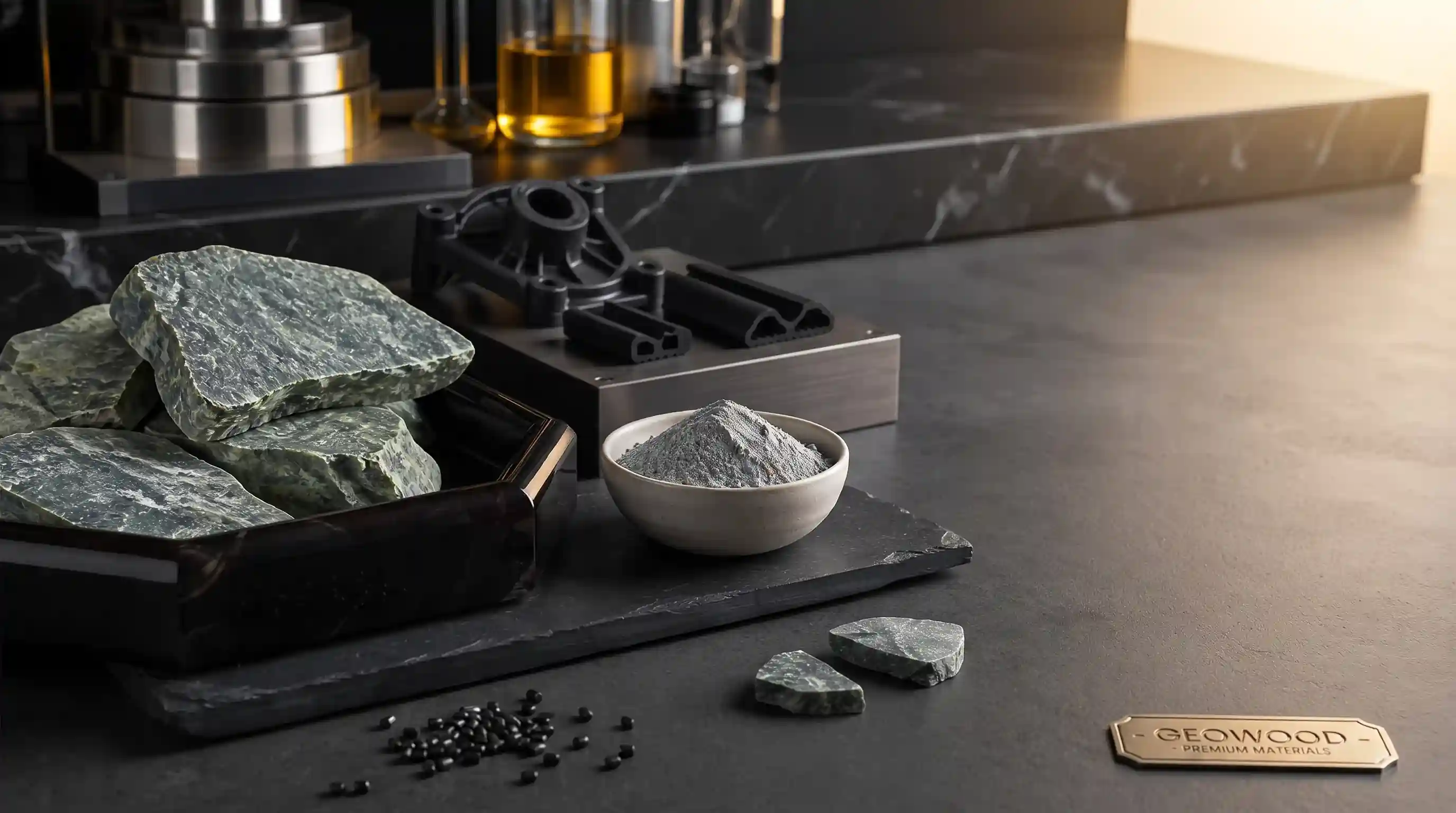
How to Determine the Purity and Quality of Industrial Talc?
Introduction to the Importance of Assessing Industrial Talc Purity and Quality
Accurate identification of minerals and evaluation of their quality play a decisive role in optimizing production processes. Among widely used minerals, industrial talc is recognized as one of the softest and most versatile fillers, earning a special place in various industries due to its layered structure and unique physical characteristics. The Amiran Stone Mineral Project focuses on supplying high-quality minerals, providing standardized products for diverse industries. To learn more about this product, you can visit the industrial talc page and review its technical specifications.
The purity of talc powder directly affects the final performance of the products in which it is used. The presence of impurities such as carbonates, iron oxides, or quartz can severely impact the mechanical and superficial properties of the final product. For this reason, manufacturing industries are constantly seeking precise methods to evaluate the quality and purity level of this mineral to prevent potential issues in production lines.
In addition to purity, other parameters such as particle size distribution and mesh range also influence the efficiency of talc. In many industrial applications, a precise understanding of these indices helps engineers select the best raw material suited to their formulation needs. Later in this article, we will thoroughly examine various dimensions of evaluating the quality and purity of this valuable mineral to provide a comprehensive guide for industrialists.
The Role of Industrial Talc in Polymer and Rubber Industries
The dynamic polymer and rubber industries are constantly looking for additives that can improve the thermal and mechanical properties of their products. The use of industrial talc in these industries as an efficient mineral filler is very common. Due to its sheet-like structure, this material increases the modulus of elasticity and dramatically improves the dimensional stability of polymer parts.
To achieve the desired thermal stability and resistance in polymer parts, alongside talc, the use of other mineral additives is also widespread. For example, studying the article How Coated Calcium Carbonate Helps Polymer Thermal Stability? provides useful information regarding the improvement of polymer thermal properties. Furthermore, the mechanical resistance of polymer products is enhanced through the use of standard materials, the details of which are explored in the post How Coated Calcium Carbonate Increases Polymer Products Resistance?.
In rubber products, talc also acts as a cure process improver and reduces inter-layer tackiness. The 450 to 1000 mesh range of this material makes it ideal for creating uniform distribution within the rubber matrix and significantly helps increase the lifespan of rubber components.
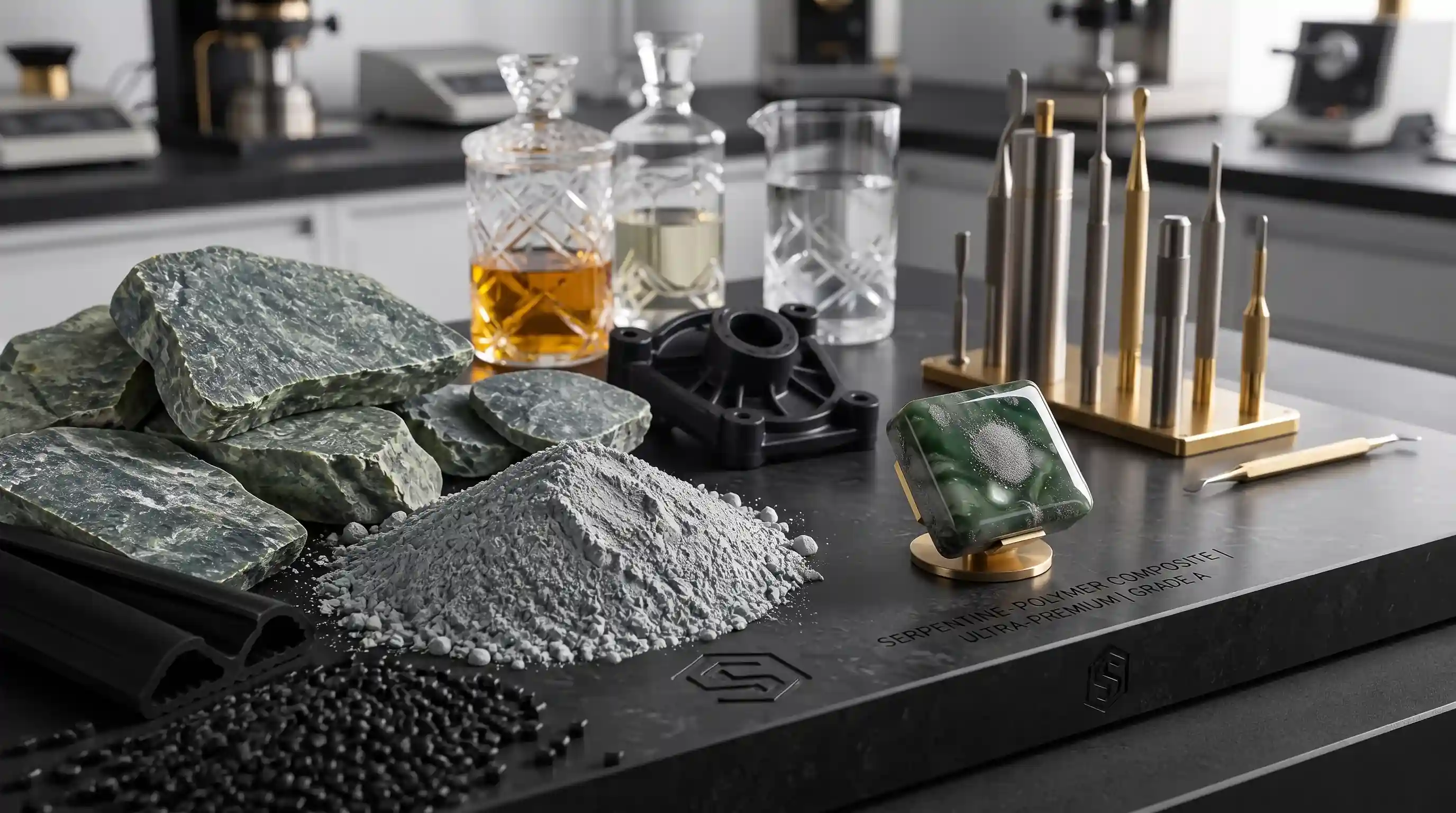
Application of Industrial Talc in Paint and Industrial Coatings Production
The paint and resin industry requires fillers that, in addition to having suitable whiteness, can improve the rheological properties and hiding power of the paint. Industrial talc, due to its appropriate refractive index and relative hydrophobicity, is considered a key component in the formulation of architectural and industrial paints.
Talc sheet-like particles align parallel to one another within the paint structure, creating a protective barrier against moisture penetration and corrosive agents. This feature helps increase the durability of industrial coatings in harsh environments. The 450 to 1000 mesh range allows paint formulation designers to select the appropriate granulation depending on whether surface gloss or a matte finish is required.
Moreover, other pigments and mineral fillers are also used alongside talc to improve the final paint. Familiarity with other colored minerals such as iron oxides is likewise important for operators in this industry; for instance, reading the Best Quality Limonite Oxide (Gel Mash) Buying Guide provides a broader perspective on pigment sourcing.
Examining the 450 to 1000 Mesh Range and Its Impact on Quality
One of the most important technical parameters in evaluating industrial talc is its particle size and mesh range. Products supplied with a 450 to 1000 mesh range fall into the category of micronized powders, each optimized for specific applications.
Coarser meshes (such as 450) are typically used in applications requiring high flowability and lower viscosity in thick mixtures, whereas finer meshes (such as 1000) create a larger surface area and are employed in thinner paints and polymers to improve mechanical and surface properties. Particle size distribution must be completely uniform to prevent particle agglomeration during the manufacturing process.
Precise control of the mesh range by quality control laboratories confirms that the final product is free from unwanted coarse particles. This uniformity positively affects the final quality of polymer, rubber, and paint products, minimizing production waste.

Laboratory Methods for Determining Industrial Talc Purity
Determining the true purity level of industrial talc requires performing rigorous laboratory tests. Since talc is a hydrated magnesium silicate, precise chemical analysis to measure the percentage of magnesium oxide (MgO) and silica (SiO2) is considered one of the primary ways to diagnose quality.
X-ray diffraction (XRD) and X-ray fluorescence (XRF) spectroscopy tests allow experts to examine the crystal structure of talc and identify the presence of interfering minerals such as chlorite, dolomite, or quartz. These impurities can increase the hardness of the powder and damage production equipment.
In addition to instrumental analyses, simple physical tests such as measuring brightness using spectrophotometer devices and determining loss on ignition (LOI) also provide valuable information about the purity and volatile content present in the sample.
Visual, Tactile, and Physical Inspection of Industrial Talc at the Delivery Site
Before conducting complex laboratory tests, there are several quick and preliminary methods for the initial evaluation of industrial talc at the warehouse or factory. Visual inspection of the powder regarding color, absence of hard lumps, and texture uniformity is the first step in cargo quality control.
From a tactile perspective, high-quality talc should feel completely soft and slippery between the fingers, with no trace of roughness or sand-like particles felt. This softness is derived from talc's layered structure and low hardness (number 1 on the Mohs scale). If the powder feels rough to the touch, it indicates the presence of hard impurities such as quartz.
Odor and flame color tests or mild heating can also reveal the presence of undesirable organic materials. Performing these initial inspections helps operators take necessary actions in case of obvious visual discrepancies before the shipment enters the production line.

The Role of Common Impurities and Their Negative Impact on the Production Process
The presence of impurities in industrial talc can create serious challenges in production lines. Identifying these impurities is essential for raw material quality control. The most common impurities found in talc mines include calcium carbonate, magnesium, iron oxides, and free silica particles.
The presence of free silica or quartz, due to its high hardness, causes severe abrasion of nozzles, molds, and extruders in the plastic and rubber industries. Furthermore, the presence of iron oxides can cause discoloration and yellowing in white paints and polymers, which is highly undesirable for manufacturers.
Associated carbonates also generate gas at high temperatures during the polymer shaping process, leading to the creation of voids or structural defects in the final part. Therefore, purchasing from reliable sources such as the Amiran Stone Mineral Project, which performs proper extraction and processing, minimizes the risk of these impurities.
Guide to Purchasing, Packaging, and Proper Storage of Industrial Talc
Selecting and purchasing the right industrial talc requires a careful review of the technical needs of the production line and its alignment with product specifications. The 450 to 1000 mesh range and its application in polymer, rubber, and paint products are among the factors that must be factored into the order.
The type of packaging plays an important role in preserving the quality of the powder during transportation and storage. The use of multi-layer bags or standard jumbo bags prevents the penetration of moisture and environmental contaminants into the powder. Storage of talc must be carried out in a dry, covered environment away from direct moisture.
Adhering to warehousing principles and inventory rotation (FIFO) ensures that raw materials always enter the production process with the highest quality. Relying on the technical information provided and cooperating with reputable suppliers, industrialists can experience maximum efficiency in manufacturing their products.
| Question |
Answer |
| What is industrial talc? |
It is a layered magnesium silicate mineral filler with high softness used in polymers, rubber, and paint. |
| What is the mesh range of Amiran industrial talc? |
This product is supplied in a mesh range of 450 to 1000. |
| What are the main applications of industrial talc? |
Polymer products, rubber products, paint, and various industrial goods. |
| How can the purity of talc be tested? |
Through instrumental XRF and XRD analyses and physical brightness and softness tests. |
| What effect does the presence of quartz have on talc? |
Due to its high hardness, quartz causes wear and tear on production equipment and molds. |
| Why is talc used in the paint industry? |
Due to improved hiding power, hydrophobic properties, and creation of a moisture-protective barrier. |
| What is the role of talc in the plastics industry? |
Increasing elasticity modulus, improving dimensional stability, and enhancing mechanical properties. |
| How can we assess the visual quality of talc? |
By checking the softness under the fingers, absence of roughness, and uniform color. |
| What are the storage conditions for industrial talc? |
It should be stored in a dry, covered environment away from moisture. |
| How can this product be procured? |
By visiting the industrial talc product page on the Amiran Stone Mineral website. |
Amiran Stone Mineral Project — Reference for industrial mineral supply.
:: برچسبها:
Industrial Talc ,
How to Determine the Purity and Quality of Industrial Talc? ,
:: بازدید از این مطلب : 0
|
امتیاز مطلب : 0
|
تعداد امتیازدهندگان : 0
|
مجموع امتیاز : 0

 عضو شوید
 عضویت سریع
 منوی کاربری

 آمار مطالب
 آمار بازدید


