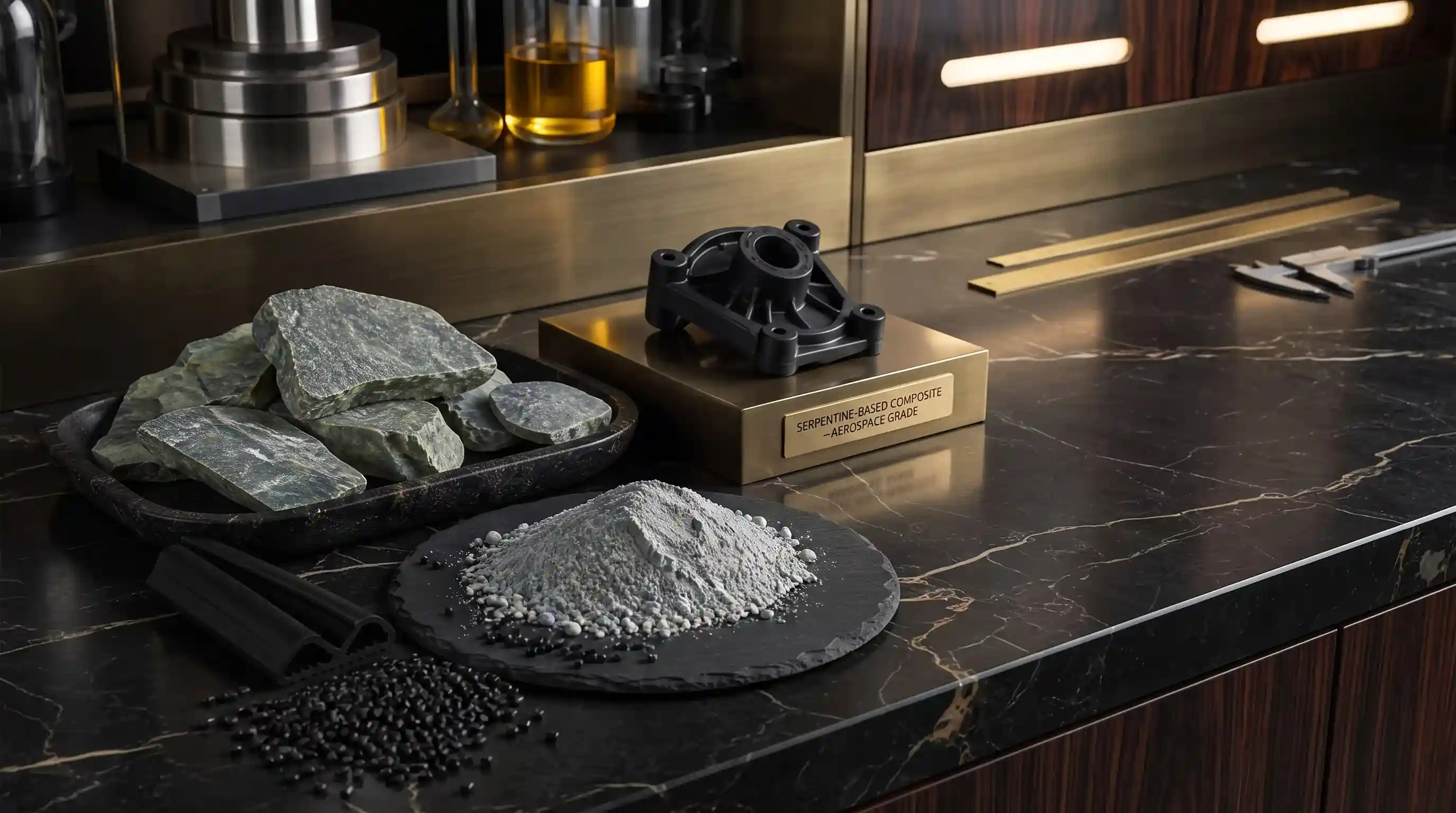
How to Choose the Best Industrial Talc?
Introduction to the Importance of Industrial Talc in Modern Industries
Precise recognition of minerals and their application in manufacturing processes is one of the main pillars for improving quality and reducing costs in various industries. Among widely used minerals, industrial talc holds a special place due to its unique physical and chemical characteristics. This mineral acts as a filler and performance enhancer, playing a key role in diverse industries and optimizing the production process.
Kanisang Amiran Project, as a leading mineral producer, supplies this product with the highest quality standards. Proper selection of this mineral requires a thorough review of technical parameters such as granulation, mesh range, and the type of final application. In this article, we intend to comprehensively examine how to choose the best type of this material for specialized applications and scrutinize its various dimensions.
To better understand the quality of minerals, we suggest reading the article How to Identify Industrial Talc Purity and Quality? to familiarize yourself with purity evaluation criteria. Also, understanding other useful minerals such as Kanisang Amiran Dolomite can significantly help you complete your industrial raw material basket.
In addition, simultaneous review of the physical properties of other minerals such as Applications of Industrial Barite in Insulation provides engineers and formulation designers with a broader perspective on choosing suitable fillers to make the best decision.
Familiarity with the Characteristics and Technical Specifications of Industrial Talc
Industrial talc is a hydrated magnesium silicate known for its layered structure and extraordinary softness. It is recognized as one of the softest natural minerals, offering excellent surface degreasing, desirable thermal stability, and suitable dielectric properties. The physical features of this material enable it to act as a functional additive in complex industrial formulations.
In the mineral supply sector, Kanisang Amiran Group focuses on providing products with precise technical specifications. Understanding parameters such as whiteness, moisture content, Mohs hardness, and particle size distribution helps engineers make optimal selections. Due to its flaky structure, this material prevents the penetration of gases and moisture, greatly improving the dimensional stability of parts.
The standard mesh range of this material plays a decisive role in its final behavior within polymeric and paint matrices. Proper granulation ensures that the materials are distributed uniformly without creating structural weak points. These features, along with appropriate purity, bring high added value to final products and enhance the efficiency of production processes.
Correct selection based on announced technical specifications is the key to success in utilizing this mineral. Technical experts always recommend that before finalizing a purchase, the compatibility of this material with other formulation components be thoroughly examined to achieve the best result.
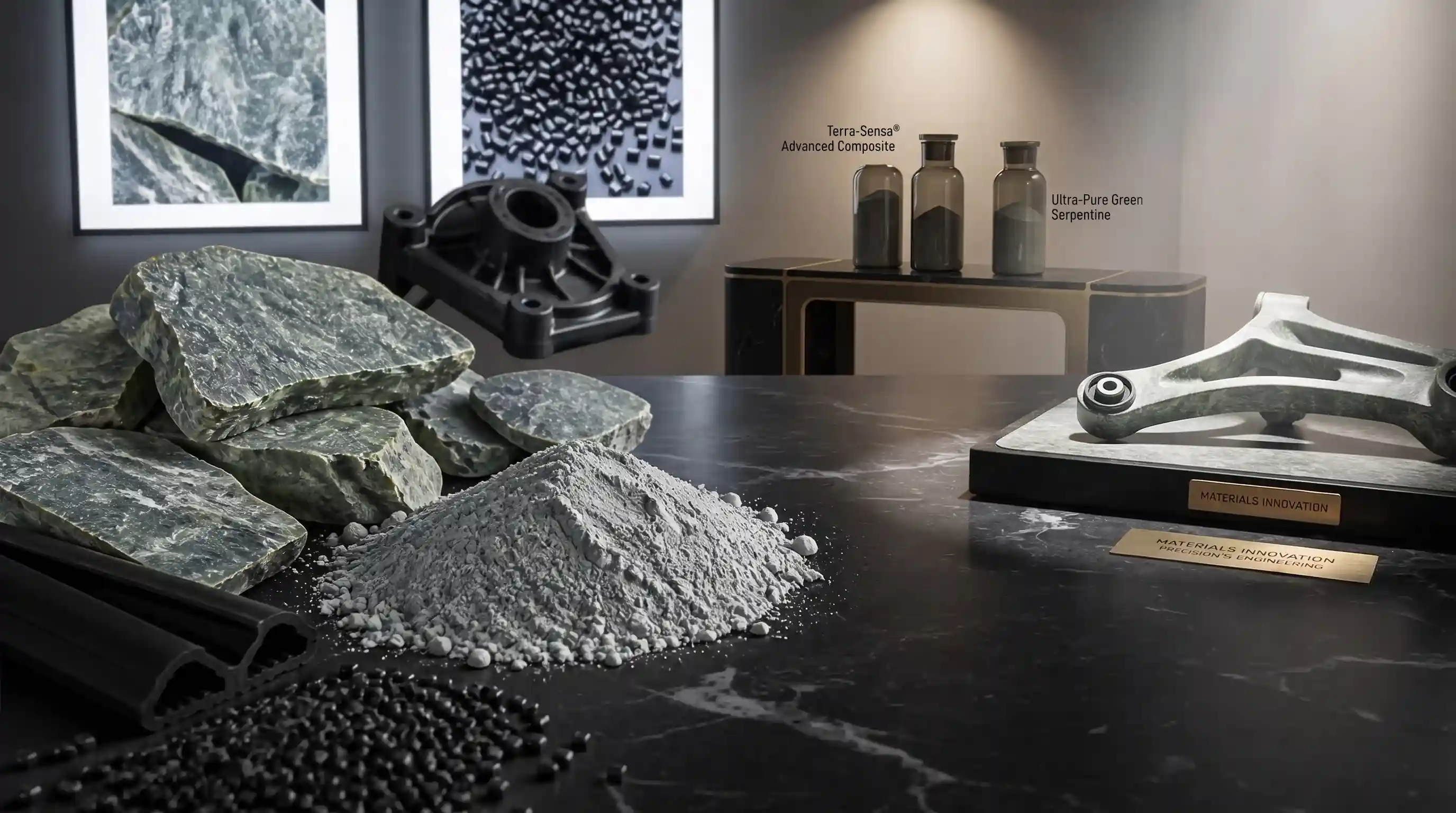
The Vital Role of Industrial Talc in the Polymer and Plastic Industry
The polymer and plastic industry is considered one of the largest consumers of industrial talc worldwide. Adding this material to thermoplastic and thermoset polymers yields significant improvements in mechanical properties such as flexural modulus, hardness, and heat resistance. Furthermore, due to reduced molding shrinkage, the dimensions of manufactured polymer parts will be much more precise.
In polymer applications, a mesh range of 450 to 1000 mesh performs extremely well. Proper particle distribution in this range helps ensure that particle dispersion in the polymer matrix occurs in the best possible way and prevents agglomeration. This directly affects the improvement of impact resistance and the surface appearance of injected parts.
By understanding the precise needs of polymer industries, Kanisang Amiran Project has provided a product tailored to the standards of this field. Using this material in the production of automotive parts, home appliances, and packaging films, in addition to improving mechanical properties, significantly helps reduce the final product cost without any loss in quality.
Observing proper compounding ratios and laboratory tests prior to mass production guarantees the flawless performance of polymer parts containing this valuable mineral and dramatically increases the useful life of products.
Widespread Application of Industrial Talc in the Rubber Manufacturing Industry
The rubber manufacturing industry has a strong need for high-quality mineral fillers to improve process characteristics and final product properties. Industrial talc, due to its internal lubricating property and reduction of molecular friction, greatly facilitates the mixing and extrusion process of rubber compounds, leading to lower energy consumption in factories.
In the production of various rubber products such as gaskets, hoses, sealing profiles, and industrial tires, using this mineral helps increase tear and wear resistance. The 450–1000 mesh range can well cover the requirements of this industry, creating a homogeneous and flawless surface.
By offering standard products, the Kanisang Amiran collection is considered a reliable supplier for rubber manufacturing industries. This material acts as an active and semi-active extender, reducing gas permeability in rubber products, a feature that is crucial in the manufacture of inner tubes and membranes.
Precise control of moisture and impurities in this mineral prevents issues during rubber curing. Therefore, careful selection of the granulation type matching the rubber compound guarantees the quality of the final product and maintains its stability under various operating conditions.

Industrial Talc in the Paint and Resin Industry; Improving Coverage and Durability
The paint and surface coatings industry is constantly looking for raw materials that not only improve hiding power but also increase the durability and stability of the paint film. Industrial talc is used as an important mineral filler in the formulation of various architectural, industrial, and anti-corrosion coatings, playing a key role in adjusting gloss and paint viscosity.
The flaky structure of this material creates a barrier property against moisture and weathering agents, resulting in a significant increase in paint resistance to corrosion and peeling. The 450–1000 mesh range is an ideal choice for achieving a smooth, uniform, and textured surface in various paints.
To procure this high-quality product for use in paint manufacturing industries, you can visit the Industrial Talc Product Page and review supplementary information. Due to its suitable whiteness, this material creates less interference with primary pigments and helps stabilize color.
Optimal use of this material in paint formulations improves drying time and prevents pigment settling during long-term storage, maximizing the overall efficiency of the product for the end consumer.
Examining the Importance of the Mesh Range (450 to 1000 Mesh) in Final Selection
One of the most important parameters in selecting powdered minerals is particle size, or mesh sizing. The 450–1000 mesh range is a spectrum that creates an unparalleled balance among surface properties, dispersibility, and mechanical characteristics. Particles in this range are fine enough to be well distributed in polymer matrices and paints, while avoiding the agglomeration problems associated with ultra-fine particles.
Selecting the appropriate mesh should be based on the type of production equipment and final application. For example, in paint manufacturing and thin coatings, higher meshes are preferred, whereas in certain polymer industries, lower ranges of this spectrum also exhibit desirable performance. Accurate recognition of this range helps optimize production process efficiency.
With precision in the granulation and milling process, Kanisang Amiran Project offers its products within this standard range to best cover the diverse needs of various industries. This precision in production guarantees the quality consistency of shipped consignments.
Procurement engineers and formulation designers must always review particle size distribution tests prior to bulk ordering to ensure that the chosen mesh perfectly matches the requirements of the production line and final product standards.
Diverse Industrial Applications and Economic Benefits of Using Industrial Talc
Beyond the polymer, rubber, and paint industries, industrial talc plays a role in many other industrial applications. These include the production of engineering ceramics, papermaking, adhesives and sealants, and advanced composites. Due to its chemical inertness, this material is compatible with most base materials.
From an economic perspective, using this mineral as a cost-effective filler sharply reduces production costs without causing any noticeable drop in product quality or performance. This competitive advantage allows manufacturing units to supply higher quality products to the market at more competitive final prices.
By providing stable access to this mineral, Kanisang Amiran Project helps various industries secure their supply chains. Uniform quality and standard granulation minimize production line downtime and increase overall productivity.
Detailed analysis of costs and technical benefits shows that the intelligent selection of mineral fillers is a reliable investment for the growth and sustainable development of large and small industrial units, ensuring long-term profitability.
How to Choose and Purchase the Best Industrial Talc?
Choosing and purchasing the best type of this mineral requires a systematic and informed approach. In the first step, the technical requirements of the production process, including the required mesh range, purity level, moisture content, and final application, must be determined. Then, by reviewing reputable suppliers such as the Kanisang Amiran Group, the best option can be selected.
Receiving a laboratory sample and conducting evaluation tests prior to bulk purchasing is one of the key principles in the raw material supply process. This allows the engineering team to evaluate material behavior under actual production conditions and ensure its compliance with internal standards.
Reviewing the supplier's history and credibility, product quality consistency over time, and the provision of technical support services are other important factors in final decision-making. Ensuring the continuity of raw material supply brings peace of mind to production managers.
Ultimately, by combining technical knowledge, careful review of product specifications, and direct communication with primary manufacturers, you can make the best choice to enhance your product quality and walk the path of industrial success with confidence.
| Question |
Answer |
| What is industrial talc? |
It is a natural hydrated magnesium silicate with a flaky structure used as a filler and property enhancer in various industries. |
| What is the mesh range of this product? |
This product is produced and supplied in the 450–1000 mesh range. |
| What are the main applications of industrial talc? |
Main applications include polymer products, rubber products, paint industries, and other industrial uses. |
| How can this product be purchased? |
Through visiting the product page on the Kanisang Amiran website and communicating with sales experts. |
| Is this material used in the rubber manufacturing industry? |
Yes, it is used as an internal lubricant, friction reducer, and abrasion resistance improver in rubber. |
| What is the role of talc in the paint industry? |
It improves hiding power, adjusts gloss, and increases the resistance of the paint film to moisture. |
| Why is the 450 to 1000 mesh range important? |
Because it creates an ideal balance between particle dispersion and mechanical properties. |
| What is the economic advantage of using this material? |
Reduction of production costs and final price without sacrificing the quality of the final product. |
| Does Kanisang Amiran guarantee product quality? |
Yes, this collection supplies mineral products with a focus on quality standards. |
| How do we choose the right mesh for the production line? |
It is determined based on equipment type, formulation, and initial laboratory tests. |
Kanisang Amiran Project — Reference for Production and Supply of Industrial Minerals
:: برچسبها:
Industrial Talc ,
How to Choose the Best Industrial Talc? ,
:: بازدید از این مطلب : 3
|
امتیاز مطلب : 0
|
تعداد امتیازدهندگان : 0
|
مجموع امتیاز : 0


 عضو شوید
 عضویت سریع
 آمار مطالب
 آمار بازدید


