
Price Review and Factors Affecting the Purchase of Premium Coated Calcium Carbonate

Price Review and Factors Affecting the Purchase of Premium Coated Calcium Carbonate
Introduction to Coated Calcium Carbonate and Its Role in Polymer Industries
In today's modern world, polymer industries, compounding, and plastic parts manufacturing heavily depend on mineral additives to both improve the final product quality and optimize production costs. Among all mineral fillers and extenders, coated calcium carbonate holds a special and irreplaceable position. With proper surface coating, this material significantly enhances the physical and mechanical properties of polymers. Kani Sang Amiran Project, as one of the leading mineral producers, supplies these products with the highest quality standards.
When it comes to improving the mechanical properties of polymer compounds, compatibility between the mineral filler and the polymer matrix becomes critically important. Regular calcium carbonate, due to not being hydrophobic and having differences in surface energy, usually does not disperse well within polymer matrices and causes agglomeration. However, by using a surface coating process, this problem is completely resolved, resulting in a product with extraordinary performance widely used in sensitive industries.
Choosing a suitable grade of this mineral material requires a precise understanding of its technical characteristics. To learn more about the technical details and exact specifications of this versatile product, you can visit the coated calcium carbonate page and obtain more comprehensive information. In this article, we intend to examine the factors affecting price, technical advantages, and industrial applications of this valuable material so that esteemed buyers and manufacturers can make choices with a broader perspective.
Production Process and the Importance of Coating in Coated Calcium Carbonate
The production of coated calcium carbonate is a precise engineering process during which micronized calcium carbonate particles are coated with specific chemical materials (mainly fatty acids such as stearic acid). This thin coating layer imparts a hydrophobic nature to the particles, which has a direct impact on how they interact with base polymers. A detailed study of this process is well explained in the specialized article Reviewing the Impact of Stearic Acid in Coated Calcium Carbonate Coating.
The surface coating causes the friction between filler particles and polymer chains to decrease. As a result, the melt viscosity of the polymer in injection and extrusion processes is improved, and production machinery operates under less pressure. This feature not only extends the useful life of the equipment but also allows for the injection of a higher percentage of filler without a drop in mechanical properties, which in turn brings significant economic savings.
Furthermore, proper coating prevents moisture absorption by mineral particles. In sensitive polymer parts, the presence of moisture can cause surface defects, bubbles, or a decrease in dielectric strength. Therefore, using a premium coated product will guarantee the dimensional and qualitative stability of the final product under various weather conditions and long-term industrial applications.
The Role of Mesh Range and Mesh Standard in the Quality of Coated Calcium Carbonate
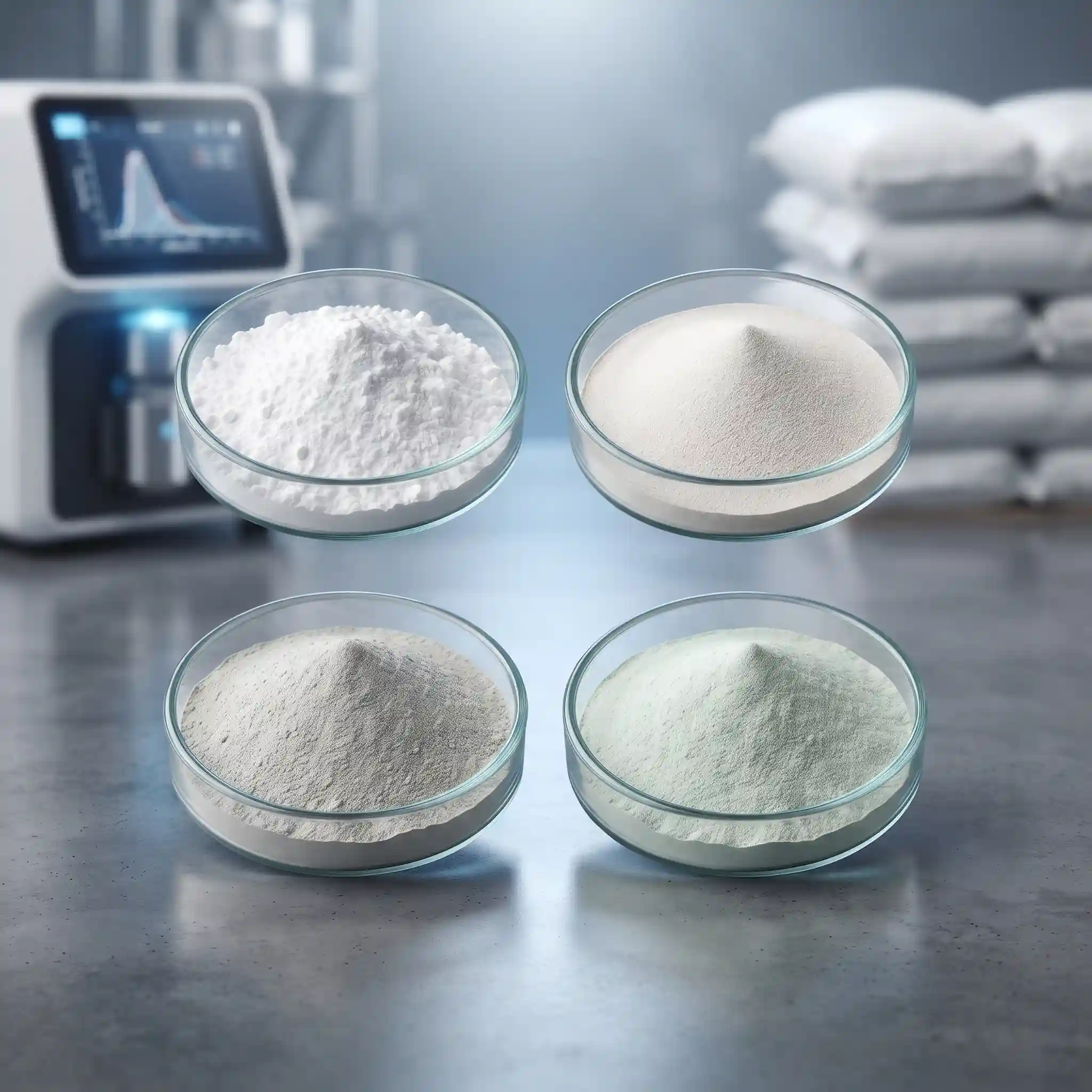
One of the most important parameters in choosing and purchasing coated calcium carbonate is the particle size and its mesh range. This product is supplied and offered by the Kani Sang Amiran project with a mesh range of 450 to 3500 mesh, where each mesh range is selected according to a specific application in compound, granule, and polymer parts industries. To better understand the importance of this parameter, reading the article Reviewing Mesh Grading Standards in Various Types of Coated Calcium Carbonate is recommended.
Particles with lower meshes (such as 450 to 800) are mostly used in applications that require high filling capacity and reduced final price without needing exceptionally specialized mechanical properties. In contrast, very fine meshes (such as 2500 to 3500, or nano grades) are used in the production of thin polymer films, precision injection parts, and high-quality profiles where surface appearance and homogeneous particle distribution are vital.
Incorrect mesh selection can lead to a drop in impact resistance, reduced transparency, or scratches on the surface of extruded parts. For this reason, production engineers must carefully evaluate the proportion between particle size, polymer melt flow index (MFI), and the type of their processing equipment before making a purchase to achieve the best result.
Main Applications of Coated Calcium Carbonate in Polymer Compounds and Granules
Compounding industries and polymer granule manufacturing are among the largest consumers of coated calcium carbonate. As a strategic additive due to its excellent compatibility with polymers such as polyethylene, polypropylene, and PVC, this material is widely used in masterbatch production lines and engineering compounds. The presence of this coated filler greatly helps with the uniform distribution of materials in twin-screw extruder machines.
In the production of polymer granules, adding this material improves flexural modulus, increases hardness, and enhances the thermal stability of the product. Also, due to reduced particle adhesion caused by the coating layer, dispersibility within the polymer matrix is maximized, preventing the formation of microscopic clumps. This directly impacts the improvement of tensile properties and impact resistance of the final part.
Granule manufacturers can increase their production rate and at the same time optimize pure polymer consumption by using grades matching standard meshes. While maintaining or even upgrading the quality standards of polymer parts, this approach makes the final product's final price significantly more competitive, which is of utmost importance for a successful presence in the market.

Application of Coated Calcium Carbonate in Profiles, Cables, and PVC Parts
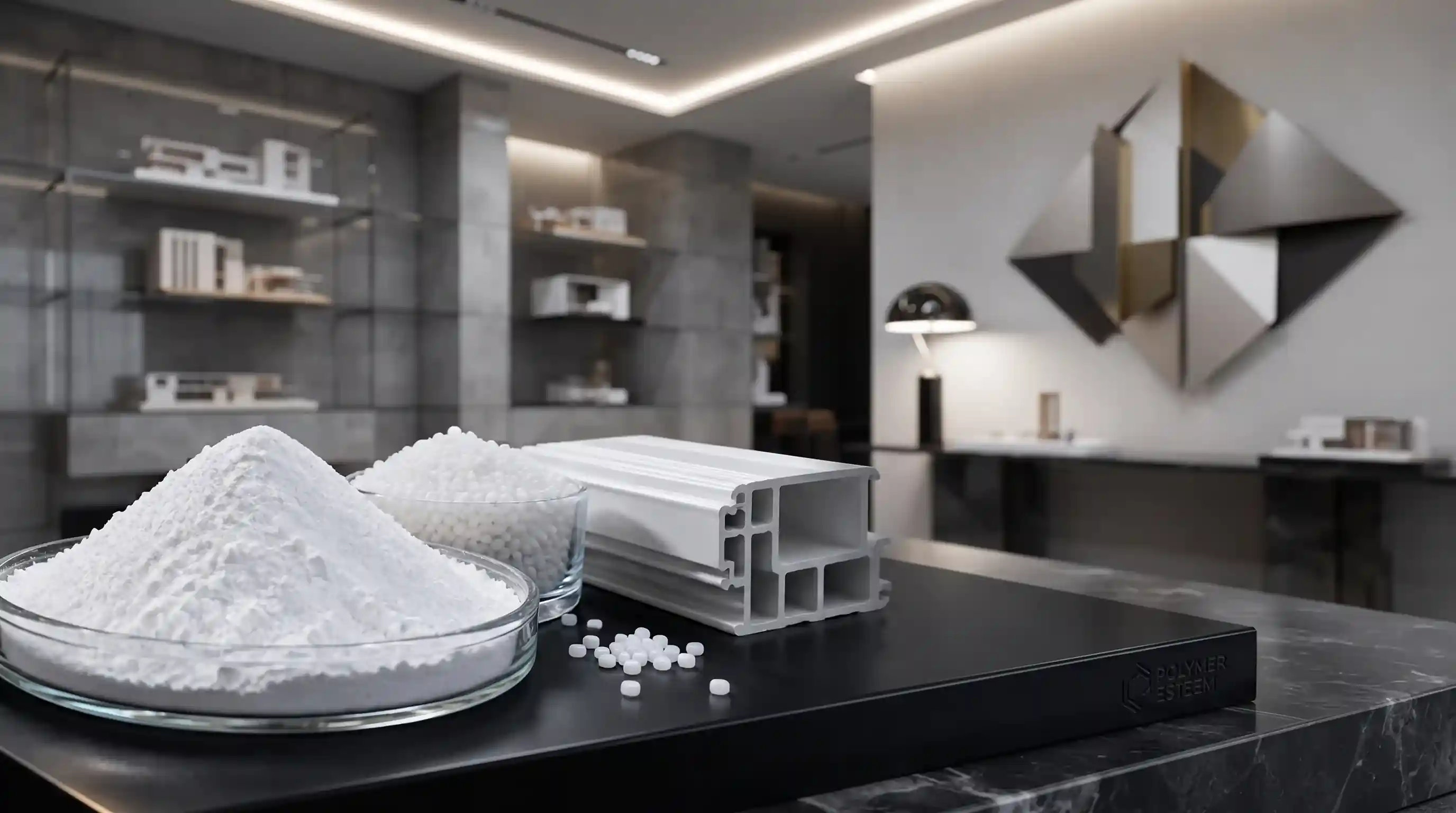
The door and window profile manufacturing industry, electrical cable sheathing, and rigid and flexible PVC parts are other vital consumption areas for coated calcium carbonate. In PVC profiles, adding this coated filler improves impact resistance, increases rigidity, and maintains the dimensional stability of the profile against severe environmental temperature changes.
In the cable manufacturing industry, the electrical and mechanical properties of insulations are of utmost importance. Using calcium carbonate with a proper surface coating prevents moisture absorption and preserves the dielectric properties of the cable. Additionally, this material plays a key role in improving surface quality and smooth extrusion of cable jackets, preventing defects in thin insulation layers.
Various PVC parts, from pipes to fittings and complex injection parts, require a filler that can maintain thermal stability during pressing or extrusion processes without increasing melt viscosity. The matching grades of this product are supplied with high precision in the Kani Sang Amiran project to meet the demanding needs of this industry.
Application in the Production of Polymer Flooring and Specialized Parts
Polymer flooring, vinyl tiles, and SPC and LVT flooring nowadays account for a large share of the interior decoration and industrial market. In the formulation of these products, coated calcium carbonate is used as the main filler to create appropriate weight, structural stiffness, dimensional stability, and wear resistance. The surface coating of the particles helps PVC resin and other additives thoroughly envelop the mineral particles.
In addition to flooring, the production of specialized industrial parts that require high dimensional accuracy and very low tolerances heavily depends on this material. The dimensional stability of the part after the injection molding process is very important, and coated particles prevent warping of large plastic parts due to reduced linear shrinkage.
By carefully selecting the mesh range and optimized percentage of this product, manufacturers of specialized polymer parts can establish an ideal balance between mechanical properties, surface appearance quality (without orange peel effect), and production economy. Supplying premium raw materials from reputable sources such as the Kani Sang Amiran project will guarantee consistency of quality in high production volumes.
Reviewing Factors Affecting Price and Valuation of Coated Calcium Carbonate
The pricing of coated calcium carbonate is influenced by various technical, chemical, and processing factors. One of the most important factors in valuing this product is the purity grade of the raw ore (natural calcium carbonate or PCC/GCC) and its whiteness level. Mineral rocks with a high percentage of calcium and fewer impurities from premium mines create a higher-quality base for production.
Another key factor is the type and percentage of the coating material (mainly stearic acid) and the coating technology. The process in which coating is performed completely uniformly across all micronized particles requires advanced equipment and precise temperature control, which directly affects the cost price. Also, for a more accurate comparison of the similar mineral market, reading the specialized article Reviewing White Talc Price and Valuation Factors provides valuable insights regarding industrial filler pricing mechanisms.
The mesh grading range also plays a decisive phase in pricing; grades with very high mesh (close to 3500 mesh) have a higher price compared to coarser grades (such as 450 mesh) due to requiring more energy and time in advanced micronized mills. Buyers should choose the best grade in terms of economy and application based on their actual technical needs.
Comprehensive Guide to Purchasing and Selecting Premium Products from Kani Sang Amiran Project
Purchasing premium coated calcium carbonate requires attention to standard quality control indicators such as moisture content, free acid level, particle size distribution (PSD), whiteness level, and coating percentage. Utilizing up-to-date technical knowledge and rich mines, the Kani Sang Amiran project has been able to supply a product matching the precise needs of the polymer, compounding, and profile manufacturing industries.
Before finalizing your purchase order, it is recommended to discuss the exact technical specifications of the product such as mesh index (in the range of 450 to 3500 mesh), oil absorption amount, and final application type (compound, granule, cable, or PVC parts) with the sales experts so that a grade completely tailored to your production line is suggested. Purchasing the wrong grade can lead to capital waste and a drop in final product quality.
Guaranteeing continuity of quality, proper packaging to prevent caking due to warehouse humidity, and technical support are the key advantages of material procurement through this collection. To inquire about prices, receive a laboratory sample, and place an order, visit the dedicated page coated calcium carbonate right now and get in touch with our experts.
| Question | Answer |
|---|---|
| What is coated calcium carbonate? | It is a type of micronized calcium carbonate whose particle surfaces are coated with coating materials (such as stearic acid) to increase compatibility with polymers. |
| What is the mesh range of this product? | This product is supplied and offered by the Kani Sang Amiran project in the mesh range of 450 to 3500 mesh. |
| What are the main applications of this material? | Compounding, polymer granules, profiles, cables, flooring, and various PVC parts are its main applications. |
| Why is coated calcium carbonate used in compounds? | Due to its hydrophobic property, better homogeneous distribution in the polymer matrix, and reduced melt viscosity. |
| What is the difference between coated calcium carbonate and the regular type? | The coated type has a surface coating that greatly increases its compatibility with polymers and prevents caking. |
| What factors affect the price of coated calcium carbonate? | Ore purity grade, whiteness level, coating technology, and mesh grading range are the main pricing factors. |
| Is this product used in the cable manufacturing industry? | Yes, it is widely used in cable sheathing due to preventing moisture absorption and preserving dielectric properties. |
| How do we choose the right grade for our production line? | According to the type of polymer, extrusion equipment, mechanical requirements of the final part, and its matching mesh. |
| What is the role of stearic acid in this product? | It acts as a surface coating agent, making the particles hydrophobic and fluid. |
| How can this product be ordered? | By visiting the website of the Kani Sang Amiran project and contacting the sales and technical support unit. |
Kani Sang Amiran Project — Specialized reference for supplying premium minerals and polymer fillers















ورود کاربران
خوش آمدید! لطفا وارد حساب خود شوید