
Review of the Kaolin Trading Market in Iran and Globally
Introduction to Kaolin and Its Place in the Mineral Industries
Kaolin mineral, as one of the most important hydrated aluminum silicates, plays a key and fundamental role in various manufacturing and processing industries. This white and valuable mineral soil, due to its suitable purity and specific physical and chemical characteristics, has always attracted the attention of engineers, mine owners, and manufacturers in various industries. A precise understanding of kaolin's nature and its wide applications helps economic actors look at the raw material supply chain with a broader perspective. In this article, we intend to comprehensively examine the trading market of this vital mineral in Iran and globally and analyze its various consumption dimensions.
Amiran Mineral Stone Project, as one of the active groups in the field of mineral production, is a supplier of this high-quality product for various industries. An examination of global and domestic market dynamics shows that demand for this mineral is growing in sync with the development of consumer industries such as tile, ceramic, and paint manufacturing. Due to its layered structure and thinning and coating properties, this material is considered a suitable replacement for many expensive fillers, which doubles its economic importance.
From the perspective of raw material supply, access to various mesh sizes of this product is of vital importance for factories. The mesh range of 450 to 1500 mesh is recognized as a common standard in the processing of this product, covering the diverse needs of modern industries. In the continuation of this text, we will put further dimensions of the supply chain, specialized applications, and trends of the kaolin trading market under the microscope.
Comprehensive Review of the Global Kaolin Market and Supply and Demand Trends
The global kaolin market has witnessed significant developments in recent decades. With the development of mineral processing technologies, the quality standards of this material have improved, and various countries have joined the ranks of its major producers and consumers. Global demand is strongly influenced by the papermaking, paint manufacturing, and advanced ceramic product industries. Leading countries in this industry, by investing in advanced micronization lines, have been able to send products with precise particle sizing to international markets.
Price fluctuations in the global kaolin market usually depend on extraction, processing, and transportation costs, as well as the purity level of the initial ore. Given the numerous applications of this material, major producers are constantly striving to meet the growing demand of industrial sectors by optimizing production processes. Meanwhile, there is intense competition among Asian, European, and American suppliers, each holding a specific share of the market.
Sustainable development and environmental standards have also had a profound impact on the global market of this product today. Industries that use this mineral, especially in the paint and coating sector, prefer to use high-quality and eco-friendly grades. This approach has caused precise processing and quality control in mines and processing plants to find double importance, and high-quality micronized products find a special place in international trade.
Status of the Kaolin Trading Market in Iran and Domestic Potentials
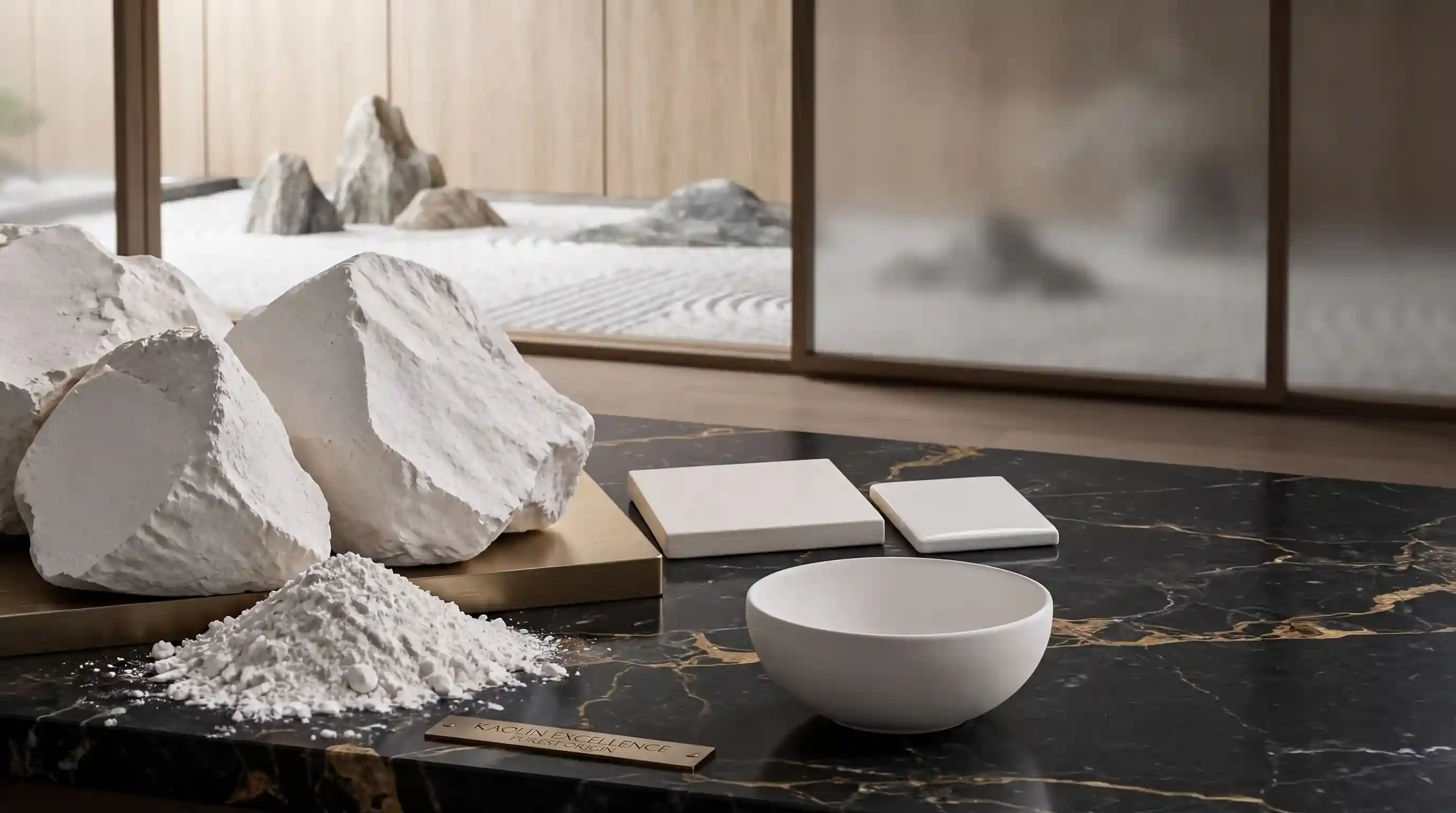
Due to having rich mineral reserves, Iran provides a favorable platform for the extraction and processing of various industrial soils. The domestic market for buying and selling kaolin enjoys high prosperity due to the activity of numerous factories producing tiles and ceramics, glazes, paints, and paper. Domestic mine owners and processing units strive to maintain their share of the competitive market by offering high-quality products that match the technical needs of industries.
One of the main concerns of domestic consumers is the continuous and uniform supply of raw materials with standard mesh sizing. This material is produced and supplied by processing units in the range of 450–1500 mesh, covering a wide range of technical needs of industries. To learn more about the supply method and features of this product, you can visit the dedicated Kaolin page and receive more accurate information. This helps buyers to place orders with full awareness.
Competition in the domestic market has caused producers to pay special attention to upgrading micronization quality and reducing impurities. The pricing of this product in the Iranian market depends on factors such as whiteness percentage, the amount of iron and titanium impurities, and the type of mesh size. Direct interaction between mines and consumer industries is considered a suitable solution for price stability and timely supply of raw materials.
Application of Kaolin in the Tile, Ceramic, and Glaze Manufacturing Industry
The ceramic and tile manufacturing industry is considered one of the largest and most traditional consumers of kaolin globally and in Iran. Due to its favorable thermal stability, white color after firing, and suitable rheological properties, this material is a main component of the body and glaze of ceramic products. The presence of this mineral soil in the tile body improves mechanical strength before firing and reduces thermal shrinkage in the kiln.
In the production of ceramic glazes, the use of finer mesh sizes of this material is of high importance because it helps create a smooth, uniform, and flawless surface. For a deeper understanding of the engineering aspects of this application, studying the specialized article Review of the Technical Benefits of Using Kaolin in Ceramics Manufacturing is suggested, which addresses technical details and structural impacts. This article provides useful information to activists in this field.
In addition to the tile body, this material is also used in glaze formulations to adjust viscosity and suspend mineral particles. The ceramic firing process requires raw materials that undergo controlled phase changes at high temperatures, and kaolin exhibits this characteristic well. For this reason, tile and ceramic factories are always looking to supply high-quality and homogeneous grades of this mineral.

The Role of Kaolin in the Paint, Coating, and Papermaking Industries
The construction and industrial paint and coatings industry is another major consumer market for kaolin. This material acts as a functional filler and a coating improvement factor (Opacity) in water-based and oil-based paints. Due to appropriate size distribution, the micronized particles of this product help uniform paint dispersion and prevent premature settling of the paint in storage. To read more about the applications of this material in the paint industry, you can read the article Review of the Benefits of Using Kaolin in Architectural Paints.
In the papermaking industry, this material is also used as a filler and surface coating for paper. The use of high-quality grades of this product increases whiteness, brightness, smoothness, and improves printability on paper. These features have caused the demand to purchase kaolin with high mesh sizes in papermaking factories to always remain at a stable level.
Understanding the exact needs of the paint and paper industries, the Amiran Mineral Stone Project has taken action to supply this product with standard technical specifications. Precise control of mesh size in the range of 450–1500 mesh guarantees the optimal performance of this material in complex paint and coating formulations, bringing satisfaction to end consumers.
Analysis of Pricing and Economic Factors Affecting the Kaolin Market
The kaolin trading market is influenced by a set of economic and technical factors that determine the final price of the product. Among the most important price-determining factors are chemical purity degree, whiteness level (Brightness), percentage of iron and titanium oxides as impurities, and the degree of micronization or the mesh size of the product. Grades that have a higher mesh and are processed to be extraordinarily fine usually have a more complex production process and are offered at different prices.
In addition to technical specifications, mining extraction costs, road transportation from the mine to the processing plant and then to the consumer's location constitute a significant portion of the finished price. Currency rate fluctuations and the costs of supplying machinery and spare parts for production lines and micronized mills also indirectly affect market prices. Producers strive to create a proper balance between quality and price to maintain competitiveness.
An examination of market trends shows that major industrial buyers prefer to enter into long-term contracts with reputable and experienced suppliers to ensure price stability and continuity of raw material supply. This approach helps significantly reduce risks caused by market fluctuations and guarantees production chain security for tile, ceramic, paint, and paper factories.

Comparison of Kaolin with Other Similar Minerals and Review of Alternatives
In materials engineering and industrial formulation, various minerals are sometimes examined as alternatives to each other. For example, calcium carbonate, talc, bentonite, and barite are among the fillers that may be compared with kaolin in certain applications. However, kaolin's specific crystal structure and its unique characteristics such as chemical stability in acidic and mildly alkaline environments, rheological behavior, and coating property have made it irreplaceable in many industries.
Compared to other minerals such as colored iron oxides used in specific industries, this material offers a completely different function. For example, the market for colored products such as iron oxides is dynamic, and studying parallel markets such as Review of the Limonite Oxide (Yellow Ochre) Sales Market can give specialists a broader perspective on the market dynamics of functional minerals in the paint and coating industries.
The choice between kaolin and other fillers is mainly made based on the final product's technical requirements, quality standards, and economic justification. Research and development experts in the ceramic and paint industries always select the best combination of raw materials by performing precise tests to both maintain product quality and optimize production costs.
Future Market Outlook and Specialized Kaolin Purchasing Guide
The future outlook of the kaolin trading market indicates continuous growth in demand in sync with manufacturing technology advancements. With the increasing focus of industries on producing higher quality, lighter products with higher environmental standards, the need for purer and micronized grades of this material will be felt more than ever. Processing units must respond to the strict needs of modern industries by equipping their production lines with modern classification and magnetic separation technologies.
For buyers and industrial purchasing managers, mastering kaolin's technical specifications before placing an order is of high importance. A detailed examination of chemical analysis (XRF), whiteness level, moisture, and precise determination of the required mesh range (450–1500 mesh range) prevents problems in production lines. Establishing communication with reputable and experienced suppliers such as the Amiran Mineral Stone Project is a safe way to achieve standard and high-quality raw materials.
Ultimately, success in today's competitive market requires information transparency, commitment to quality, and mutual understanding of supply chain needs. By observing technical principles in purchasing and consuming this mineral, factories can increase their productivity and strengthen the position of their products in domestic and export markets.
| Question |
Answer |
| What is kaolin? |
It is a natural, white hydrated aluminum silicate used in various industries. |
| What are the main applications of kaolin? |
Tiles, ceramic products, glazes, paper, and paint. |
| What is the mesh size range of the provided kaolin? |
This product is supplied and offered in the 450–1500 mesh range. |
| Which group is the supplier of this product? |
Amiran Mineral Stone Project operates as a mineral producer. |
| Is it possible to view the product page? |
Yes, it is accessible via the link of the dedicated kaolin page on the Amiran Mineral Stone website. |
| What is the role of kaolin in the ceramic industry? |
Improving body strength, reducing thermal shrinkage, and improving glaze quality. |
| Why is this material used in paint manufacturing? |
It is used as a coating agent, paint stability improver, and filler. |
| What are the factors affecting the price of kaolin? |
Degree of whiteness, chemical purity, amount of impurities, and type of mesh size. |
| How can one obtain more technical information? |
By studying specialized articles related to ceramics and paint on the Amiran Mineral Stone website. |
| Why is direct purchase from the producer important? |
Quality assurance, raw material supply stability, and more affordable price. |
Amiran Mineral Stone Project — Reference for industrial mineral production and supply.
:: برچسبها:
Kaolin ,
Review of the Kaolin Trading Market in Iran and Globally ,
:: بازدید از این مطلب : 3
|
امتیاز مطلب : 0
|
تعداد امتیازدهندگان : 0
|
مجموع امتیاز : 0


 عضو شوید
 عضویت سریع
 آمار مطالب
 آمار بازدید


