
The Role of Dolomite in Advanced Chemical and Agricultural Industries
Introduction to the Mineral Dolomite and Understanding Its Structure
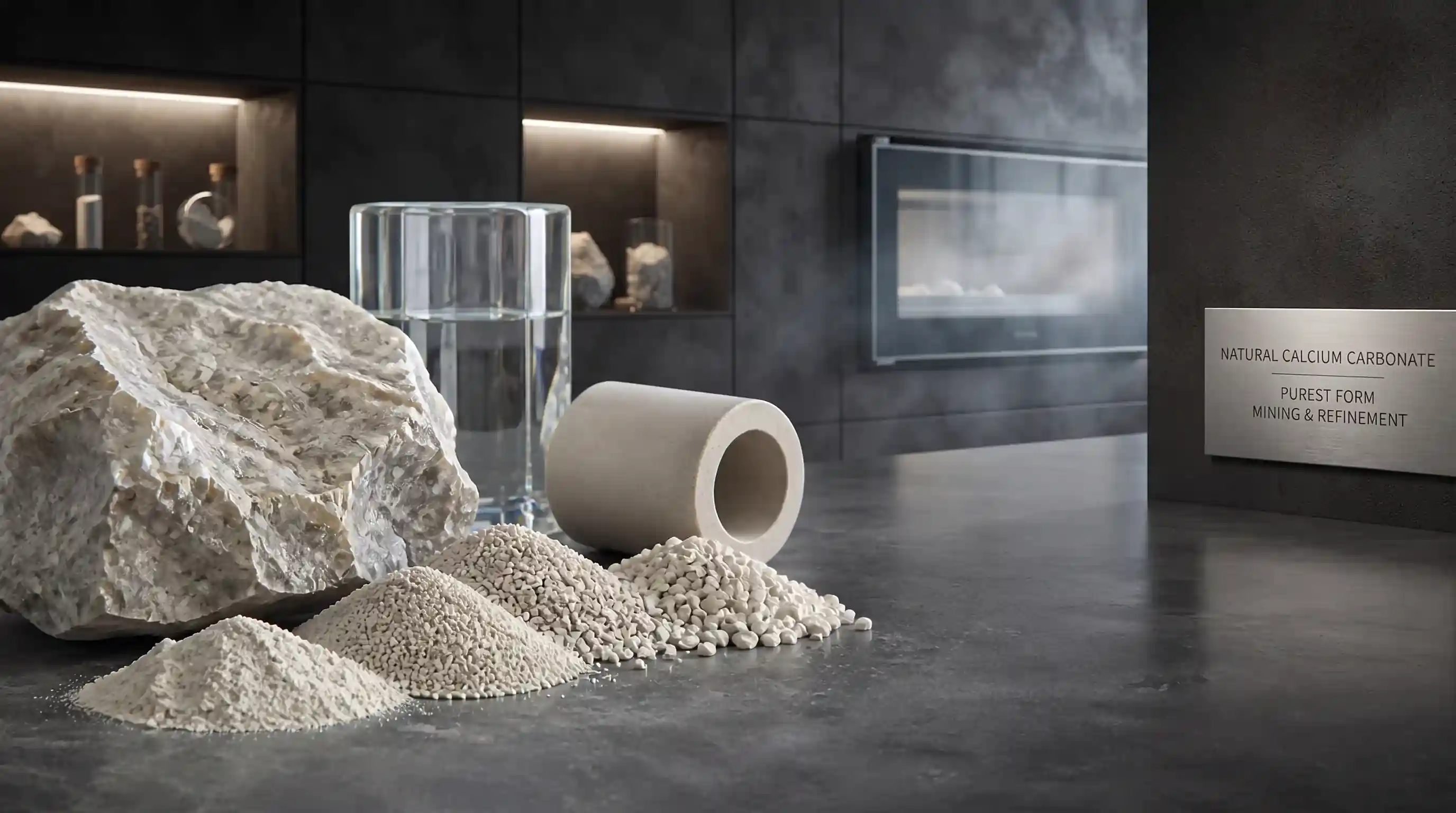
The mineral dolomite is known as one of the most important sedimentary and carbonate rocks in nature, which chemically consists of a combination of calcium and magnesium carbonate. With its specific chemical formula, this mineral offers unique physical and chemical properties that distinguish it from ordinary limestone. In industrial and mining projects, a precise understanding of the purity and characteristics of this material plays a key role in determining its final application. Examining the use of minerals, especially this valuable rock, opens the door to more optimized execution of industrial processes.
On a geological scale, this material is formed through metamorphic processes and the replacement of magnesium in primary limestones. The simultaneous presence of calcium and magnesium ions in its crystal lattice structure results in favorable thermal stability and adequate mechanical resistance. Mining engineers and specialists utilize advanced extraction techniques to mine this material from rich deposits and prepare it for various applications. To learn more about the technical details and order this mineral, you can visit the dolomite page, which provides its complete specifications.
The appearance characteristics of this material include white, gray, cream, and soft pink colors, which vary depending on the impurities present in the rock. The hardness of this mineral on the Mohs scale is between 3.5 and 4, and it reacts mildly to acids. These stable physical properties have made it a strategic raw material of interest in many core industries. Strict quality control during the crushing and sizing stages also guarantees its high performance in consumer industries.
The Role of Dolomite in the Glassmaking Industry and Improving Product Quality
The glassmaking industry is one of the major consumer sectors of minerals in which dolomite holds a special place. The magnesium present in this mineral's composition plays an important role in lowering the melting point of glass raw materials, which in turn leads to significant energy savings in melting furnaces. Additionally, the presence of magnesium significantly increases the chemical stability of glass against environmental factors and thermal shocks.
In addition to lowering the melting temperature, the use of this mineral prevents the phenomenon of devitrification in the glass structure. This feature is of vital importance for the production of flat glass, glass bottles, and packaging containers. To better understand these applications, reading more about examining the application of dolomite in paint and resin industries provides industrialists with a broader perspective, demonstrating the breadth of its applications.
Sizing and mesh grading of this material are of high importance in the glassmaking industry. The standard mesh range between 10 to 40 mesh allows for homogeneous mixing with other raw materials such as silica and sodium carbonate. This homogeneity in the initial composition minimizes air bubbles in the final product and noticeably enhances the transparency and mechanical quality of the glass.

Application of Dolomite in Ceramic Industries and Advanced Glazing
In the ceramic and pottery industries, dolomite acts as a highly efficient flux. This material melts at high firing temperatures and contributes to greater compaction and density of the ceramic body. The magnesium and calcium present in this mineral's structure reduce the rate of thermal shrinkage during the firing process, which prevents warping and cracking of ceramic pieces.
In the formulation of ceramic glazes, the presence of this mineral greatly helps improve the gloss, surface smoothness, and chemical resistance of the glaze. Glazes optimized with this composition exhibit very high durability against abrasion and household or industrial chemicals. For further reading regarding the importance of this material in engineering and manufacturing sectors, you can read the article on what is the important application of dolomite in construction and manufacturing industries, which sheds light on various dimensions.
Choosing the appropriate mesh size with a range of 10 to 40 mesh helps particles distribute uniformly within the ceramic slip. This uniform distribution prevents the creation of weak points in the dense ceramic structure and guarantees the final quality of the product. Ceramic manufacturers elevate the quality standards of their production by relying on these properties.
The Importance of Dolomite in Building Materials and Civil Engineering
The civil engineering and construction materials sector is the largest consumer of dolomite on a global scale. This material is used in the form of crushed aggregates, micronized powder, and fillers in concrete, asphalt, and construction mortars. The favorable mechanical strength of this rock against point loads and impacts makes it an ideal choice for road sub-bases and the production of high-strength concrete.
In asphalt production, using aggregates of this mineral improves the adhesion of bitumen to aggregates, which increases pavement stability under various weather conditions. Also, in cement production, adding this material to clinker can optimize the properties of the final cement. This approach is recognized as a standard in modern concrete structure engineering.
Kani Sang Amiran project, by precisely processing these products within the 10 to 40 mesh range, answers the needs of civil engineering projects for quality and standard materials. The precise and uniform sizing of these products guarantees optimal performance in concrete and asphalt mixtures and best fulfills civil engineering standards.

The Role of Industrial Minerals in Wastewater Treatment and Optimization Processes
Water resource and industrial wastewater management is one of the major challenges of modern industries, requiring the use of active minerals. Although the main focus is on carbonate compounds, alongside them, other minerals such as bentonite also play vital roles. To better understand this process chain, reading the article the role of bentonite in water and industrial wastewater treatment provides experts with useful information regarding wastewater treatment.
In many filtration systems, alkaline minerals are used for pH adjustment and heavy metal precipitation. The calcium and magnesium compounds present in carbonate rocks have the ability to neutralize acids in industrial wastewater. This chemical process greatly helps reduce the pollution load of water exiting production and industrial units.
The combined use of various minerals in industrial treatment plants increases the efficiency of physical and chemical treatment systems. A precise understanding of each mineral's characteristics allows environmental engineers to select the most suitable material for adsorbing pollutants and improving water quality, thereby preventing destructive environmental effects.
Processing, Crushing, and Sizing of Dolomite in Various Meshes
Converting the extracted rock from the mine into a usable industrial product requires going through precise processing stages. Primary crushing, secondary crushing, and milling are the main stages of producing this material. Meanwhile, precise control of sizing according to customer requirements is of utmost importance, and the 10 to 40 mesh range is supplied as one of the common standards.
Modern crushing equipment and vibrating screens are utilized in the Kani Sang Amiran project to produce a product with a minimum level of impurities and a completely uniform particle size distribution. This precision in sizing guarantees that raw materials react smoothly and with the highest efficiency in consumer industries.
Continuous monitoring of production lines and performing quality control tests in equipped laboratories guarantee the purity and uniformity of shipped consignments. This attention to technical details has earned the trust of various industries, including glassmaking, ceramics, and construction materials, in the products manufactured by this collection.
Economic and Industrial Advantages of Using High-Quality Dolomite
Using high-quality domestic minerals always brings significant economic advantages for manufacturing industries. Dolmite, as an abundant and cost-effective source of magnesium and calcium, considerably reduces final production costs in industries such as glass and ceramics. Sustainable access to rich domestic mines ensures the continuity of large factory production lines.
In addition to direct economic benefits, improving the quality of the final product due to the high purity of this mineral creates high added value for manufacturers. Reducing energy consumption in furnaces thanks to the fluxing property of this mineral also tangibly lowers fuel and energy costs, which plays a positive role in the macroeconomic environment of industries.
Kani Sang Amiran project, by optimizing extraction and processing procedures, supplies a high-quality product at a competitive price to the market. This approach allows various industries to optimize their operational costs while maintaining high quality standards and preserving their competitive edge in the market.
Future Outlook of Dolomite Applications in Modern Technologies
With the advancement of materials science and modern technologies, the demand for high-purity minerals with precise technical specifications is increasing day by day. Dolomite is no exception to this rule, and extensive research is underway regarding its new applications in advanced industries, environmental protection, and new energies. The structural properties of this mineral hold high potential for developing new composite materials.
The role of this material in petrochemical industries, advanced agriculture, and the production of next-generation refractories has attracted the attention of researchers. The development of modern processing and micronization methods has opened new horizons for utilizing this valuable mineral in high-tech industries, promising a bright future for this industry.
Kani Sang Amiran collection, by monitoring market developments and the needs of modern industries, constantly strives to supply more diverse products in compliance with contemporary world standards by upgrading processing technologies. This commitment to quality and innovation has solidified this collection's position as one of the reputable mineral suppliers in the country.

| Question |
Answer |
| What is dolomite? |
It is a carbonate mineral composed of calcium and magnesium with a specific chemical formula used in various industries. |
| What is the chemical formula of dolomite? |
It is calcium and magnesium carbonate with a stable crystal structure. |
| What are the main applications of dolomite? |
Glass, ceramic products, and building materials. |
| What is the production mesh range of dolomite products? |
The mesh range is 10 to 40 mesh. |
| Why is dolomite used in glassmaking? |
The magnesium within it lowers the melting point and increases the chemical stability of the glass. |
| What is the role of dolomite in the ceramic industry? |
It acts as a flux and controls thermal shrinkage during firing. |
| What colors are found in natural dolomite? |
White, gray, cream, and soft pink. |
| What is the economic advantage of using this material? |
Reducing energy consumption in furnaces and providing an inexpensive supply of magnesium and calcium. |
| How can this product be obtained? |
Through the dedicated product page on the Kani Sang Amiran website. |
| What is the hardness of dolomite on the Mohs scale? |
It is between 3.5 and 4. |
Specialized Reference of Geology and Mining of Iran, Technical Reports of the Kani Sang Amiran Project.
:: برچسبها:
Dolomite ,
The Role of Dolomite in Advanced Chemical and Agricultural Industries ,
:: بازدید از این مطلب : 0
|
امتیاز مطلب : 0
|
تعداد امتیازدهندگان : 0
|
مجموع امتیاز : 0


 عضو شوید
 عضویت سریع
 آمار مطالب
 آمار بازدید


