
The Role of Dolomite in the Production of Raw Materials for Advanced Industries
Introduction to the Importance of Dolomite in Advanced and Construction Industries
Minerals are recognized as the foundation and basis of many manufacturing and construction industries, and among them, dolomite holds a special place. This valuable mineral, composed of calcium and magnesium, plays a key role in improving the physical and chemical properties of final products. A precise understanding of the characteristics of this material can help engineers and manufacturers significantly increase the productivity of their production lines.
In modern industries, choosing high-quality raw materials has a direct impact on the durability, strength, and quality of the final product. Given the importance of this topic, examining the diverse applications of this mineral in various industrial sectors is of high importance. For a better understanding of this subject, it is suggested to read the article What is the important application of dolomite in construction and manufacturing industries to become familiar with broader dimensions of this mineral.
Kani Sang Amiran project, by offering standard products, has been able to supply the needs of various industries including glassmaking, ceramics, and construction materials in the best possible way. The use of this mineral not only enhances product quality but also significantly helps in optimizing production costs.
Understanding the Chemical and Physical Structure of Dolomite
For the optimal use of dolomite in industrial processes, examining its chemical structure and physical characteristics is essential. This carbonate sedimentary rock consists of calcium magnesium carbonate and is very similar in appearance to limestone, with the difference that the presence of magnesium in its structure brings about different mechanical and thermal properties.
The physical characteristics of this material, including hardness, granulation, and purity level, determine its application in various industries. For example, the mesh range of 10–40 mesh of this product makes it possible to use it in specific construction and industrial applications. A precise understanding of these parameters allows industrialists to choose the best raw material suitable for their production line needs.
In addition, good thermal stability and resistance to unwanted chemical reactions make this material an ideal option for high-temperature processes. Reputable suppliers such as Kani Sang Amiran project strive to supply products to the market that have the highest compliance with industrial standards.

The Key Role of Dolomite in the Glassmaking Industry
The glassmaking industry is a major consumer of minerals, and among them, dolomite acts as a rich source of calcium oxide and magnesium oxide. The presence of these oxides in the initial glass mixture compounds regulates the melting points of materials and improves the efficiency of melting furnaces.
The use of this material in the glass composition increases resistance to thermal shocks, improves chemical stability, and prevents unwanted crystallization (devitrification). The appropriate granulation of this product plays an important role in homogenizing the glass melt and guarantees the final product quality.
Manufacturers of glass containers and sheets are always looking for suppliers who guarantee the purity and qualitative stability of this mineral. For further investigation and to get acquainted with technical details around this subject, reading the specialized article Examining the application of dolomite in paint and resin industries will not be out of place and presents fresh perspectives.
Widespread Applications of Dolomite in Ceramic Product Manufacturing
The ceramics industry requires raw materials that exhibit stable behavior at high temperatures. Due to having alkaline earth elements, dolomite acts as a strong flux in the production of ceramic bodies and glazes. This material lowers the melting points of ceramic mixtures and facilitates the firing process.
In addition to its fluxing role, the presence of magnesium in the structure of this mineral improves color acceptance, reduces firing shrinkage, and increases the mechanical strength of ceramic products and tiles. Choosing standard granulation such as the 10–40 mesh range plays an important role in the uniform distribution of this material in the ceramic structure.
Compliance with quality standards in supplying this mineral guarantees the absence of surface and structural defects in ceramic products. Kani Sang Amiran project, utilizing rich mineral resources, provides high-quality products for this vital industry that help elevate production standards.

The Importance of Dolomite in Construction Materials and Civil Engineering
In the field of civil engineering and construction materials, the choice of aggregates and mineral powders has a direct impact on the durability of structures. Due to its suitable hardness, excellent adhesion, and resistance to weathering factors, dolomite is widely used in the production of concrete, asphalt, cement, and other construction materials.
This material acts as a resistant filler in construction industries and increases the stability of structures against mechanical pressures and temperature changes. Also, in the production of precast concrete products, the use of this mineral greatly helps in improving physical properties.
To gain more comprehensive information on how to select and optimally utilize these mineral resources in civil engineering projects, you can read the complete specifications on the dedicated page Dolomite. Compliance with granulation standards and structural quality is the key to success in using these materials.
Improving Thermal Resistance and Industrial Processes with Minerals
Process and thermal industries require raw materials that can withstand very high temperatures and do not deform. In this regard, understanding the thermal behavior of minerals plays a vital role. For example, examining the behavior of refractory materials and related minerals, such as comparison with the role of kaolin in improving the thermal resistance of refractory materials, helps engineers design a complete package of heat-resistant raw materials.
Dolmite, due to its high melting point and chemical stability against basic slags, is also used in melting furnaces and industrial linings. Combining this material with other refractory additives significantly increases the lifespan of thermal equipment.
Industrial product manufacturers, by utilizing the thermal properties of this mineral, optimize their furnaces and equipment and reduce repair and maintenance costs, which brings greater profitability.
Technical Review of the 10–40 Mesh Range in Production Processes
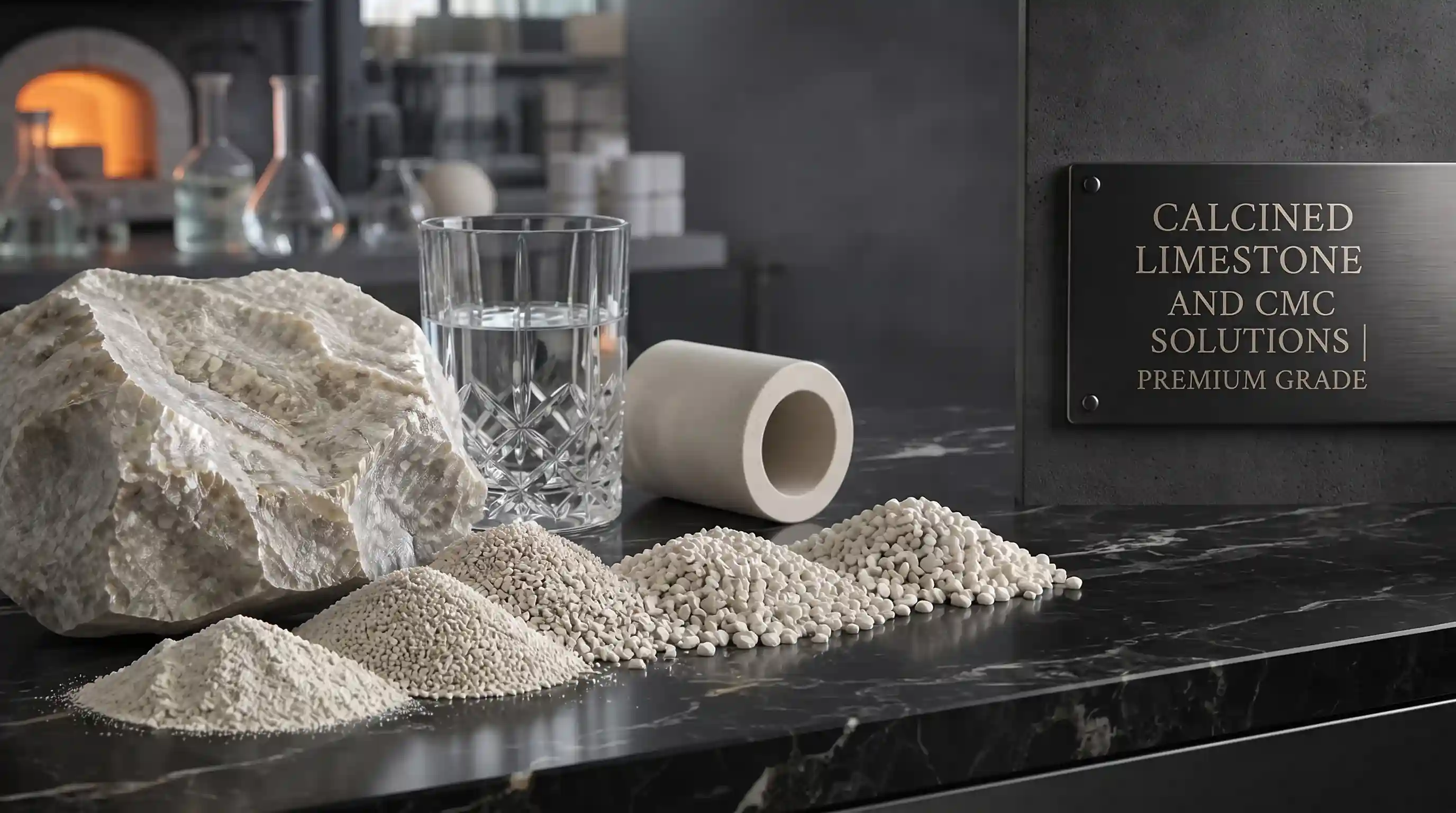
Mineral granulation is one of the vital parameters in process engineering that determines the behavior of the material during mixing and reaction. The dolomite product with a 10–40 mesh range has been optimized for a specific spectrum of applications in construction, glassmaking, and ceramic industries.
This particle size allows the material, while maintaining its reactive property, to prevent excessive dust generation in the working environment and have proper flowability in hoppers and material transfer systems. Precise control of particle dimensions indicates high accuracy in processing and granulation processes.
Industrialists, by carefully choosing the appropriate granulation, can maximize the efficiency of chemical and physical reactions. Kani Sang Amiran project, by observing strict standards in processing, provides a uniform and reliable product to consumer industries.
Future Outlook and Quality Control in Dolomite Supply
With the daily development of construction and industrial technologies, the demand for high-quality and standard raw materials is felt more than ever. Continuous quality control on the extracted dolomite will guarantee the stability of chemical and physical properties in the long run.
Quality control laboratories ensure the compliance of the product with national and international standards by closely examining the purity level, percentage of calcium and magnesium oxides, and granulation tests. This scientific approach helps dependent industries minimize production risks.
Focusing on principled extraction and advanced processing, Kani Sang Amiran project is committed to the sustainable supply of this valuable mineral for the glass, ceramic, and construction materials industries and always puts customer satisfaction at the top of its working priorities.

| Question |
Answer |
| What is dolomite? |
A natural mineral composed of calcium and magnesium carbonate. |
| What are the main applications of dolomite? |
Glass industries, ceramic products, and construction materials. |
| What is the mesh range of the product? |
This product is supplied in the 10–40 mesh range. |
| What is the role of dolomite in glassmaking? |
As a source of calcium and magnesium, it improves the stability and thermal resistance of glass. |
| Why is this material used in ceramics? |
It acts as a flux and facilitates the firing of ceramics. |
| Is this material used in construction materials? |
Yes, it is used in the production of concrete, cement, and construction fillers. |
| Where is the producer of this product located? |
Kani Sang Amiran project is the producer of this mineral. |
| How can the product be obtained? |
Through the dedicated product page on the Kani Sang Amiran website. |
| Does granulation affect quality? |
Yes, 10–40 mesh granulation is optimized for industrial and construction applications. |
| What is the advantage of using this mineral? |
Increasing durability, improving thermal properties, and optimizing production processes. |
Kani Sang Amiran project — Reference for the production and supply of standard mineral and industrial materials.
:: برچسبها:
Dolomite ,
The Role of Dolomite in the Production of Raw Materials for Advanced Industries ,
:: بازدید از این مطلب : 1
|
امتیاز مطلب : 0
|
تعداد امتیازدهندگان : 0
|
مجموع امتیاز : 0


 عضو شوید
 عضویت سریع
 آمار مطالب
 آمار بازدید


