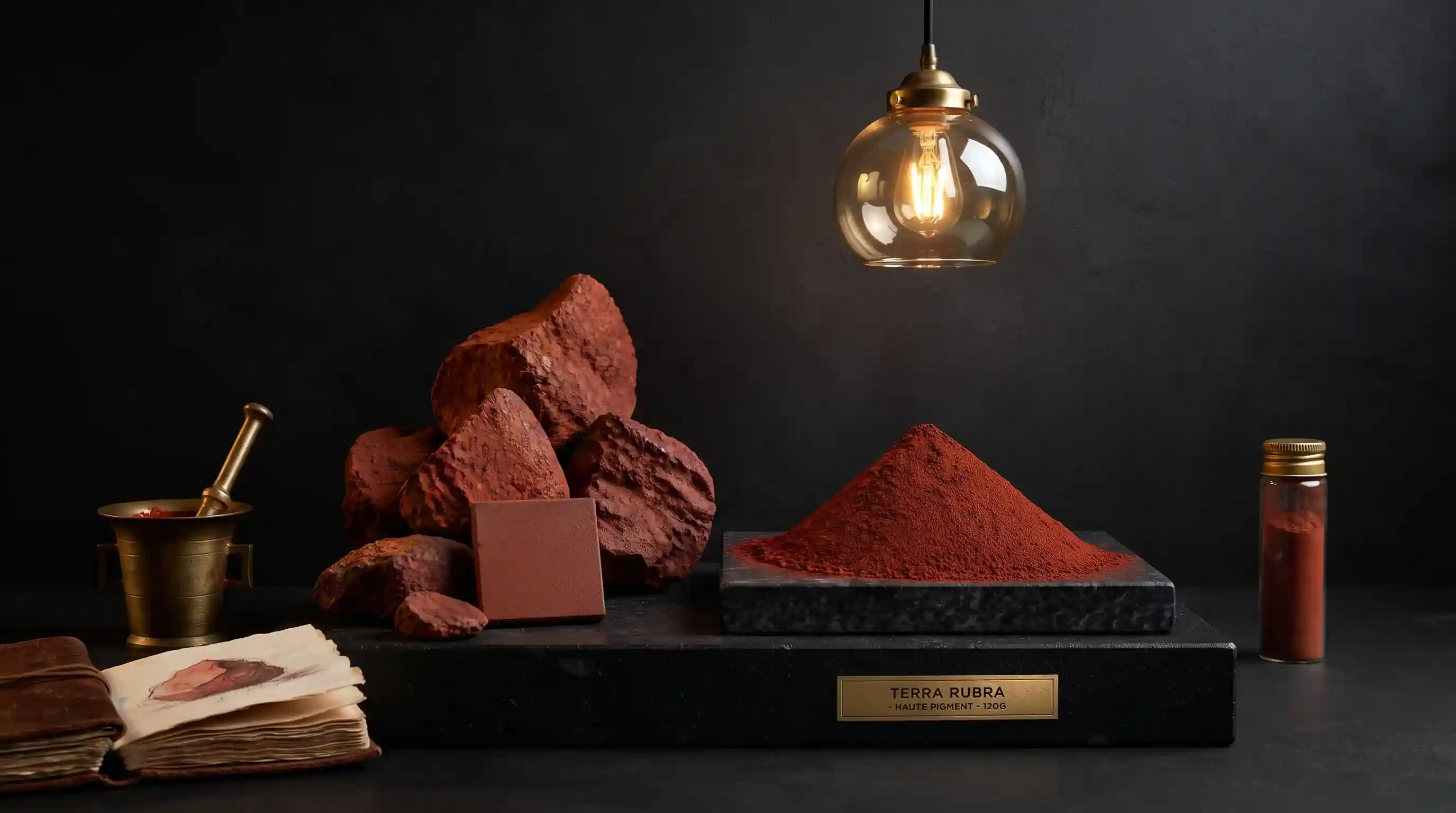
The Role of Red Iron Oxide (Ochre) in Glass Manufacturing Industries
Introduction to Red Iron Oxide (Ochre) and Its Characteristics
Red iron oxide, also known in the mining and industrial markets as Hormuz red ochre, is one of the most important mineral pigments that holds a special place in various industries due to its unique chemical and physical properties. This valuable mineral is recognized as a stable natural pigment that exhibits extremely high resistance to environmental and atmospheric factors. Since the final color and quality of many industrial products depend on the quality of the pigments used, a precise understanding of the characteristics of this material becomes doubly important.
In the field of industrial production, Kani Sang Amiran Project — Mineral Production has undertaken the processing and supply of this high-quality product. The mesh size range of this mineral powder varies between 450 and 1500 mesh, which allows it to be used in diverse applications requiring fine softness and precise granulation. The high quality and proper purity of this material make it an ideal choice for the paint manufacturing, coating, and building materials production industries.
Another prominent feature of this mineral powder is its exceptional color stability against sunlight and ultraviolet rays. This feature ensures that final products containing this material do not experience discoloration or degradation in quality over time. The use of advanced technologies in grinding and micronizing this material has resulted in a uniform and homogeneous powder that easily disperses and distributes in various matrices.
To become more familiar with the variety of functional minerals used in different industries, you can take a look at What is the Important Application of Dolomite in Construction and Manufacturing Industries, which provides useful information about construction minerals. However, red ochre still stands out as a base pigment in many industrial formulations and plays a key role in improving the appearance and mechanical properties of final products.
The Role of Red Iron Oxide (Ochre) as a Pigment in the Paint and Resin Industry
One of the main and vital applications of red iron oxide (ochre) is its use as a colorant or pigment in the paint manufacturing and industrial coatings industry. Due to its high tinting strength, excellent coverage, and non-toxic nature, this material is considered one of the most widely used mineral pigments in the world. The micronized powder of this material easily disperses in various solvent-based and water-based resins, creating a vibrant, stable, and durable color.
Kani Sang Amiran Project — Mineral Production supplies this product in various meshes from 450 to 1500 mesh, where for the paint and coating industry, the use of finer meshes (such as 1500 mesh) is very common due to creating a smoother and more uniform surface. Industrial coatings produced with this pigment feature high resistance to corrosion, rust, and harsh weather conditions, which significantly increases the lifespan of metal structures.
Alongside iron oxide pigments, other minerals are also used in the coating and insulation industries, familiarity with which is quite worthwhile. For example, reviewing related articles can provide formulator engineers with an open perspective. The chemical stability of this pigment against weak acids and alkalis has led to its frequent use in traffic paints, anti-rust coatings, and marine coatings.
The correct choice of mesh and granulation of this material has a direct impact on the viscosity, gloss, and coverage rate of the final paint. Paint formulation experts can utilize the high-quality powders supplied by Red Iron Oxide (Ochre) to produce products with high standards and long-lasting durability that effectively respond to the demands of the industrial market.
Application of Red Iron Oxide in Cement and Colored Concrete Manufacturing Industries
The cement and concrete industry is another major consumer field of red iron oxide (ochre). In the production of colored cements, colored concrete blocks, mosaics, concrete flooring, and street curbs, there is a need for a mineral pigment that simultaneously possesses a beautiful and lasting color, is compatible with the cement structure, and does not reduce its mechanical strength. Due to its stability in alkaline cement environments, this mineral pigment is a flawless choice for this industry.
When this powder with a mesh range of 450 to 1500 is added to the cement mixture, its fine particles thoroughly penetrate the empty space between the cement grains and, in addition to uniform coloring, help achieve greater density and reduce concrete permeability. This feature helps increase the durability of concrete against freeze-thaw cycles and water penetration, upgrading the quality of colored concrete structures.
Alongside this application, other minerals also play a role in the construction and pipe-making industries. For instance, studying the article The Role of Calcium Carbonate in Plastic Pipe Manufacturing provides valuable information on the application of fillers in polymeric and construction products. However, in the field of colored concretes, red ochre remains the undisputed king of creating various shades of red and brown.
The precise use of a specific amount of this pigment in concrete batching requires continuous quality control so that the final color remains uniform and no compressive strength drop occurs. Precast concrete product manufacturing units can impart a beautiful appearance and high durability to their products by using standard products.
The Role of Red Iron Oxide (Ochre) in Ceramic and Tile Manufacturing Products
The ceramic and tile manufacturing industry has long been a major consumer of mineral pigments. Due to its suitable melting point and high thermal stability, red iron oxide (ochre) is used as a colorant and property modifier in the body and glaze of ceramic products. This material can create a wide range of colors from bright red to dark brown in ceramic firings.
Kani Sang Amiran Project — Mineral Production supplies the tile and ceramic factories with homogeneous, impurity-free powders by offering this product across various mesh ranges. The fine-grained nature of these powders (especially in high meshes such as 1500) helps the pigment completely dissolve in the ceramic clay or glaze, preventing spotting or color inhomogeneity.
In addition to coloring, the physical properties of minerals in insulation and ceramic industries are of great importance. For example, in industries related to insulation production, reviewing the article Industrial Barite Applications in Sound and Thermal Insulation can reveal new dimensions of mineral applications. In ceramics manufacturing as well, the combination of iron oxide with other industrial clays helps improve firing properties.
Controlling impurities such as free lime or coarse silica in these powders is extremely crucial so that no issues are caused to the ceramic body during firing in high-temperature kilns. The use of premium red iron oxide guarantees the quality consistency of ceramic products in mass production lines.
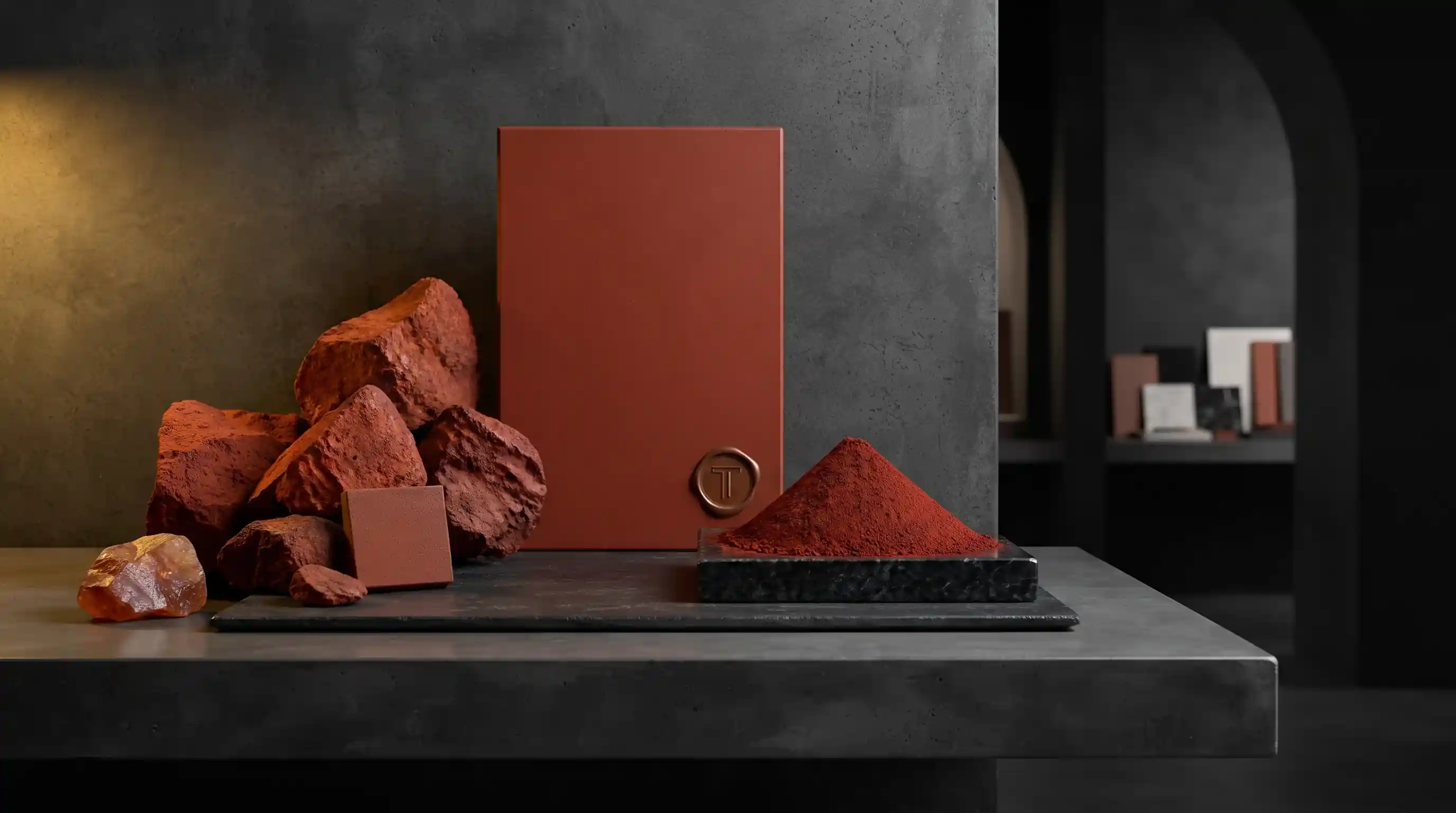
Technical Review of the 450 to 1500 Mesh Range and the Importance of Micronization
The granulation and mesh of mineral powders are among the key parameters in determining their application and final quality. Red iron oxide (ochre) is processed and supplied in the 450 to 1500 mesh range. This wide range allows industrialists to choose the appropriate mesh according to their technology type and equipment. Mesh 450 is suitable for applications requiring coarser particles, while high meshes like 1500 are produced in a fully micronized form.
The micronization process requires advanced equipment such as jet mills or Raymond mills, which can reduce particles to micron dimensions. Increasing the specific surface area of particles in high meshes leads to increased tinting strength, improved coverage, and better dispersion in liquid and polymeric systems. This maximizes the efficiency of the pigment.
In coating and paint manufacturing industries, the finer the powder particles, the higher the gloss and surface smoothness of the coating, preventing rapid particle settlement during storage. Kani Sang Amiran Project — Mineral Production utilizes modern granulation equipment to supply the market with a uniform product featuring an appropriate particle size distribution.
Mesh size precision also has a direct impact on the viscosity of paints and ceramic slurries. Therefore, a precise understanding of process requirements and choosing the optimal mesh is the key to success in using this valuable mineral material.
Applications and Benefits of Using Red Iron Oxide in Advanced Coating Industries
Advanced industrial coatings require pigments with exceptional mechanical and chemical properties. Due to its stable mineral structure, red iron oxide (ochre) plays an important role in the production of anti-rusts, industrial primers, metal structure coatings, and oil and gas transmission pipelines. This pigment acts as a corrosion inhibitor and prevents the penetration of moisture and corrosive agents to the metal surface.
The use of micronized powder of this material in electrostatic powder coating formulations is also very common. Powder coatings are widely popular due to the absence of solvents and their environmental friendliness, and the presence of high-quality pigments such as red iron oxide in them guarantees color stability and impact resistance.
Kani Sang Amiran Project — Mineral Production helps industrial coating manufacturers achieve the highest quality standards by supplying this pigment in fine meshes. The suitable thermal stability of this material also allows it to be utilized in fireproof and high-temperature-resistant paints.
Overall, the combination of anti-corrosion properties, optical stability, and high tinting strength makes this material an unrivaled choice in the coating industry, bringing high economic value to consumer industries.
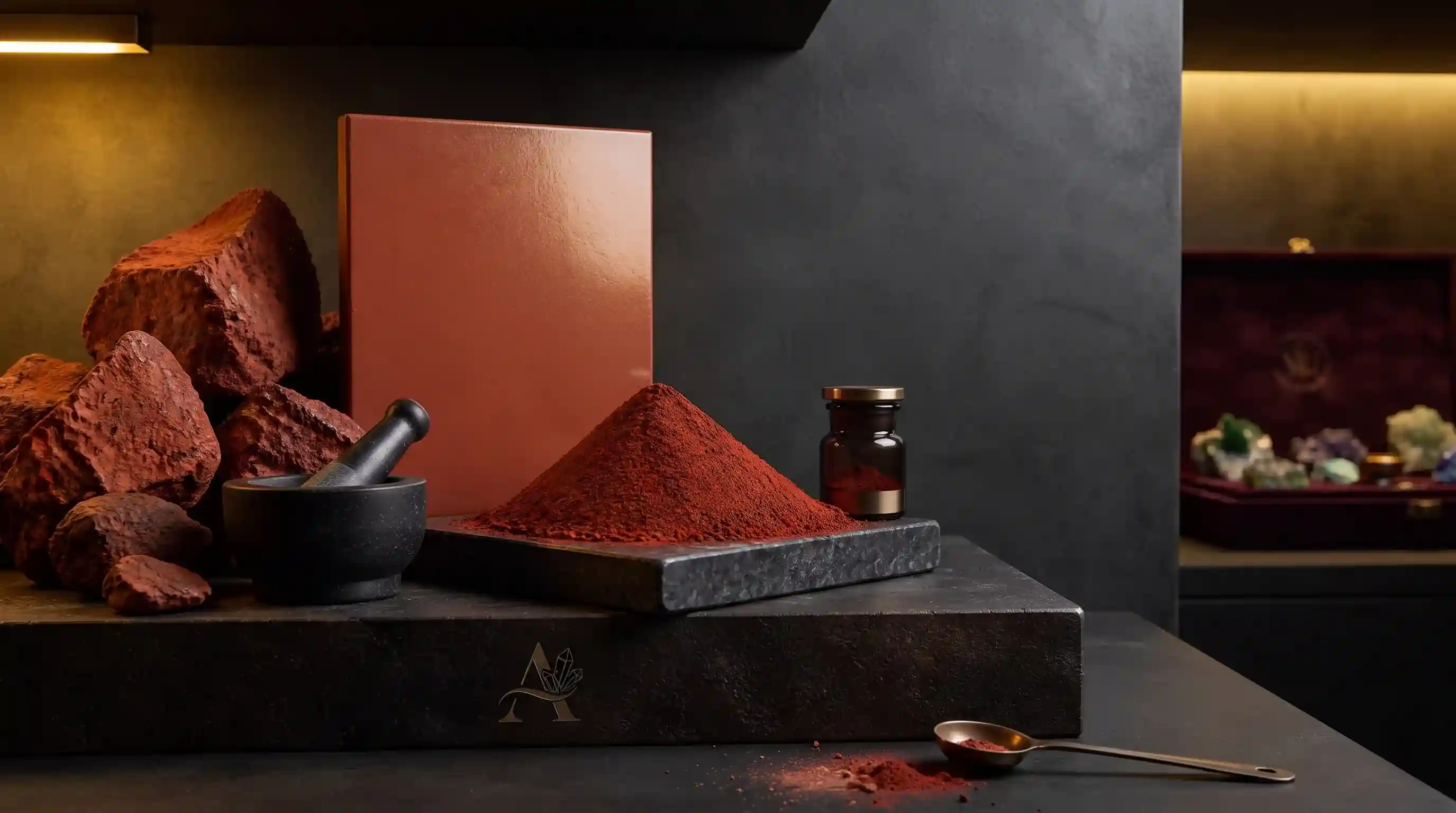
Quality Standards and Quality Control in Ochre Production and Processing
The industrial production of red iron oxide (ochre) requires strict adherence to quality control standards at all stages; from the extraction of raw ore from the mine to the crushing, grinding, dispersion, and final packaging stages. Iron purity level, iron oxide percentage (`Fe2O3`), moisture content, loss on ignition, and particle size distribution are among the parameters continuously measured in laboratories.
The presence of harmful impurities such as sulfates, chlorides, or heavy metals can severely affect the quality of consumer products (such as paint or ceramics). Therefore, precise processing and mineral washing when necessary are of high importance to deliver a high-purity product to the customer.
By establishing stringent quality control systems, Kani Sang Amiran Project — Mineral Production strives to supply the market with a stable and homogeneous product featuring a mesh range of 450 to 1500. This quality consistency gives customers peace of mind that they will not encounter unwanted changes in their industrial formulations.
Compliance with packaging standards is also very important to prevent moisture absorption and powder caking during storage. Standard and durable packages preserve the initial product quality until final consumption.
Market Outlook and Economic Benefits of Using Mineral Red Iron Oxide
The global and domestic market for mineral pigments always faces high demand due to the growth of the construction, paint, and coating industries. As a natural pigment, red iron oxide (ochre) offers significant economic advantages compared to synthetic and chemical pigments, noticeably reducing the finished product cost for manufacturers.
The use of domestic mineral resources and their processing by reputable companies such as Kani Sang Amiran Project — Mineral Production has facilitated the country's industries' access to premium raw materials and minimized dependence on foreign pigment imports. This greatly helps support national production and industrial leaps.
With the development of modern technologies in producing high-mesh micronized powders, the quality of Iranian mineral products has grown closer to global standards. Paint, cement, and ceramic industry manufacturers can purchase Red Iron Oxide (Ochre) to optimize production costs while improving product quality.
Ultimately, investing in research and development and deeply understanding the needs of consumer industries paves the way for upgrading the applications of this valuable material and entering new regional and international markets.
| Question |
Answer |
| What is red iron oxide (ochre)? |
It is a natural mineral pigment with high stability used in the paint, cement, coating, and ceramic industries. |
| What is the mesh range of this mineral powder? |
This product is processed and supplied in a mesh range of 450 to 1500. |
| What are the main applications of red ochre? |
Pigments, industrial coatings, colored cement, and ceramic products are among its main applications. |
| Is this material resistant to sunlight? |
Yes, it features exceptional color stability against light and UV rays. |
| What is the role of this material in the cement industry? |
It is used for producing colored cement, colored concretes, increasing density, and reducing concrete permeability. |
| Why is 1500 mesh more suitable for paint manufacturing? |
Due to being micronized, it provides better coverage, gloss, and dispersion in color systems. |
| Does this pigment have anti-corrosion properties? |
Yes, it performs excellently as an anti-rust and primer in metal coatings. |
| How can this product be procured? |
It can be ordered through the dedicated product page on the Kani Sang Amiran website. |
| What factors determine the quality of ochre? |
Iron oxide purity, absence of harmful impurities, and particle size distribution (mesh). |
| Is this powder safe for the environment? |
Yes, it is recognized as a non-toxic, eco-friendly natural mineral pigment. |
Kani Sang Amiran Project — Mineral Production, specialized reference for mineral and industrial material processing and supply.
:: برچسبها:
Red Iron Oxide (Ochre) ,
The Role of Red Iron Oxide (Ochre) in Glass Manufacturing Industries ,
:: بازدید از این مطلب : 0
|
امتیاز مطلب : 0
|
تعداد امتیازدهندگان : 0
|
مجموع امتیاز : 0


 عضو شوید
 عضویت سریع
 آمار مطالب
 آمار بازدید


