
Analysis of the Chemical Composition of Pure Calcium Carbonate Powder
Introduction to Chemical Analysis and the Importance of Calcium Carbonate
Examining the chemical analysis of pure calcium carbonate powder is recognized as one of the most fundamental steps in the mineral and chemical industries. This valuable material, which is used as a strategic filler and additive in various manufacturing sectors, requires a precise understanding of its composition, purity, and physical specifications. In various industries, the final product quality has a direct dependency on the characteristics of this mineral powder. Kani Sang Amiran project, focusing on principled extraction and processing, supplies this material to the market with standard technical specifications.
A precise understanding of the properties of this material is only achievable through laboratory testing and accurate analyses. In today's modern industries, using high-quality raw materials creates a noticeable difference in the final product quality. For more familiarity with supply details and technical characteristics, you can visit the dedicated page for calcium carbonate to obtain more comprehensive information about this product.
In this specialized article, an effort is made to evaluate all dimensions related to chemical analysis, particle size distribution, and industrial applications of this mineral material. Given the importance of chemical purity in sensitive industrial processes, a careful review of quality parameters helps manufacturers make the best choice for their production lines.
Chemical Composition and Purity Parameters of Calcium Carbonate
The chemical formula of calcium carbonate (CaCO3) indicates the presence of three main elements: calcium, carbon, and oxygen. However, in natural mineral samples, amounts of accompanying impurities such as magnesium oxide, silica, iron oxide, and alumina may also be present in minor quantities. The purity level of this powder is measured based on the percentage of contained calcium carbonate, and the lower the percentage of impure elements, the higher the quality and grade of the powder.
One of the main challenges for buyers is diagnosing the authenticity and quality of this mineral material. To ensure purity, appearance, and chemical characteristics, studying specialized guides is of great importance. In this regard, reading the article How to identify original calcium carbonate powder? provides practical and useful information for industrial activists.
Precise chemical analysis shows that pure powder must have a minimum moisture content, standard thermal loss, and a homogeneous particle distribution. The presence of heavy elements or colored impurities can disrupt sensitive applications such as paint manufacturing or white polymer production; therefore, chemical quality control is of vital importance at all production stages.
The Role and Importance of Mesh Range in Mineral Powder Quality
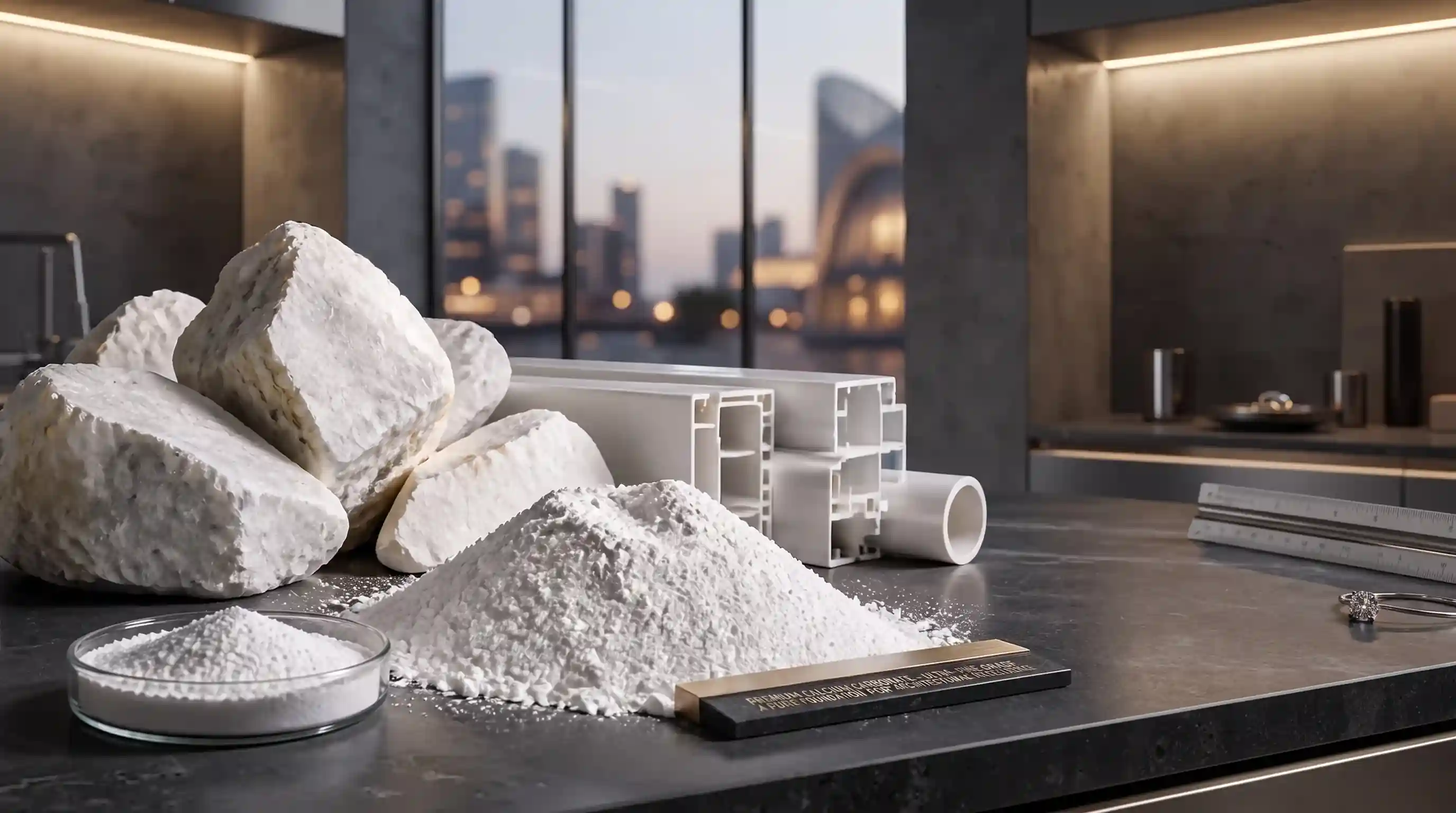
The physical specifications of mineral powder depend on its particle size and mesh range. This product is processed and supplied in the 100 to 3500 mesh range, each of which is utilized for a specific application in engineering and chemical industries. Lower mesh (coarser) particles are usually used in industries requiring high mechanical strength and reduced shrinkage, whereas ultra-fine meshes (up to 3500 mesh) find applications in the production of thin masterbatches, polymer films, and high-quality paints.
Themicronizing and milling process of mineral rocks requires advanced equipment to achieve a uniform and standard particle size distribution. A precise understanding of mesh grading standards in various products helps designing engineers formulate more optimal formulations. Along these lines, studying the specialized article Reviewing standard mesh grading in various coated calcium carbonates helps in better understanding particle physical behavior and dimensional standards.
Fine-tuning the powder mesh directly affects viscosity, thermal stability, and optical properties of the final product. For instance, in the papermaking industry, fine particle size improves paper brightness and surface smoothness, whereas in polymer pipes, the appropriate mesh improves impact resistance.
Coating and the Effect of Stearic Acid in Coated Grades
In many polymer and engineering applications, the coated type of this powder is used. The coating process is usually performed using stearic acid to dramatically increase water repellency and the powder's compatibility with polymer matrices. This surface modification ensures that mineral particles disperse well within the plastic or resin bed and prevents them from agglomerating.
For a deeper understanding of the chemical mechanisms of this process, examining the bonding nature between stearic acid molecules and the calcium particle surface is important. In this regard, studying the article Reviewing the effect of stearic acid in coating calcium carbonate thoroughly explains the scientific and technical details of this surface phenomenon.
The presence of the stearic acid coating layer improves polymer melt flowability during extrusion and plastic injection processes. This not only upgrades the appearance quality of manufactured parts but also extends the lifespan of production equipment due to reduced internal friction.

Industrial Applications in Polymer, Pipe, and PVC Profile Industries
Polymer industries and PVC products are among the largest consumers of calcium carbonate powder. This material is used as a cost-effective filler and mechanical properties enhancer in the production of PVC/UPVC profiles and pipes, masterbatches, and various electrical cables. Adding this powder to polymer pipe formulations increases the elasticity modulus, improves dimensional stability, and reduces the final product cost.
In the production of polymer masterbatches, the uniform distribution of mineral particles within the carrier polymer is extremely vital. Using powders with high purity and proper mesh grading prevents the formation of weak points in the structure of films and plastic parts. Kani Sang Amiran project, by supplying this high-quality mineral material, fulfills the country's polymer industries' requirements in an optimal manner.
In addition to pipes and profiles, in the electrical cable manufacturing industry, this powder is also used as a heat-resistant filler and electrical insulator. Precise control of the chemical analysis of this material in the cable manufacturing industry prevents any conductive impurities or moisture from entering the insulation structure.
Application in Paint, Paper, Adhesive, and Artificial Leather Industries
The paint and coating industry is another key domain where calcium carbonate powder functions as an extender pigment and filler. Due to its high whiteness, this material enhances paint brightness and acts as an agent to adjust glossiness and opacification of the paint film. Furthermore, in the papermaking industry, this material is used as a filler and surface coating to increase whiteness, printability, and reduce cellulose pulp consumption.
In the adhesive and sealant manufacturing industries, this mineral powder plays a role as a viscosity regulator and shear adhesion strength improver. The non-interference of this material with other chemical compounds of the adhesive increases the product's storage stability. Additionally, in artificial leather manufacturing, it is applied as a filler in PVC and polyurethane foams to create the desired texture and reduce production costs.
The combination of suitable physical properties and high chemical purity has given this material a special position in all these specialized applications. Continuous monitoring of the particle size distribution and analysis of this powder guarantees its optimal performance in the aforementioned industries.
Application in Engineered Stone and Advanced Engineering Products
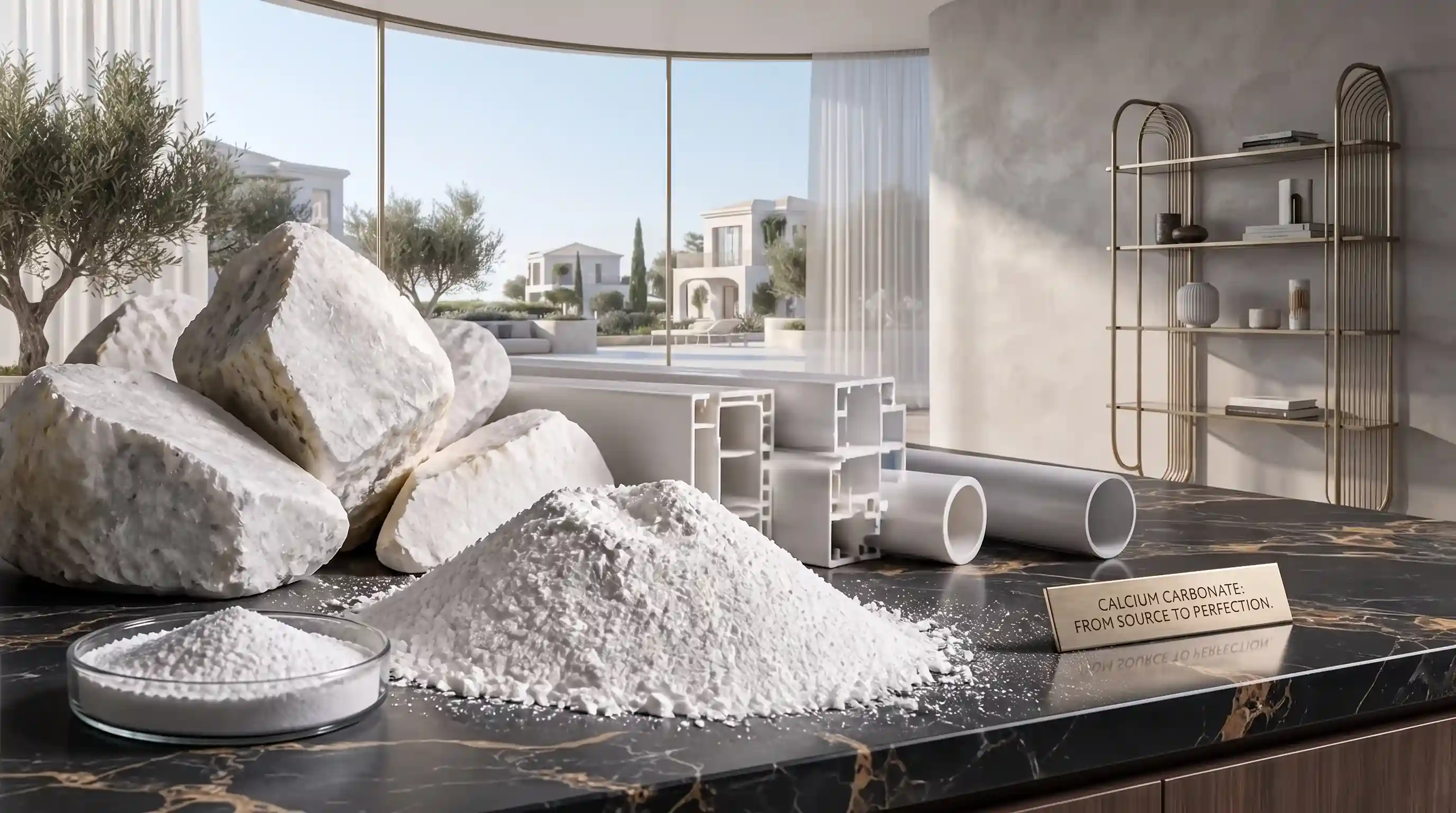
Artificial Stone is among the modern construction and decorative products whose main structural base consists of calcium carbonate powder. In this industry, mineral particles are combined with polymeric resins (such as polyester or epoxy) and color pigments to produce slabs with a natural stone appearance but with significantly higher mechanical and chemical resistance.
Characteristics such as very low water absorption, resistance to impact and scratching, and variety of designs and colors in engineered stones heavily depend on the quality and particle size of the consumed powder. Particles with suitable dimensional distribution help resins completely fill spaces and prevent any voids from forming within the stone structure.
The use of this mineral material in engineered products, besides improving technical properties, is considered an eco-friendly option due to resource abundance and sustainable processing. Technical experts, by carefully reviewing chemical and physical analyses, determine optimal mixing ratios to achieve the highest quality standards in engineered stone.
Conclusion and Selection Guide for High-Quality Calcium Carbonate Powder
In this comprehensive article, various dimensions of chemical analysis and industrial applications of calcium carbonate powder were discussed and reviewed. It became clear that chemical purity, mesh range from 100 to 3500, and coating type are among the most important determining factors of this mineral material's quality across various industries such as PVC pipes and profiles, paint, paper, artificial leather, and engineered stone.
Correct selection of raw material tailored to the needs of each industry will guarantee the quality and durability of the final product. Kani Sang Amiran project, by providing standard mineral products, has established a suitable foundation for supplying the needs of esteemed manufacturers. Paying attention to precise technical specifications, performing quality control tests, and cooperating with reputable suppliers are the keys to success in optimizing industrial formulations.
It is hoped that this specialized review can provide a clear perspective to engineers, researchers, and industrial managers regarding the selection and optimal utilization of this valuable material. Adhering to quality standards in all production and processing stages will bring high added value to consuming industries.

| Question |
Answer |
| What is the mesh range of calcium carbonate powder? |
This powder is processed and supplied in the 100 to 3500 mesh range. |
| What are the main applications of this mineral material? |
PVC/UPVC profiles and pipes, masterbatch, cables, artificial leather, paint, paper, adhesive, and engineered stone. |
| What is the chemical formula of calcium carbonate? |
The chemical formula of this material is CaCO3. |
| Why is the coated type used in some applications? |
To increase water repellency and better compatibility with polymer matrices using stearic acid. |
| Is this powder used in the paint manufacturing industry? |
Yes, it is used as an extender pigment, gloss modifier, and opacifying agent. |
| What is the role of this material in engineered stone production? |
It is used as the primary filler combined with polymeric resins to manufacture resistant slabs. |
| Which entity is the supplier of this product? |
Kani Sang Amiran project. |
| How can the authenticity of the powder be identified? |
Through examining chemical analysis, thermal loss, and purity laboratory tests. |
| What factors affect the quality of polymer masterbatch? |
High chemical purity and homogeneous distribution of micronized particles. |
| Why is moisture control important in this powder? |
High moisture can cause bubbles and a drop in quality in polymer and paint processes. |
Kani Sang Amiran Project — Reference for the production and processing of mineral and industrial materials.
:: برچسبها:
Calcium Carbonate ,
Analysis of the Chemical Composition of Pure Calcium Carbonate Powder ,
:: بازدید از این مطلب : 0
|
امتیاز مطلب : 0
|
تعداد امتیازدهندگان : 0
|
مجموع امتیاز : 0


 عضو شوید
 عضویت سریع
 آمار مطالب
 آمار بازدید


