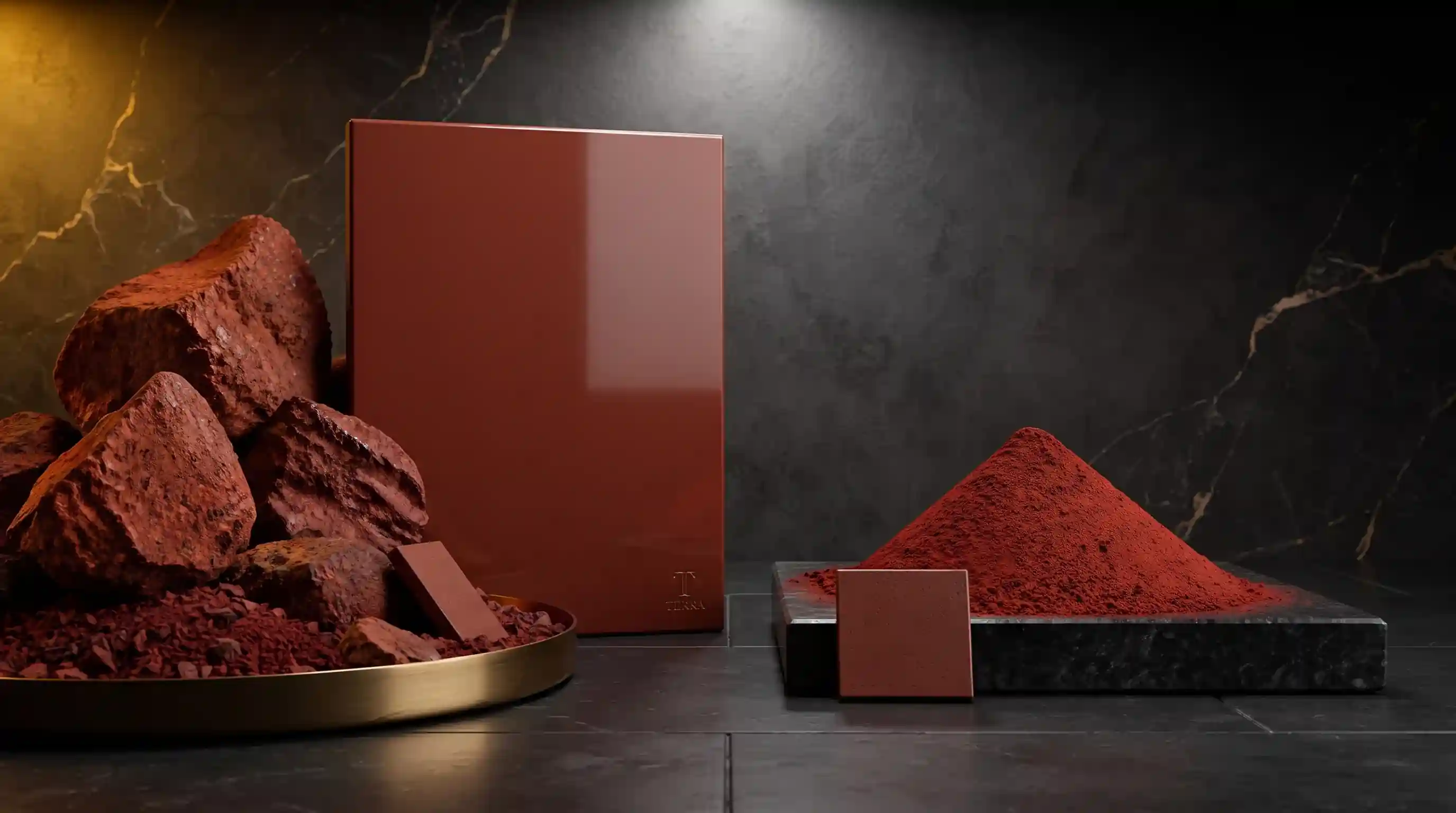
Application of Red Iron Oxide (Ochre) in Ink and Paint Manufacturing
Introduction to Red Iron Oxide (Ochre) and Its Importance in the Ink and Paint Industry
The ink and printing ink manufacturing industry is a specialized field where the choice of raw materials plays a decisive role in the final product quality. Among all mineral and synthetic pigments, red iron oxide (ochre) is recognized as one of the oldest, most stable, and most efficient natural and mineral pigments. Featuring unique physical and chemical properties, this remarkable material has secured a special place in the formulation of various printing inks, writing inks, and industrial inks. A precise understanding of this pigment's structure helps formulators produce inks with excellent coverage, high lightfastness, and long-lasting durability. From ancient times to the present day, ochre has always been a symbol of color stability and permanence, and today, with advances in grinding and micronization technologies, its efficiency has increased more than ever.
In the ink manufacturing process, multiple factors such as particle size, tinting strength, solvent resistance, and purity levels are important. Red iron oxide provides high flexibility for manufacturers by offering a mesh range of 450 to 1500 mesh, allowing them to use the appropriate granulation for every type of application, from fine printing to heavy industrial coatings. In this comprehensive article, we examine the various dimensions of using this valuable material and place its role in different industries, especially ink production, under the microscope. Also, to learn more about related mineral products, you can visit the red iron oxide (ochre) page and read its complete specifications.
As a leading supplier in the field of minerals, Kani Sang Amiran Project covers the needs of various industries by providing high-quality and standard products. In addition to the wide applications of this material in pigmenting, coating, cement industries, and ceramic products, examining the synergistic effects of other minerals is also important in materials engineering. For example, studying the application of limonite oxide (yellow ochre) in precast materials provides a broader perspective on the iron oxide family. In the continuation of this article, we will examine in detail the technical aspects, particle distribution, economic benefits, and challenges of ink formulation using ochre to provide a comprehensive guide for professionals in this field.
Physical and Chemical Properties of Red Iron Oxide (Ochre) on a Micronized Scale
The physical and chemical properties of red iron oxide (ochre) are the primary determinants of its behavior when mixed with resins, solvents, and additives present in inks and paints. One of the most important parameters in this regard is the mesh range of the material. This product is supplied in a mesh range of 450 to 1500 mesh, which indicates its fine-grained nature and high micronization quality. Particles in this size range have a suitable specific surface area that significantly helps improve dispersion in solvent-based and water-based systems. Uniform particle size distribution prevents aggregation and agglomeration, thereby preventing nozzle clogging or unwanted lines in high-precision printing.
Chemically, this material has a stable structure that acts neutrally against various weather conditions, ultraviolet (UV) radiation, and chemical reactions. This chemical stability ensures that inks produced with this pigment exhibit exceptional resistance to discoloration caused by sunlight and environmental factors. High tinting strength is another prominent feature of this pigment, allowing formulators to achieve the desired color intensity using a smaller amount of material. This feature is not only economically cost-effective but also prevents an excessive increase in the viscosity of the ink.
In addition to the ink industry, the peerless properties of this material have made it recognized as a standard raw material in other fields such as pigments, coatings, cement, and ceramic products. The high thermal stability of this pigment allows it to function without loss of quality or color phase change in ceramic firing processes and the production of building materials that require high temperatures. The chemical composition of this material is free of harmful impurities, which guarantees the safety and health of working with it in manufacturing plants. A detailed examination of these parameters helps engineers design more optimal formulations, which we will discuss in detail in subsequent sections.
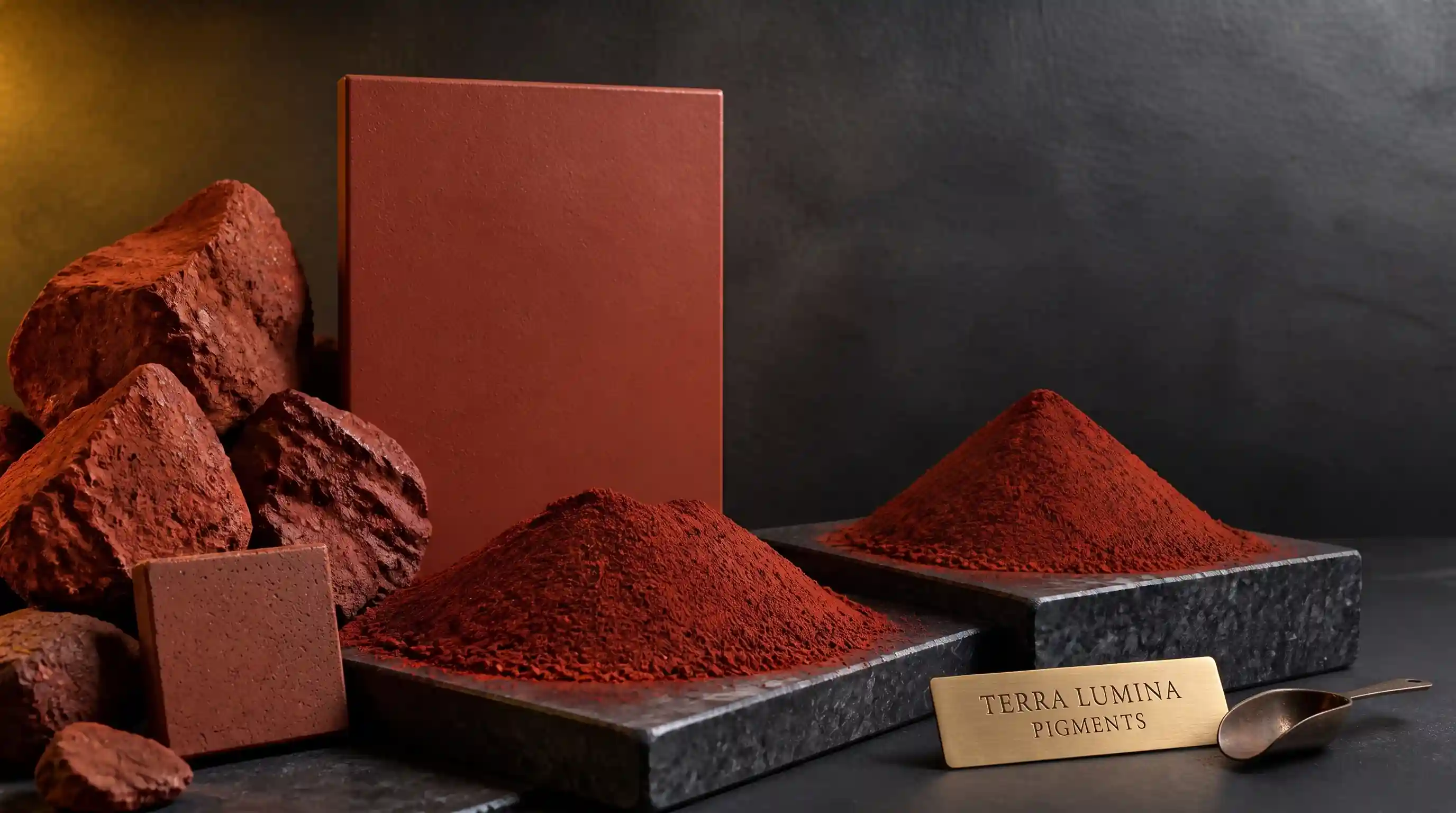
The Role of Red Iron Oxide (Ochre) as a Pigment and Colorant in the Printing Industry
The printing and ink manufacturing industry heavily depends on a pigment capable of producing vivid, stable color and uniform coverage. Recognized as a well-known natural and synthetic mineral pigment, red iron oxide (ochre) provides a wide spectrum of color tones ranging from red to reddish-brown, finding applications in various newsprint, carton, packaging, and industrial printing inks. The warm and pleasant undertone of this material results in very attractive and natural visual outcomes when combined with other colorants, which is crucial for packaging various products.
When this pigment with 450 to 1500 mesh is used in ink formulation, its fine particles can easily penetrate between paper fibers or the pores of the printing substrate, forming a thin, homogeneous, and resistant layer. This feature prevents ink bleeding during printing and maximizes the clarity of lines and text. Furthermore, the gloss and final appearance of the print are improved due to the homogeneous particle distribution. Excellent resistance to color migration and non-solubility in common ink solvents are other competitive advantages of this pigment compared to organic options, which usually have lower resistance to light and heat.
The use of stable mineral pigments plays a key role in modern packaging industries, where products are exposed to various warehousing conditions. Alongside ink, the primary applications of this material include pigments, coatings, cement, and ceramic products, all of which testify to the versatility of this valuable mineral. Understanding the mechanism of pigment interaction with binders and resins present in the ink is the key to achieving a high-quality final product. By utilizing the purity and uniformity of this mineral material, manufacturers can produce inks with international standards that hold a strong position in today's competitive market.
Formulation and Production Technology of Various Inks Using Ochre
Ink and paint formulation is a precise engineering process in which the exact ratio of pigment, resin, solvent, and additives determines the final performance of the product. In the manufacturing of solvent-based or water-based inks using red iron oxide (ochre), the dissemination and milling stage is of vital importance. Given that the mesh range of this product is 450 to 1500 mesh, using appropriate equipment such as ball mills, triple-roll mills, or sand mills can best break down the particles and encapsulate them within the resin bed.
In this process, selecting the appropriate binder or resin to wet the iron oxide particles is crucial to prevent particle re-agglomeration. Anti-caking additives and dispersants are used alongside this mineral pigment to increase the storage stability of the ink and keep the product viscosity constant over time. The pigment loading in the formulation must be adjusted such that both the desired tinting strength is achieved and the flow properties of the ink are maintained for application with various printing machinery. This delicate balance requires experience and mastery of materials science.
Mineral material manufacturers such as Kani Sang Amiran Project provide a suitable foundation for formulation engineers by offering standard products, allowing them to comfortably benefit from the consistency of raw material quality. In addition to the ink industry, understanding the behavior of minerals in other industries can also inspire the improvement of manufacturing processes; for example, examining what is the important application of dolomite in construction and manufacturing industries clearly shows how careful selection of minerals can revolutionize the efficiency of final products. Consequently, the principled application of red iron oxide in ink making yields a durable, colorful, and high-quality product that meets the demanding requirements of today's printing industry.

Industrial Coatings and Ink Resistance to Environmental Conditions
One of the major challenges in the printing and surface coating industry is protecting the paint or ink layer against destructive environmental factors such as continuous sunlight exposure, moisture, temperature changes, and chemicals. Due to its inherent mineral structure, red iron oxide (ochre) exhibits extraordinary performance in enhancing the resistance of inks and coatings. This pigment acts as a protective shield and prevents the degradation of substrate resins by ultraviolet radiation. Consequently, inks printed with this material do not experience fading or peeling even outdoors and under harsh weather conditions.
High heat resistance is another prominent feature that makes this pigment ideal for inks used in specialized and industrial applications. In processes requiring thermal curing of ink or paint, red iron oxide undergoes no phase change and retains its original color. This thermal and chemical stability significantly increases the lifespan of printed products. In addition to inks, this material is widely used in primary application categories including pigments, coatings, cement, and ceramic products, demonstrating its high adaptability to various matrices.
The development of specialized insulation and coatings requires the use of fillers and pigments that reinforce mechanical and thermal properties. In this regard, studying the industrial barite applications in sound and thermal insulation provides valuable information on the synergistic role of various minerals in improving coating performance. Combining this knowledge with the outstanding properties of red iron oxide allows manufacturers to supply coatings and inks with the highest quality and resistance standards to the market, enduring the harshest environmental conditions.
Diverse Applications of Red Iron Oxide in Cement Industries and Ceramic Products
Beyond the printing and ink manufacturing industry, red iron oxide (ochre) is recognized as a strategic mineral material in construction, colored cement production, and ceramic products. In the cement industry, adding this mineral pigment to concrete and white cement enables the production of products with attractive and stable colors, which are widely used in building facades, concrete flooring, and precast elements. Due to the extraordinary resistance of iron oxide to the alkaline environment of cement, the created color does not deteriorate or fade over time.
In the field of ceramics, this material is used as a powerful coloring agent in glazes and tile bodies, decorative ceramics, and earthenware vessels. The 450 to 1500 mesh range of this product helps particles completely dissolve in the ceramic glaze or be homogeneously distributed, creating a smooth, grain-free surface with a uniform color. The thermal stability of this pigment in the ceramic firing kiln ensures that the final color appears precisely in accordance with designed standards without any impurities or undesirable reactions occurring.
By supplying this high-quality product, Kani Sang Amiran Project has best fulfilled the needs of various industries, including tile and ceramic factories, colored cement producers, and the pigment manufacturing industry. A precise understanding of this mineral's properties, such as particle size and chemical purity, helps industrialists maximize the efficiency of their production lines. The integration of this material's applications across various industries shows that red iron oxide acts beyond a simple colorant, playing a key role in improving the durability and beauty of final products.
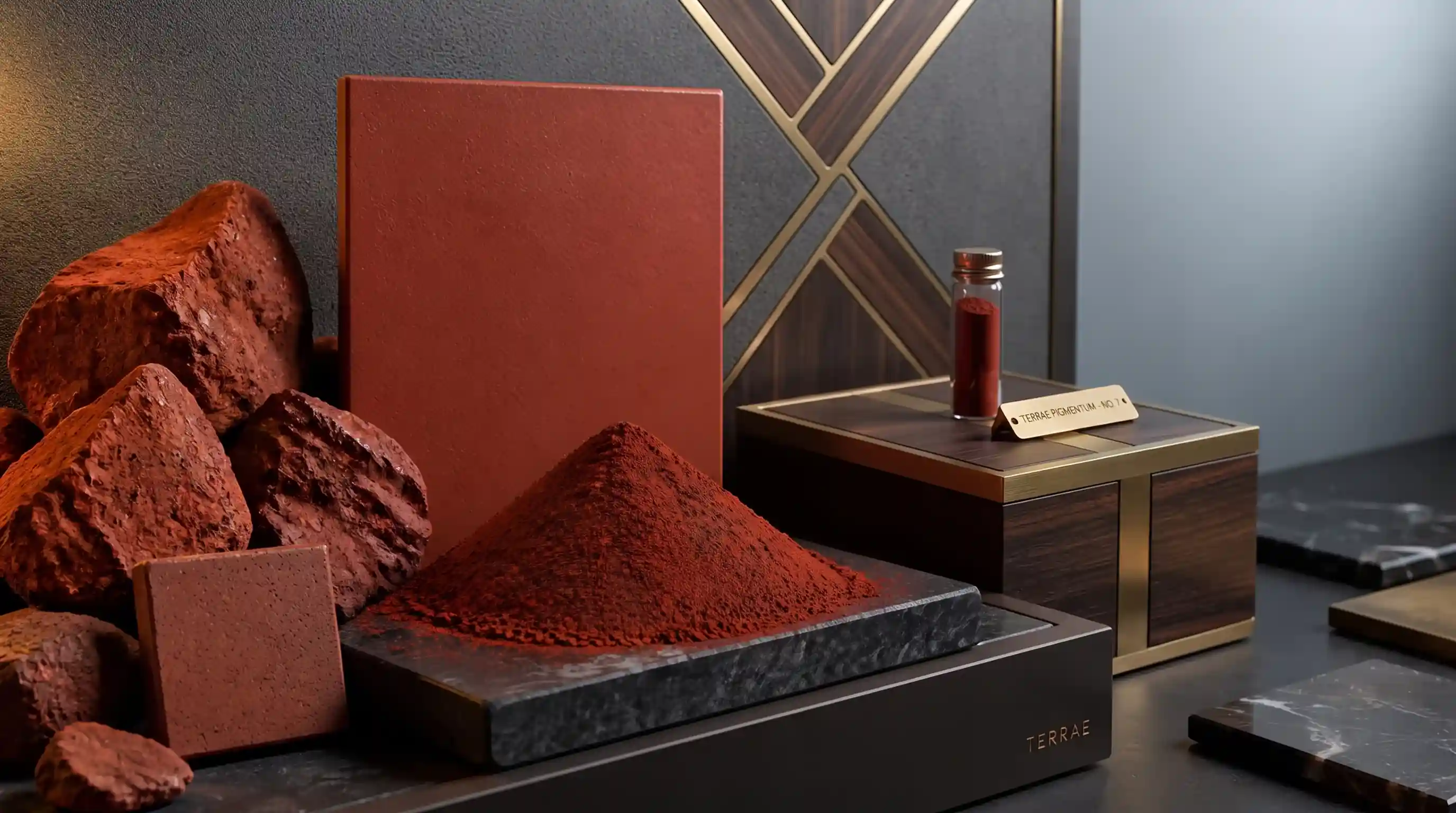
Economic Benefits and Challenges of Ink Formulation with Mineral Pigments
From an economic perspective, using red iron oxide (ochre) brings significant benefits for manufacturers of inks, printing inks, and industrial coatings. Compared to complex synthetic organic pigments, this natural and cost-effective mineral pigment significantly reduces final production costs without causing any noticeable drop in quality or performance. High tinting strength means formulators can achieve the desired coverage and color density with a lower weight percentage of pigment, which in turn helps optimize raw material costs.
However, ink formulation with mineral pigments also carries its own specific challenges. The higher density of iron oxide compared to certain organic materials may cause gradual particle settling during long-term storage. To overcome this challenge, using the appropriate mesh (450 to 1500 mesh range) and correctly selecting anti-settling agents and wetting agents in the formulation is essential. Strict viscosity control and ensuring uniform particle distribution during production stages guarantee product stability.
Complying with quality control standards at all stages of production, from mining extraction by Kani Sang Amiran Project to the micronization and packaging process, plays an important role in resolving these challenges. By being aware of these technical points, manufacturers can produce inks with high durability, excellent flowability, and a flawless appearance that stand out in today's competitive market. Ultimately, mastering formulation knowledge and accurately understanding the physical and chemical behavior of red iron oxide is the key to success in developing superior products.
Conclusion and Future Outlook for Using Red Iron Oxide in the Printing Industry
In this comprehensive article, various dimensions of applying red iron oxide (ochre) in the ink, printing ink, coatings, cement, and ceramic products industries were examined. Relying on prominent features such as unparalleled light and thermal stability, high tinting strength, chemical purity, and standard mesh range of 450 to 1500 mesh, this valuable pigment has secured its position as a primary and irreplaceable component in industrial formulations. The modern printing and packaging industry constantly requires raw materials that offer both high durability and visual appeal, and this mineral material best responds to these needs.
The future outlook of industries related to mineral pigments moves towards more optimized, eco-friendly, and higher-quality usage. Advancements in milling and micronization technologies have enabled the production of finer particles with a narrower size distribution, further enhancing the efficiency of red iron oxide in advanced digital and industrial printing inks. By continuing to supply high-quality and standard products, Kani Sang Amiran Project plays an important role in supporting domestic manufacturers and supplying the needs of mineral and chemical industries.
In conclusion, investing in formulation technical knowledge, carefully selecting raw materials suited to the final application, and paying attention to quality standards are the main strategies for success in the competitive ink manufacturing market. As a natural heritage combined with modern technologies, red iron oxide will continue to make industrial products more colorful and durable, remaining a reliable choice for engineers and industrialists.
| Question |
Answer |
| What is red iron oxide (ochre)? |
It is a natural and synthetic mineral pigment with high color stability, used in pigment, coating, cement, and ceramic industries. |
| What is the mesh range of red iron oxide? |
This product is supplied in a mesh range of 450 to 1500 mesh, micronized for various applications. |
| What are the main applications of red iron oxide? |
Main applications include pigments, coatings, cement, and ceramic products. |
| Why is ochre used in ink manufacturing? |
Due to high tinting strength, light stability, chemical resistance, and the creation of uniform coverage in printing ink. |
| Is this pigment resistant to heat? |
Yes, red iron oxide has high thermal stability and is used in ceramic firing processes and heat-resistant coatings. |
| What is the role of mesh range in ink quality? |
Finer mesh (up to 1500 mesh) helps better particle distribution, prevents agglomeration, and improves printing quality. |
| Does red iron oxide have applications in the cement industry as well? |
Yes, it is used to produce colored cement and decorative concrete with excellent color stability against alkaline environments. |
| How can complete information about this product be viewed? |
By visiting the product page on the Kani Sang Amiran website, you can review complete specifications. |
| What are the economic benefits of using this pigment? |
Reduction of production costs due to high tinting strength and lower consumption requirements compared to expensive organic pigments. |
| How can pigment agglomeration be prevented in ink? |
By using appropriate mesh, standard dispersants, and advanced milling equipment in the formulation process. |
Specialized Reference for Mineral and Industrial Materials, Kani Sang Amiran Project
:: برچسبها:
Red Iron Oxide (Ochre) ,
Application of Red Iron Oxide (Ochre) in Ink and Paint Manufacturing ,
:: بازدید از این مطلب : 0
|
امتیاز مطلب : 0
|
تعداد امتیازدهندگان : 0
|
مجموع امتیاز : 0

 عضو شوید
 عضویت سریع
 منوی کاربری

 آمار مطالب
 آمار بازدید


