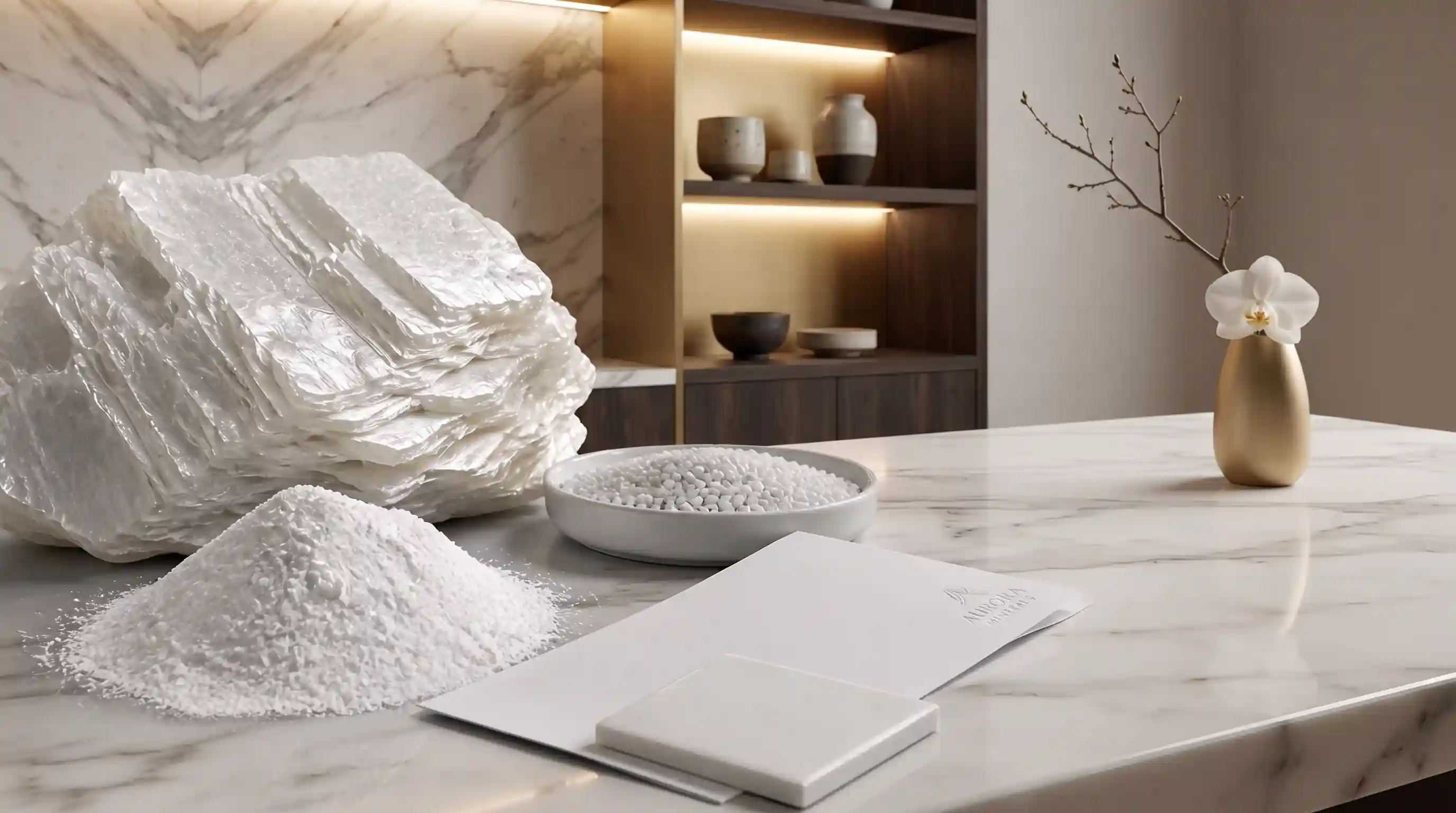
Application of White Talc in Papermaking and Coating Industries
Introduction to the Importance of White Talc in Industry
Introduction and initial understanding of mineral materials is one of the most fundamental steps in improving the quality of final products across various industries. Meanwhile, white talc is recognized as one of the most functional mineral fillers and pigments, playing a key role in diverse industries. With its flaky structure and unique physical and chemical properties, this material has secured a special position in manufacturing processes. Kani Sang Amiran project, as a mineral producer, supplies this product with the highest quality.
The prominent physical characteristics of this material, including softness, whiteness, and chemical stability, have made it useful as a performance-enhancing component in many industrial formulations. To learn more about the specifications and purchase of this product, you can visit the white talc page and obtain comprehensive information. In the continuation of this article, we intend to examine in detail the applications of this material in papermaking, coating, and other fields.
A precise understanding of the properties of this mineral helps engineers and formulation designers make a more optimal choice. The use of this material in advanced industries is increasing day by day, and examining its various application dimensions is of high importance.
The Role of White Talc in Improving Quality and Properties of Polymeric Products
The polymer industry and plastic part manufacturing always require fillers that, in addition to reducing production costs, also improve the mechanical and visual properties of the product. In this regard, the use of white talc as a common reinforcer in masterbatch and compound production lines is well-known. The mesh range of 450 to 2500 of this product allows for precise control of the physical properties of polymeric parts.
Improving flexural modulus, increasing dimensional stability, and enhancing surface quality are among the most important advantages of adding this mineral to polymers. For a deeper understanding of the positive effects of this material on product appearance, it is recommended to read the article regarding the role of white talc in improving the appearance quality of polymeric products to familiarize yourself with more technical details.
The correct choice of particle size, or granulation, plays a direct role in the uniform distribution of materials within the polymer matrix. By supplying a wide range of meshes required by the industry, the Kani Sang Amiran project thoroughly covers the needs of manufacturers.

Specialized Application of White Talc in the Papermaking Industry
The papermaking industry is considered one of the major consumers of minerals and fillers. In the paper production process, using suitable minerals to improve whiteness, surface smoothness, and printability is of vital importance. Due to its flaky structure, white talc positions itself well among cellulose fibers and fills the pores.
In addition to acting as a filler to reduce wood pulp consumption, this material is also recognized as an enhancer of paper opacity and whiteness. Furthermore, the relative water-repellent feature of this material significantly helps improve print quality and prevents ink bleeding on the paper surface. Using appropriate meshes of this material in papermaking reduces surface roughness and creates the desired smoothness in the final product.
By utilizing standard minerals, paper manufacturers can bring the quality of their products closer to global standards. Expertise and precision in raw material selection by the Kani Sang Amiran project guarantee sustainable quality for consuming industries.
Coating and Application of White Talc in Paint and Resin Industries
In the paint and coatings industries, achieving optimal coverage, high durability, and a beautiful visual appearance are the main goals of formulators. white talc is used as an extender pigment and functional filler in various architectural and industrial paints. Due to its suitable refractive index and excellent suspension property, this material increases color stability against atmospheric factors.
Compared to other common minerals in the coating industry, such as the investigations conducted regarding the impact of stearic acid in coated calcium carbonate coating, talc also exhibits different behaviors in improving paint adhesion and peel resistance. The use of this material in anti-rust paints and primers is very common.
The flaky particles of this material create a network structure within the paint that prevents the penetration of moisture and corrosive agents to the underlying surface. This feature dramatically increases the lifespan of industrial coatings.
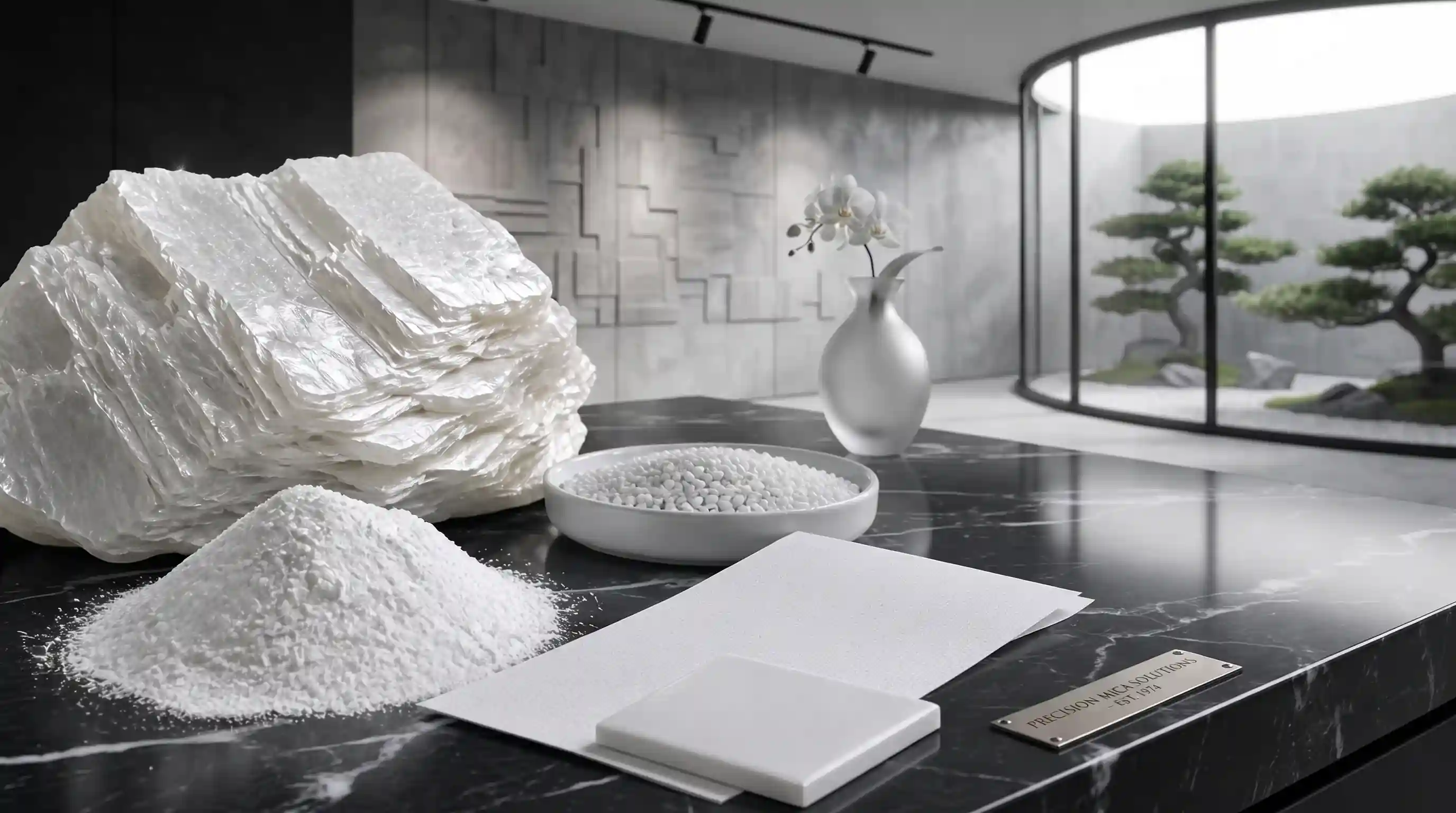
Examination of Mesh Size and Granulation of White Talc (450 to 2500 Mesh)
Particle size is one of the key parameters in determining the quality and application of mineral materials. The mesh range of 450 to 2500 for white talc indicates high diversity in the industrial applications of this product. Coarser meshes are usually used in industries requiring deep filling and cost reduction, while ultra-fine meshes (such as 1500 and 2500) find applications in paints, thin masterbatches, and engineering compounds.
Liquids and polymers exhibit different behavior when exposed to ultra-fine talc particles, creating a more homogeneous distribution. The micronization process of this material requires advanced equipment, which the Kani Sang Amiran project performs by utilizing state-of-the-art technology.
Strict quality control on granulation and particle size distribution ensures that the final product reaches the consumer free of lumps and impurities. This maximizes production efficiency in industrial factories.
The Role of White Talc in Ceramic and Refractory Products Industries
The ceramic manufacturing industry is always seeking raw materials that improve the thermal stability and mechanical properties of the ceramic body. The use of white talc in the production of tiles, ceramics, and refractory sections is recognized as a fluxing agent and firing shrinkage regulator.
This material reacts at high temperatures and helps form stable mineral phases within the ceramic structure. Also, similar to the applications mentioned in the article application of dolomite in paint and resin industries, the precise selection of mineral fillers has a direct impact on reducing firing cracks and increasing mechanical strength.
The presence of optimal amounts of this material in the ceramic body controls the thermal expansion coefficient and significantly improves resistance to thermal shocks.

Economic and Industrial Advantages of Using Amiran White Talc
Using high-quality domestic minerals, in addition to technical benefits, brings high economic added value to manufacturing industries. By directly supplying high-purity white talc conforming to industrial standards, the Kani Sang Amiran project eliminates intermediaries and provides a cost-effective product to the masterbatch, compound, paint, paper, and ceramic industries.
Quality consistency in shipped consignments, access to a diverse mesh range from 450 to 2500, and technical support are among the advantages of cooperating with this collection. Relying on these sustainable sources, manufacturers can manage their production costs and guarantee the quality of the final product.
Optimizing industrial formulations using this mineral helps reduce the consumption of expensive polymeric and chemical materials, thereby significantly lowering the final product cost.
Conclusion and Future Outlook of White Talc Application in Industry
In this article, we comprehensively and specializedly examined white talc, its technical specifications, the mesh range of 450 to 2500, and its applications in masterbatches, compounds, paints, paper, and ceramic products. Possessing unique physical and chemical characteristics such as a flaky structure, softness, and stability, this mineral has cemented its position as a strategic additive in modern industries.
The outlook for utilizing micronized minerals shows that with advancements in production technologies, the demand for high-purity fillers with precise granulation will increase. Understanding these needs, the Kani Sang Amiran project constantly strives to supply the best mineral products matching daily industrial standards.
The conscious choice of raw materials is the key to success in today's competitive markets. We hope the provided content serves as a useful guide for engineers, researchers, and industrial managers toward improving manufacturing processes.

| Question |
Answer |
| What is white talc and what are its applications? |
It is a flaky mineral used as a filler and property enhancer in masterbatch, compound, paint, paper, and ceramic industries. |
| What is the mesh size range of Amiran white talc? |
This product is produced and supplied in a mesh range of 450 to 2500. |
| Is this material used in the paint manufacturing industry? |
Yes, it is used as an extender pigment, improving coverage and color stability against atmospheric factors. |
| What is the role of white talc in the papermaking industry? |
It acts as a filler to reduce pulp consumption, increase whiteness and opacity, and improve paper printability. |
| Why is talc used in masterbatches and compounds? |
It is applied to improve flexural modulus, dimensional stability, and upgrade the surface quality of plastic parts. |
| Is this product also consumed in the ceramic industry? |
Yes, it is used as a fluxing agent and firing shrinkage regulator in ceramic bodies. |
| How can white talc be procured from Kani Sang Amiran? |
You can obtain the necessary information by visiting the dedicated product page on the Kani Sang Amiran website. |
| What is the advantage of talc's flaky structure? |
The flaky structure helps improve resistance to moisture penetration and increases mechanical strength. |
| Do finer talc meshes have better quality? |
It varies depending on the type of application; 1500 and 2500 meshes are used for paints and thin masterbatches. |
| Why is choosing the right supplier important in purchasing minerals? |
Consistency in purity, uniformity of mesh sizing, and timely delivery have a direct impact on the final product quality. |
Kani Sang Amiran Project — Mineral Production (ksamiran.ir)
:: برچسبها:
White Talc ,
Application of White Talc in Papermaking and Coating Industries ,
:: بازدید از این مطلب : 0
|
امتیاز مطلب : 0
|
تعداد امتیازدهندگان : 0
|
مجموع امتیاز : 0


 عضو شوید
 عضویت سریع
 آمار مطالب
 آمار بازدید


