
Comparison of Domestic Industrial Talc Quality with Foreign Samples
Introduction to Industrial Talc and Its Position in Modern Industries
Industrial talc is one of the most strategic and widely used minerals in various industries, holding a special place in manufacturing processes due to its unique physical and chemical properties. This material is recognized as an efficient filler and additive, and understanding it thoroughly helps industrialists choose the best raw materials to enhance the quality of their final products. In many production lines, the quality of the consumed mineral materials determines the durability and efficiency of the product.
Examining the qualitative characteristics of mineral raw materials, such as what is discussed in the article How to Identify Industrial Talc Purity and Quality?, is of high importance in making the right choice. Industrialists are constantly looking to compare domestic and foreign samples in order to strike a proper balance between cost and quality. With its layered structure and specific softness, this mineral plays an important role in improving the mechanical and appearance properties of manufactured parts.
In the mineral supply chain, choosing the right reference for purchase is vital. The Kani Sang Amiran project, as a mineral producer, has provided access to high-quality industrial talc for various industries. Using this material in industrial formulations improves thermal stability, reduces shrinkage, and increases wear resistance, which is why the demand for it in domestic and foreign markets is constantly growing.
Accurately understanding the technical parameters of this material, such as the mesh range and impurity levels, forms the basis of an informed choice in materials engineering. In the continuation of this article, we will thoroughly evaluate the various aspects of comparing domestic and foreign samples of this valuable powder in terms of quality standards and industrial applications.
Technical Features and Structural Specifications of Industrial Talc
Industrial talc is known as a natural hydrated magnesium silicate with a layered crystalline structure. This layered structure allows the particles to easily slide over one another, which is why this substance is recognized as one of the softest minerals. Exceptional softness and natural lubricating properties are among the most important reasons for the widespread application of this material in various industries.
One of the most important technical specifications considered in industrial processes is the mesh range. The mesh range of 450–1000 mesh for industrial talc indicates the precise particle dimensions and the degree of powder softness, which directly affects the final product properties. Particles within this mesh range provide a very suitable surface area for reacting with other formulation components.
In addition to sizing, items such as whiteness, moisture content, and accompanying impurities are also key parameters in determining the technical quality of this mineral. A careful examination of these parameters helps engineers predict the behavior of the material in complex polymer and rubber formulations. Alongside this material, other minerals such as Application of Industrial Barite in the Production of Sound and Thermal Insulation also hold a special place in industrial formulation engineering, demonstrating the diversity and breadth of mineral applications in modern industries.
Ultimately, a precise understanding of the physical and chemical specifications of this mineral is the main prerequisite for the competitiveness of manufactured products in the market. Matching technical specifications with production line requirements increases operational efficiency and minimizes waste.
Review of Industrial Talc Applications in Polymer and Rubber Industries
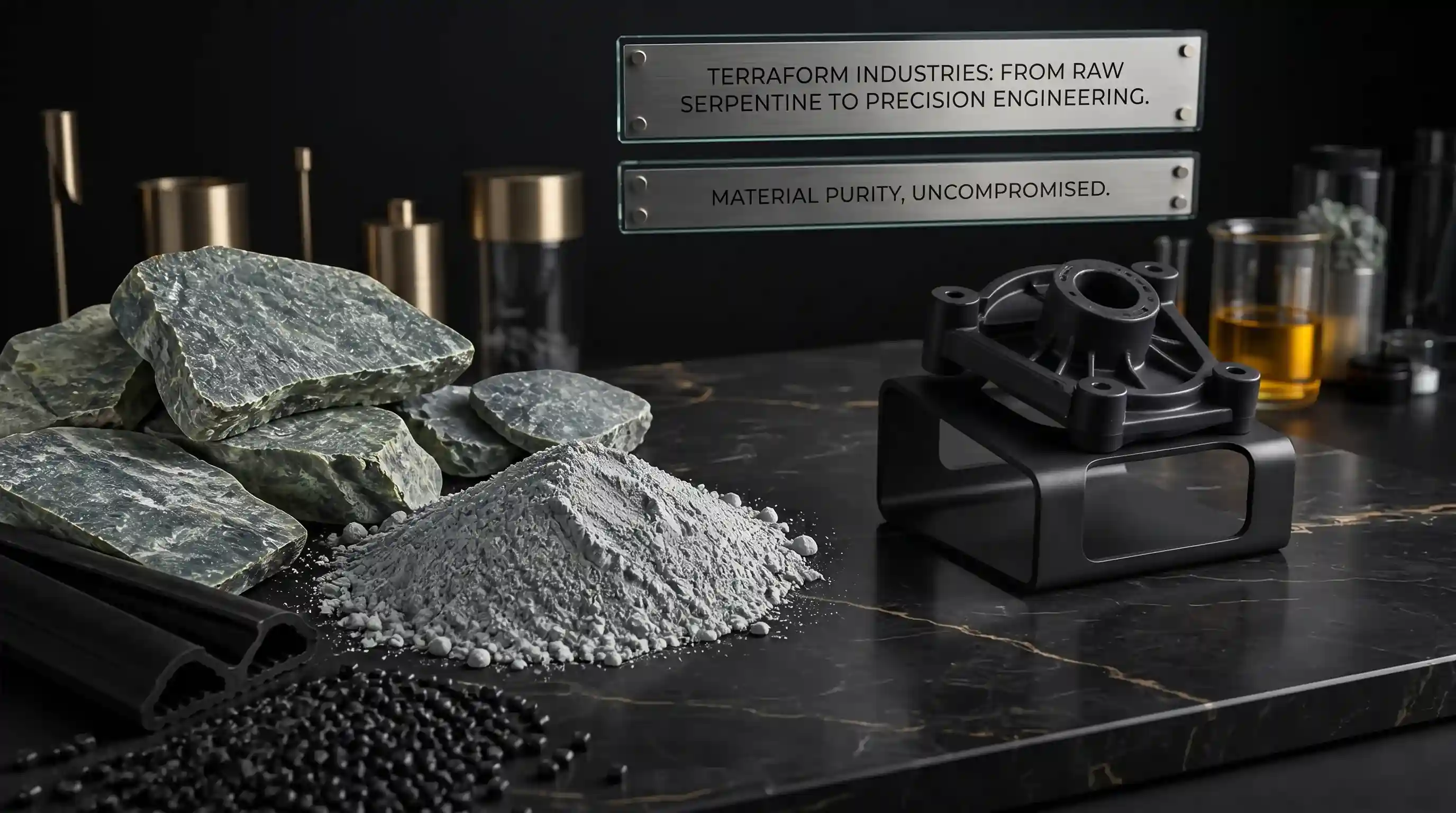
The polymer and rubber industries are among the largest consumers of micronized minerals in the world. In these industries, industrial talc is used as a functional filler to improve elastic modulus, increase tensile strength, and reduce thermal shrinkage of plastic parts. The presence of this material in the polymer matrix improves the dimensional properties of the part.
In the rubber manufacturing industry, this material plays a key role in improving the processability of rubber compounds and increasing tear and abrasion resistance. The uniform distribution of micronized particles within a specific mesh range greatly helps improve the dynamic properties of rubber. The optimal use of this mineral can significantly increase the lifespan of rubber parts under mechanical stresses.
In addition to polymers and rubbers, examining other pigments and functional minerals is also important in manufacturing engineering; for example, familiarity with the properties of industrial limonite oxide (yellow ochre) alongside polymer additives can provide a more comprehensive view of the mineral materials consumed in paint and coating production lines. However, talc still maintains an unrivaled position as a white and neutral filler in color formulations.
The Kani Sang Amiran project, by supplying various minerals, has provided a suitable platform to meet the needs of the polymer and rubber industries so that manufacturers can utilize the highest quality raw materials in their production lines and elevate the quality standards of their products.
Industrial Talc in Paint, Resin, and Industrial Coatings Industries
The paint and industrial coatings industry is heavily reliant on mineral fillers and pigments that can optimize gloss, coverage, and the durability of the paint film. Industrial talc, due to features such as good adhesion, water-repellent properties, and high chemical stability, is considered a main component in the formulation of various architectural and industrial paints.
Using this material in paints helps reduce unwanted gloss, improve durability against weather conditions, and increase corrosion resistance. The flaky particles of this material in the paint structure align parallel to one another, creating a physical barrier against moisture penetration and corrosive agents, which significantly increases the lifespan of the coating.
Alongside talc, other minerals such as Familiarity with the Properties of Industrial Limonite Oxide (Yellow Ochre) are also used in paint manufacturing, demonstrating the diversity of functional minerals in this industry. The precise selection of the mesh range of this mineral has a direct impact on the viscosity and rheological properties of the paint during application.
Paint manufacturers using standard raw materials supplied by the Kani Sang Amiran project can produce products with uniform coverage and long-term stability. This brings ultimate customer satisfaction and market competitiveness.
Comprehensive Comparison of Domestically Produced Industrial Talc with Imported Samples
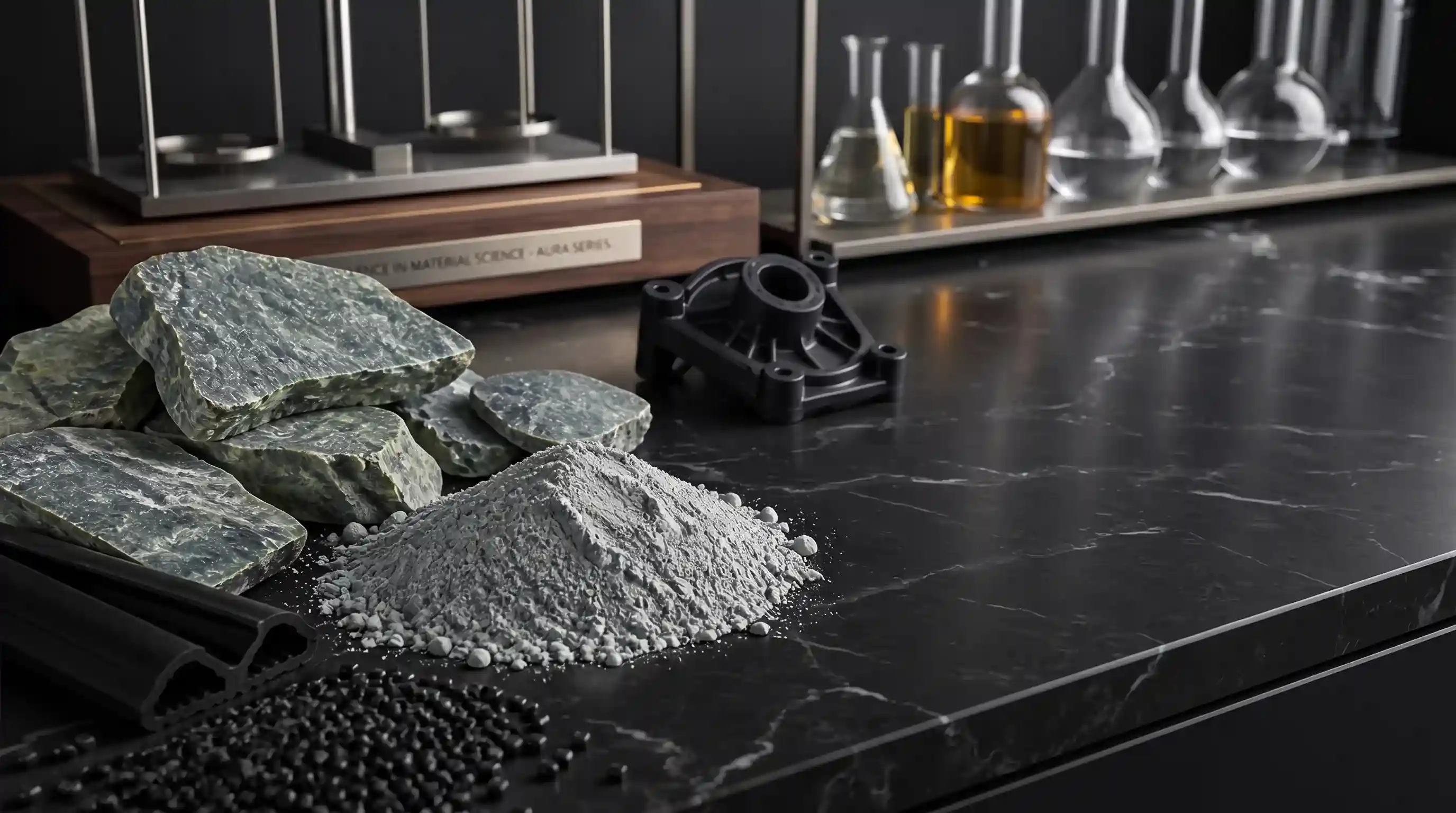
Comparing the quality of domestic industrial talc with foreign samples has always been one of the controversial topics among industrialists and materials engineers. Our country's rich mines harbor valuable reserves of this mineral, and by utilizing advanced processing and micronization technologies, their quality has come very close to international standards.
On the other hand, foreign samples available in the market are often offered with claims of high purity and dazzling whiteness, but their finished cost is much higher due to customs tariffs, international shipping costs, and currency fluctuations. In many industrial applications, domestic samples have managed to offer completely similar performance to imported samples at a more economical price.
The important point in this comparison is the consistency of quality across consecutive shipments, which the Kani Sang Amiran project has managed to guarantee for industrial consumers through strict control of its production processes. Precise knowledge of quality parameters allows industrialists to make the best choice without relying on expensive foreign brand names.
Ultimately, supporting domestic production alongside the continuous upgrading of quality standards is the main solution for reducing industrial dependence and optimizing finished costs in the country's production units, a trend that has accelerated with the efforts of domestic manufacturers.
Key Parameters in Evaluating and Selecting Suitable Industrial Talc
To choose the best industrial talc suited to the needs of the production line, reviewing several key parameters is mandatory. These parameters include the whiteness level of the powder, the percentage of impurities (such as carbonates and iron oxides), particle size distribution, and the moisture content in the material, each of which plays a decisive role in the final quality of the product.
The mesh range of 450–1000 mesh determines the grinding degree of the powder, and choosing the appropriate number within this range depends directly on the type of final application in polymers, rubbers, or paints. For example, thinner paint coatings require finer particles, while polymer compounds require a particle distribution suited to mechanical properties.
In addition, careful examination of the technical features of raw materials, similar to the topics raised in the article How to Identify Industrial Talc Purity and Quality?, helps quality control managers ensure the absence of harmful impurities in the powder. This meticulousness prevents defects in final products.
By providing precise technical specifications for its products, the Kani Sang Amiran project has provided the necessary transparency for industrial buyers to proceed with the selection and purchase of their required minerals with complete confidence.

Supply Chain Challenges and Cost Optimization with Domestic Industrial Talc
Managing the raw material supply chain is one of the main concerns of purchasing managers in various industries. Global market fluctuations, customs clearance problems, and delays in delivering imported shipments can plunge production lines into crisis. Using domestic industrial talc as a reliable solution resolves many of these challenges.
Sustainable access to domestic resources, reduced delivery times, and the elimination of heavy import costs bring a major competitive advantage to manufacturing companies. Furthermore, direct communication with domestic manufacturers allows for the customization of sizing and packaging based on the specific needs of the production line.
Alongside the sustainable supply of talc, reviewing other functional minerals such as Application of Industrial Barite in the Production of Sound and Thermal Insulation shows that the domestic mineral supply network has a high capacity to cover diverse industrial needs and can minimize industries' reliance on foreign countries.
By optimizing extraction and processing procedures, the Kani Sang Amiran project has made continuous efforts to offer competitive prices and sustainable quality so that Iranian industrialists can produce high-quality goods with peace of mind.
Conclusion and Future Outlook of the Industrial Talc Market in Iran
The reviews conducted show that domestically produced industrial talc, relying on rich mines and advanced processing technologies, has managed to bring its quality close to global standards and is a very suitable substitute for expensive imported samples.
Polymer, rubber, paint, and other industrial sectors can optimize their product performance in the best possible way by carefully selecting raw materials within the 450–1000 mesh range. Attention to purity and quality parameters is the key to success in modern market competition.
The development of production infrastructures by complexes such as the Kani Sang Amiran project heralds a bright future for the secure and economical supply of minerals in the country. This not only reduces production costs but also strengthens industrial independence in the field of raw material supply.
Ultimately, by elevating the technical knowledge level of industrialists and closely cooperating with domestic manufacturers, it can be expected that the share of high-quality Iranian products in domestic and regional markets will increase day by day, and the path of industrial development will be traversed with greater acceleration.

| Question |
Answer |
| What is industrial talc? |
It is a natural hydrated magnesium silicate with a layered structure and exceptional softness used as a filler in various industries. |
| What is the mesh range of the supplied industrial talc? |
This product is produced and supplied in the mesh range of 450 to 1000 mesh. |
| What are the main applications of industrial talc? |
It is used in polymer products, rubber products, paint industries, and other industrial applications. |
| Why is domestic industrial talc a suitable substitute for foreign samples? |
Domestic samples have a quality very close to global standards and are much more cost-effective in terms of price and sustainable access. |
| Is industrial talc used in polymer industries? |
Yes, it is used to improve mechanical properties, increase elastic modulus, and reduce thermal shrinkage in polymers. |
| What is the role of talc in the paint industry? |
It is used as a white filler, improving coverage, reducing gloss, and increasing resistance against moisture and corrosion. |
| How can the quality of industrial talc be evaluated? |
By examining the whiteness level, particle size distribution (mesh), moisture content, and percentage of impurities. |
| Is industrial talc also used in the rubber industry? |
Yes, it is used to improve the processability of rubber compounds and increase resistance against wear and tear. |
| How can one obtain high-quality industrial talc? |
Through reputable mineral producers such as the Kani Sang Amiran project. |
| Does the mesh range affect the efficiency of talc? |
Yes, selecting the appropriate mesh directly affects the rheology, surface area, and final properties of the product. |
Reference: Kani Sang Amiran Project — Mineral Production (ksamiran.ir)
:: برچسبها:
Industrial Talc ,
Comparison of Domestic Industrial Talc Quality with Foreign Samples ,
:: بازدید از این مطلب : 0
|
امتیاز مطلب : 0
|
تعداد امتیازدهندگان : 0
|
مجموع امتیاز : 0

 عضو شوید
 عضویت سریع
 منوی کاربری

 آمار مطالب
 آمار بازدید


