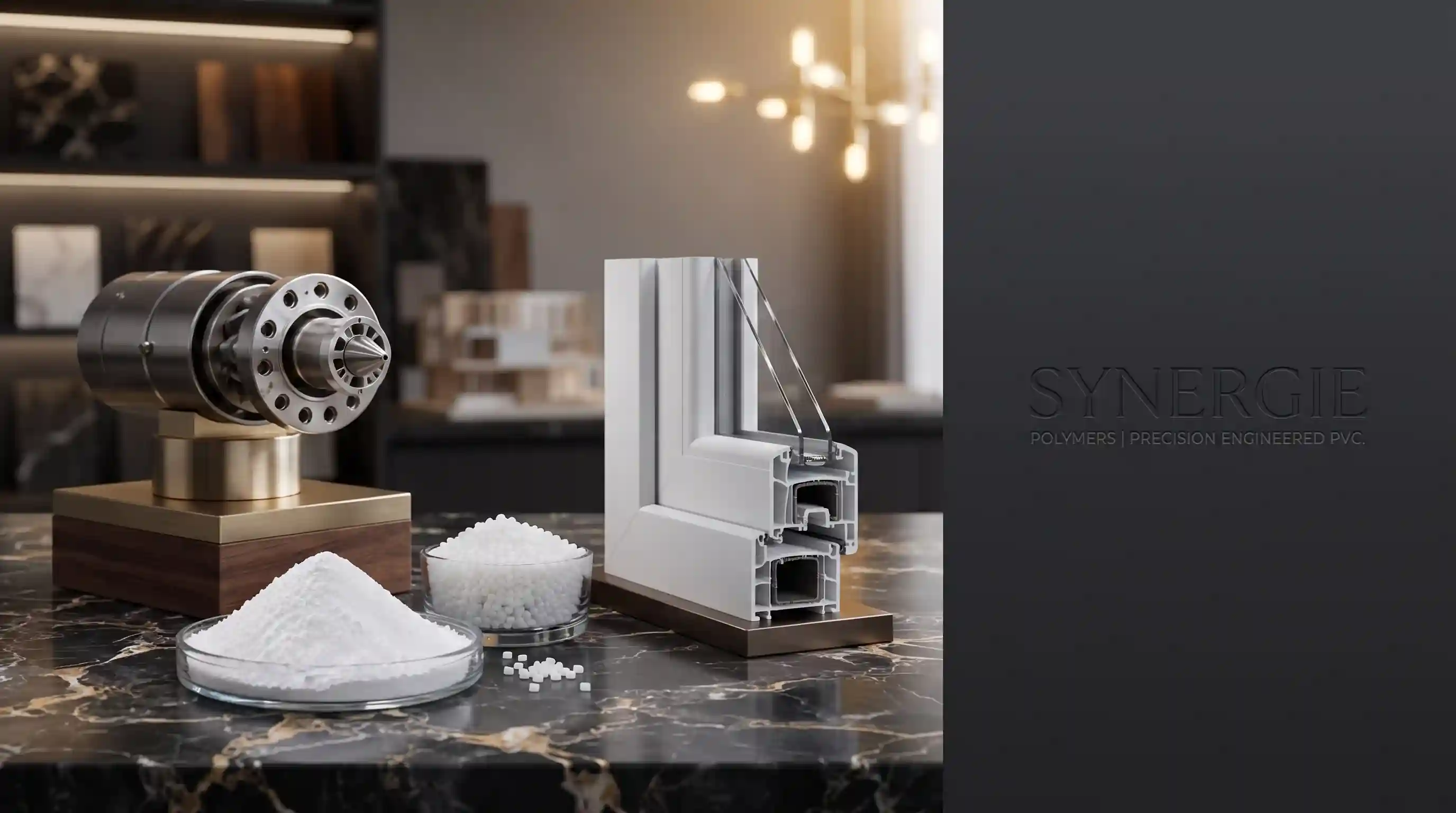
How Coated Calcium Carbonate Increases the Resistance of Polymer Products
Introduction to the Importance of Coated Calcium Carbonate in Polymer Industries
The polymer and plastics industry is constantly seeking additives that can improve the mechanical, physical, and processing properties of final products. Among these, minerals play a very important role as functional fillers. However, one of the major challenges in using traditional mineral powders is their lack of proper compatibility with hydrophobic polymer matrices. This incompatibility leads to particle agglomeration, the creation of structural weak points, and a drop in mechanical properties. To overcome this problem, surface coating technology has been developed, and the resulting final product is called coated calcium carbonate.
This material is coated using fatty acids (usually stearic acid) to change its surface characteristics from hydrophilic to hydrophobic. This fundamental change allows the mineral particles to disperse well within the polymer matrix and form a stronger bond with the polymer chains. Focusing on the production of high-quality minerals, the Kani Sang Amiran Project supplies this product with a mesh size appropriate for various industries. For more information on technical characteristics and how to order, you can visit the coated calcium carbonate page and review the full specifications.
In the production process of polymer compounds, the uniform distribution of fillers is of vital importance. When conventional powders are used, the shear force of the extruder is sometimes insufficient to break down agglomerates, but the coated type easily disperses in polymer blends due to reduced surface energy. This feature not only enhances the visual quality of the final part but also drastically increases the lifespan and durability of parts under various working conditions.
Mechanism of Mechanical Resistance Improvement Using Coated Calcium Carbonate
One of the main reasons for using mineral fillers in polymer formulations is the effort to increase mechanical strength, including impact resistance, tensile strength, and elastic modulus. However, if the adhesion between the matrix phase (polymer) and the dispersed phase (mineral particles) is weak, the applied stresses, instead of being transferred to the particles, concentrate around voids and separation boundaries, causing premature part failure. Using coated calcium carbonate solves this fundamental problem.
The stearic acid coating present on the surface of the particles acts as a compatibilizing bridge and reduces the surface energy of the particles. This improves the wetting of the particles by the polymer melt during the extrusion and injection process. As a result, stress transfer from the soft polymer matrix to the hard mineral particles is optimized, which directly leads to an increase in tensile strength and flexural modulus. A more comprehensive study regarding these processes is examined in detail in the article Introduction to the Application of Coated Calcium Carbonate in the Plastic Industry.
Furthermore, the presence of particles with an appropriate particle size distribution and uniform coating prevents the growth of microscopic cracks inside the polymer part. When a crack is created due to impact or mechanical loading, its collision with the dispersed mineral particles deflects the path of the crack and dissipates the fracture energy. This mechanism severely increases the impact resistance of polymer parts and guarantees the mechanical performance of the entire polymer structure.

The Role of the 450 to 3500 Mesh Range in Compound Quality and Efficiency
Particle size and its dimensional distribution are key parameters in determining the quality of polymer products. The mesh range is an important characteristic indicating the number of holes per square inch of sieve mesh; therefore, the higher the mesh number, the smaller the particle size and the greater its specific surface area. In the production of compounds, granules, and polymer parts, choosing the appropriate mesh is of utmost importance to establish an optimal balance among mechanical, rheological, and economic properties.
In industrial applications of this product, the 450 to 3500 mesh range is used as an efficient standard. Finer particles (higher meshes) have a better effect in reinforcing the polymer matrix due to their larger contact surface, but on the other hand, they have a greater tendency to agglomerate due to high surface energy. The coating process becomes important precisely at this point; because the coating prevents fine particles from agglomerating and allows the use of high meshes without a drop in processing quality. For a more accurate comparison of these values and related standards, we suggest reading the article Expert Guide to Comparing Coated Calcium Carbonate Types Available in the Market.
The correct choice of the matching mesh also has a direct effect on the melt viscosity of the polymer during the extrusion process. If the particles are very coarse, they disrupt the flow cross-section and create surface defects, and if they are excessively fine and uncoated, they drastically increase viscosity. However, by utilizing precise mesh sizing and coating technology, these challenges are minimized and the dimensional stability of polymer parts is guaranteed.
Specialized Applications in the Production of Polymer Granules and Compounds
Polymer compounds and granules are the main raw materials in plastic injection, extrusion, and blow molding industries. Adding minerals to these compounds is not only done to reduce the final price of the product, but also serves as a structural improver to enhance engineering properties. Among these, the use of coated calcium carbonate is very common due to its high compatibility with base polymers such as polypropylene (PP), polyethylene (PE), and polyvinyl chloride (PVC).
When producing polymer granules, the mixing process takes place in a twin-screw extruder. If the mineral powder lacks a suitable coating, particle agglomeration occurs during melting and mixing, and the final granules will have heterogeneous spots that cause tearing or reduced impact resistance during the shaping of the final part. Surface coating reduces internal friction between particles and the polymer, resulting in better lubrication during granulation and an increased production line output.
Reviewing the mesh grading standard in these applications is vital. Compound manufacturers require a powder with a very narrow particle size distribution and without oversized particles. You can search for supplementary information in this area in the article Reviewing Mesh Grading Standards in Various Types of Coated Calcium Carbonate to become familiar with more technical details. This precise coordination between mesh and coating maximizes tensile properties and fatigue resistance in engineering granules.
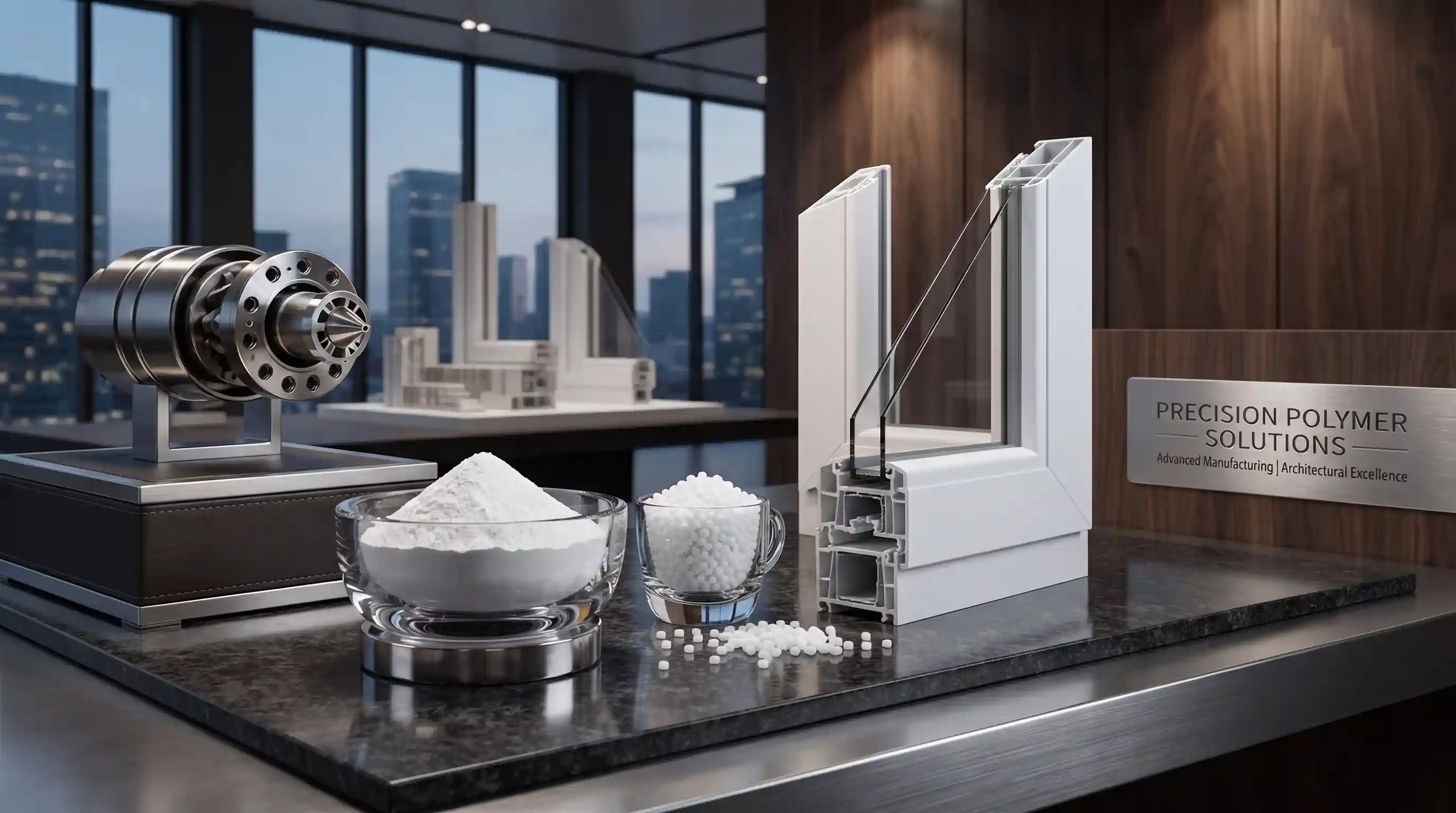
Increasing the Durability and Stability of PVC Profiles and Parts
The industry of producing PVC profiles, pipes, cables, and engineering parts is another field that requires high precision in selecting additive raw materials. Door and window profiles or cable routing channels must exhibit high resistance to continuous mechanical stresses, temperature changes, and environmental factors. In these formulations, coated calcium carbonate acts not only as a volumetric filler, but also as a dimensional stability-improving agent.
Due to the polar structure of PVC and the non-polar nature of ordinary calcium carbonate, using the simple type leads to a reduction in the cold and hot impact strength of the profile. By applying an active surface coating, the bond between the mineral particles and the PVC matrix is strengthened, and stresses are homogeneously distributed throughout the part. This prevents the formation of micro-cracks caused by pressure or sudden impact in construction profiles.
In addition to improving mechanical properties, the use of this coated powder in the formulation of PVC parts improves thermal stability during the extrusion process. Reducing friction between particles and machinery equipment prevents thermal degradation of the polymer at high temperatures and creates a smoother, flawless surface on the final product. This feature is extremely crucial for producing parts with complex geometries and strict quality standards.
Improving the Properties of Cables and Polymer Flooring Using Coating Technology
The electric and telecommunication cable manufacturing industries, as well as the polymer flooring manufacturing industries, have very strict standards regarding flexibility, electrical resistance, thermal stability, and abrasion resistance. In cable jackets, the filler must be such that it does not reduce insulating properties while increasing the mechanical and tensile strength of the jacket. Using coated calcium carbonate with a suitable mesh is considered an ideal solution for these specialized industries.
In the construction of polymer flooring (such as vinyl or elastomeric flooring), resistance to wear, indentation, and impact is of special importance. If the mineral particles do not disperse well in the polymer, the flooring will suffer from cracking or peeling under frequent foot traffic. The active surface coating of the mineral particles ensures that no empty spaces or weak boundaries remain between phases, creating a uniform and densified structure capable of withstanding heavy mechanical loads.
Understanding the precise needs of these industries, the Kani Sang Amiran Project processes its products in such a way that surface moisture is minimized and the dielectric and mechanical properties of cable and flooring compounds are maintained at the highest standard level. Due to their uniform distribution, these processed powders prevent the penetration of moisture and corrosive environmental factors into the cable or flooring structure, significantly increasing the useful life of the product.

Economic and Process Benefits in Plastic Production Lines
In addition to the remarkable improvement in the mechanical and physical properties of final products, using coated calcium carbonate brings significant economic and process benefits to production units. Minerals inherently have a lower price than base polymer resins; therefore, increasing the consumption percentage of the filler helps reduce the final price of the compound and the polymer part. However, in conventional powders, increasing the consumption percentage severely causes a drop in mechanical properties and extruder problems.
Thanks to coating technology, manufacturers can use a more optimal percentage of this material in their formulation without worrying about a severe drop in mechanical resistance. From a process perspective, the reduction of melt viscosity and the improvement of external lubrication resulting from the presence of the stearic acid coating lead to a decrease in the power consumption of the extruder electric motor, an increase in production line speed (throughput), and a reduction in machine part wear (such as the screw and barrel).
Process temperature stabilization and the prevention of localized thermal shocks are other advantages of these products. The 450 to 3500 mesh range provides polymer engineers with a flexible choice based on equipment type and process requirements, so that by optimizing production parameters, they can achieve the highest economic efficiency and the best structural quality in products such as profiles, granules, cables, and PVC parts.
Conclusion and Final Selection Guide for Polymer Engineers
Choosing the right additives plays a decisive role in the commercial and technical success of polymer products. As examined, using coated calcium carbonate goes beyond a simple cost-reduction method; this material is considered a powerful tool for engineering and upgrading mechanical resistance, thermal stability, surface quality, and long-term durability of various polymer parts. Through chemical modification of the particle surface and the creation of complete compatibility with the polymer matrix, common problems of particle agglomeration and structural weakness are completely resolved.
The matching mesh range (from 450 to 3500) gives compound, granule, profile, cable, flooring, and PVC part manufacturers the ability to choose the best mineral powder precisely tailored to the application type and available equipment. By offering standard and high-quality products, the Kani Sang Amiran Project is ready to supply the specialized needs of this industry. To start cooperation, expertly review specifications, and place an order, we suggest visiting the coated calcium carbonate introduction page right now and communicating with our sales experts.
Adhering to mesh grading standards, precision in selecting the coating percentage, and attention to the base polymer type bring a stable and competitive formulation to the market that guarantees the quality and lifespan of your manufactured polymer parts.
| Question |
Answer |
| What is coated calcium carbonate? |
It is a type of processed mineral powder whose particle surface is coated with fatty acids (such as stearic acid) to increase its compatibility with polymers. |
| How is it different from ordinary calcium carbonate? |
The coated type has hydrophobic properties, does not agglomerate, and forms a much stronger bond with polymer matrices. |
| What is the mesh range of this product? |
This product is supplied in the 450 to 3500 mesh range according to the needs of various industries. |
| What are the main applications of this material? |
Production of compounds, polymer granules, profiles, cables, flooring, and various PVC parts. |
| How does it increase the resistance of polymer products? |
By improving particle distribution, reducing surface energy, facilitating stress transfer, and preventing the growth of microscopic cracks. |
| Is using this product cost-effective? |
Yes, in addition to reducing the final price of the formulation, it improves process efficiency and increases production speed. |
| Is it used in the production of PVC pipes and profiles? |
Yes, it noticeably upgrades the impact resistance and dimensional stability of PVC profiles. |
| What is the role of the stearic acid coating? |
It acts as a compatibilizing bridge and reduces internal friction and the melt viscosity of the polymer. |
| How can this product be obtained? |
You can place an order by visiting the website of the Kani Sang Amiran Project and the specialized products section. |
| Does mesh grading affect the final quality? |
Yes, choosing the matching mesh creates an ideal balance between the mechanical and rheological properties of the polymer compound. |
Kani Sang Amiran Project — Reference for specialized production and processing of minerals and various micronized coated powders.
:: برچسبها:
Coated Calcium Carbonate ,
How Coated Calcium Carbonate Increases the Resistance of Polymer Products ,
:: بازدید از این مطلب : 0
|
امتیاز مطلب : 0
|
تعداد امتیازدهندگان : 0
|
مجموع امتیاز : 0

 عضو شوید
 عضویت سریع
 منوی کاربری

 آمار مطالب
 آمار بازدید


