
How Does Coated Calcium Carbonate Help Improve the Thermal Stability of Polymers?
Introduction to the Role of Coated Calcium Carbonate in Polymer Industries
Today, the polymer industry faces numerous challenges regarding the improvement of the mechanical, thermal, and economic properties of its products. The use of mineral fillers is one of the most common methods for optimizing polymer formulations. Among these, coated calcium carbonate has found a special position as an advanced additive. The coating process, or surface treatment of the particles, drastically transforms the characteristics of this material and prepares it for integration into sensitive polymer matrices.
During production processes such as extrusion, plastic injection molding, and calendering, polymers are exposed to intense heat and mechanical shear. Without the use of stabilizing agents and compatible fillers, thermal degradation can rapidly destroy the polymer's molecular structure and degrade the quality of the final product. Through surface modification, coated calcium carbonate improves the bonding between the mineral particle and the polymer chains, which has a direct impact on thermal stability.
At the Kani Sang Amiran project, this mineral is produced and supplied with high precision to meet the needs of various industries, particularly manufacturers of compounds and PVC parts. A precise understanding of the mechanisms by which this additive affects the thermal behavior of polymers is considered a fundamental step toward enhancing the quality of final products and reducing production costs.
The use of appropriate mesh ranges is another key advantage in choosing this product, significantly contributing to the uniform distribution of particles within the polymer matrix. Later in this article, we will examine in detail the various dimensions of this material's impact on thermal resistance, processability, and its industrial applications to further highlight its technical significance.
Mechanism of Action of Coated Calcium Carbonate on Polymer Thermal Stability
To understand how coated calcium carbonate helps improve the thermal stability of polymers, we must look at the surface structure of the particles and the nature of their interaction with the polymer matrix. Due to their hydrophilic nature, conventional calcium carbonate particles do not disperse well in hydrophobic polymers, and their aggregation or agglomeration creates weak points in the structure that are vulnerable to heat.
The process of coating the particles with organic materials (typically fatty acids such as stearic acid) makes the particle surface hydrophobic and maximizes its compatibility with various polymers. This optimal compatibility ensures that the particles are distributed completely homogeneously throughout the matrix. The uniform distribution of particles acts as a barrier against localized heat transfer and prevents the degradation of polymer chains at high temperatures.
Furthermore, the surface coating prevents unwanted catalytic reactions between the active surface of the calcium carbonate and other polymer additives in the presence of heat. This property helps reduce the rate of thermal degradation, preserves the initial color of the part, and prevents the polymer from yellowing or deforming during the thermal process.
For further reading on the technical specifications and standards of this material, it is recommended to refer to the article Reviewing Standard Mesh Grading in Various Types of Coated Calcium Carbonate to gain comprehensive information about particle dimensions and quality.
The Role of the 450 to 3500 Mesh Range in Optimizing Thermal Properties
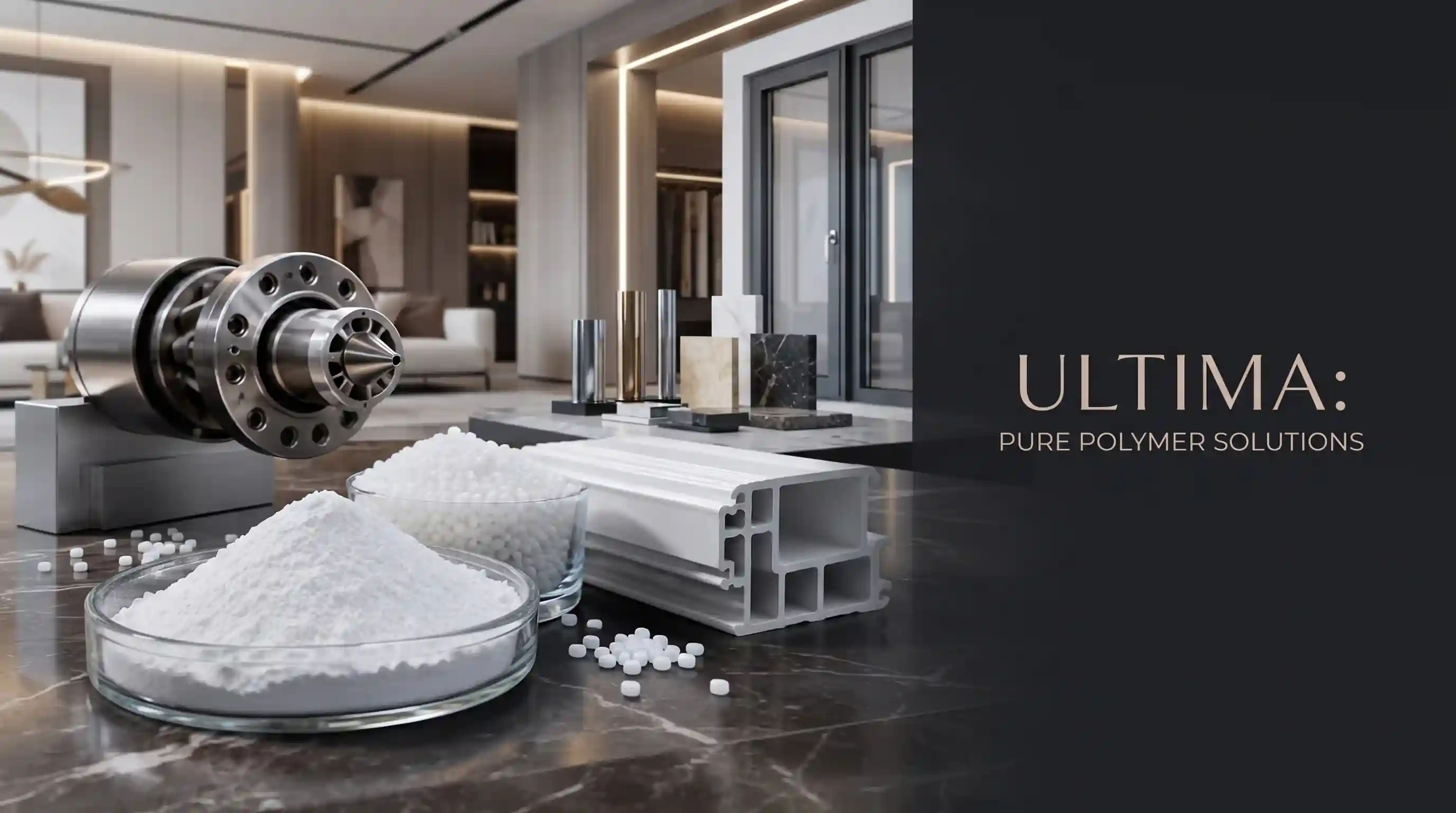
One of the most important parameters in choosing mineral fillers is particle size and their mesh range. Coated calcium carbonate is produced and supplied in a mesh range of 450 to 3500, with each mesh suitable for specific applications in the compound and polymer granule industry. Choosing the appropriate mesh has a direct impact on the thermal and mechanical behavior of the final product.
Particles with lower meshes (such as 450 or 800) have a smaller surface area compared to very fine particles and are typically used in profiles and thicker parts that require volumetric mechanical properties. In contrast, higher meshes (such as 2500 and 3500), which fall into the micronized and nanometric categories, create a very large contact surface with the polymer matrix.
This extensive contact surface at high meshes helps thermal stresses to be distributed more uniformly across the entire structure, preventing the formation of hot spots, which are the main cause of the onset of thermal degradation. Precise particle size distribution also maintains the polymer melt viscosity at an optimal level, which facilitates the extrusion process at optimal temperatures.
By carefully selecting the appropriate mesh from Kani Sang Amiran's product portfolio, manufacturers can create an ideal balance between thermal stability, melt flow, and the final properties of polymer parts, noticeably increasing the productivity of their production lines.
Industrial Applications of Coated Calcium Carbonate in Polymer Compounds and Granules
Due to the need for melting and reshaping processes, the polymer compounding and pelletizing industries deal with the issue of thermal stability more than other sectors. In these industries, polymers are heated multiple times, which significantly increases the likelihood of thermal degradation and the loss of mechanical properties. The use of coated calcium carbonate in these formulations is a fundamental solution to overcome this challenge.
When producing polymer granules, adding this coated material helps reduce melt viscosity and lowers internal friction between polymer chains at high temperatures. This reduction in friction means less shear heat is generated inside the extruder, which itself serves as an important safeguard against polymer thermal degradation.
In addition to compounding, this material plays a key role in the production of profiles, cables, flooring, and various PVC parts. In the cable manufacturing industry, thermal stability and electrical insulation are of vital importance, and the presence of this mineral filler helps maintain structural integrity under harsh operating conditions.
To learn more about the diverse applications of this product in the plastics and polymer industries, reading the article Introduction to the Application of Coated Calcium Carbonate in the Plastics Industry is recommended, as it offers practical and valuable insights.
The Impact of Coated Calcium Carbonate on Improving Processability and Reducing Costs
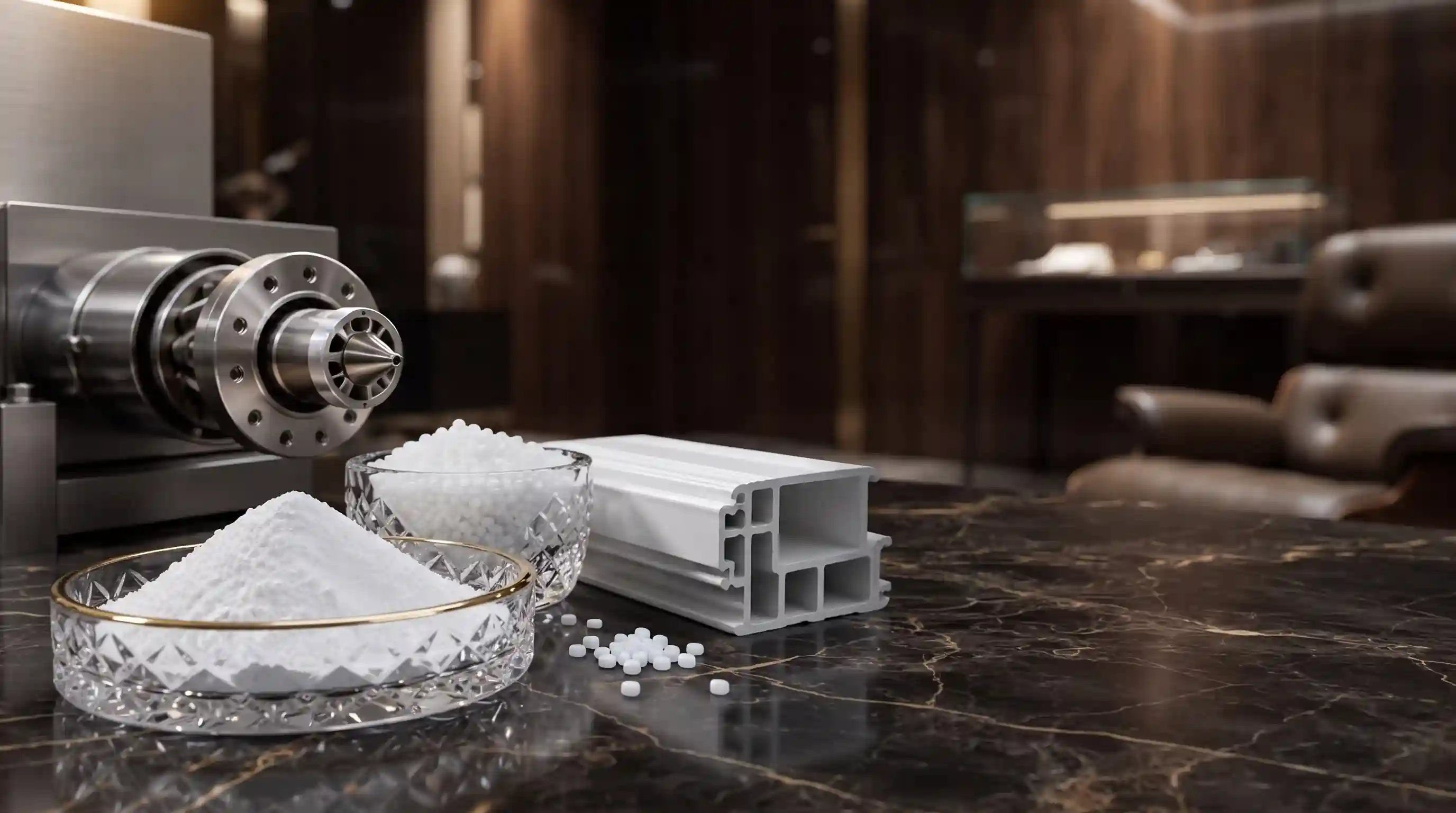
In addition to improving thermal stability, using coated calcium carbonate brings significant economic and processing benefits to manufacturing units. In the production of polymer parts, raw material costs and the energy consumption of machinery are key factors determining profitability. As an economic filler, this mineral covers a significant volume of the formulation without any loss in quality.
The fatty acid coating on the particles improves the lubricity and flow properties of materials inside the barrel and extruder die. This feature reduces the required motor torque of the machine, consequently lowering electrical energy consumption. Furthermore, reducing melt adhesion to equipment walls makes the molding process smoother and improves the production cycle time.
From the perspective of thermal stability during processing, the reduction in frictional heat allows manufacturers to operate the machine within a safer thermal window without worrying about polymer scorching or product discoloration. This processing stability minimizes production waste and dramatically increases the overall efficiency of the production line.
By supplying this high-quality material at a competitive price, the Kani Sang Amiran project helps manufacturers optimize their final production costs while upgrading the quality standards of their products.
Functional Comparison of Coated Calcium Carbonate with Uncoated Samples Against Heat
To understand the added value of coated calcium carbonate, comparing its performance against heat with uncoated types is highly instructive. Due to the absence of a surface coating, uncoated calcium carbonate has a high surface energy, leading to particle agglomeration in the polymer matrix. During heating, these agglomerates turn into stress concentration points and uneven heat transfer zones.
In contrast, the coated type establishes a stronger chemical or physical bond with the polymer by creating a compatibilizing layer. Thermal tests such as TGA (Thermogravimetric Analysis) show that polymers containing this type of filler begin to decompose at higher temperatures, and their thermal degradation rate slows down. This means a wider thermal processing window is available to the operator.
Additionally, in thermal aging tests, parts manufactured with coated calcium carbonate exhibit better resistance to discoloration, embrittlement, and the loss of mechanical properties. This long-term stability is vital for products exposed to sunlight and ambient heat.
An informed choice among the various types available on the market requires a careful examination of their technical specifications. For further guidance in this area, reading the article Specialized Guide to Comparing Types of Coated Calcium Carbonate Available in the Market can provide engineers and purchasing managers with a comprehensive perspective.
Application in PVC Parts and Profiles and Its Role in Thermal Resistance
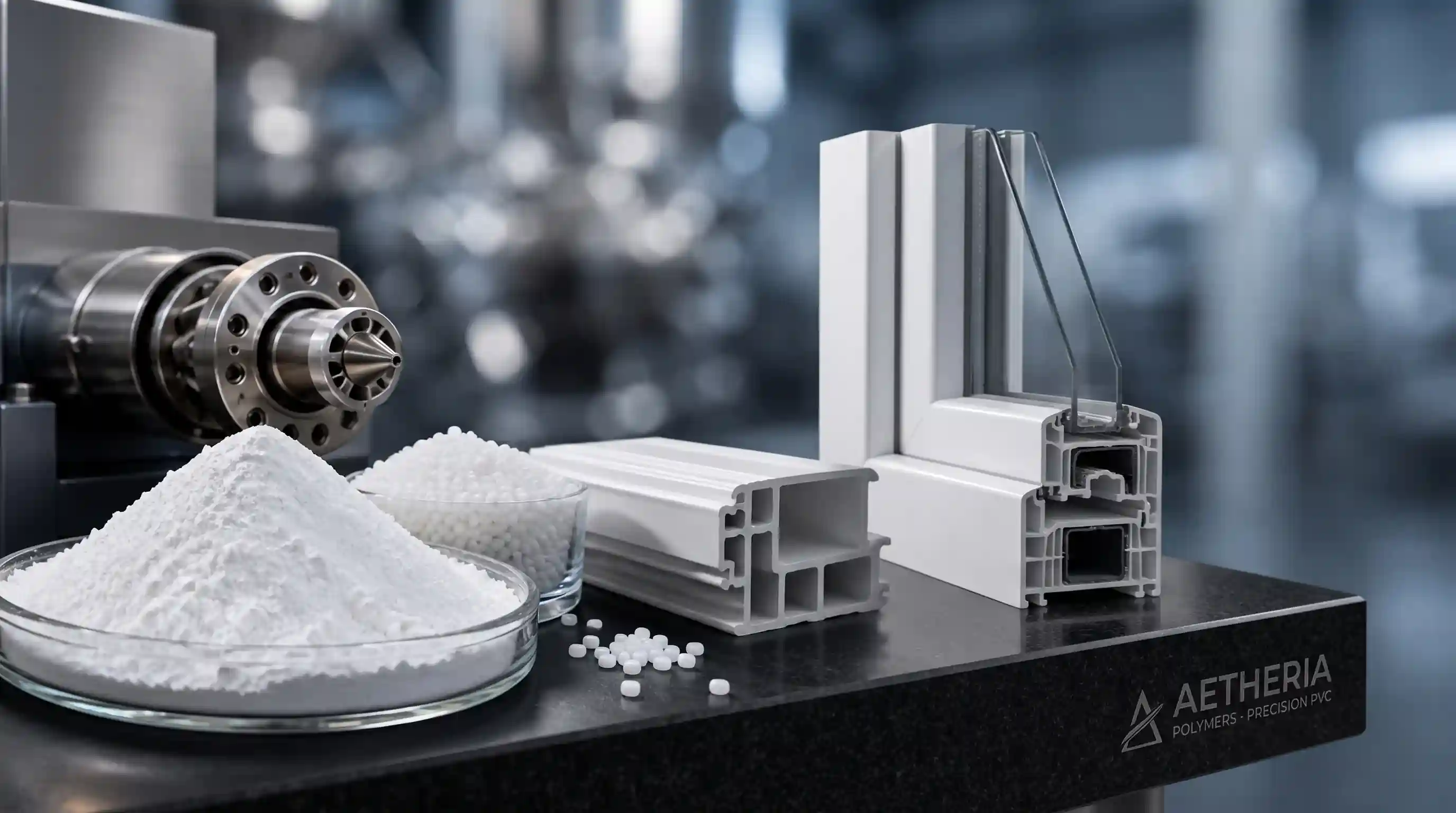
Polyvinyl chloride (PVC) is one of the polymers most sensitive to heat, making it heavily prone to degradation and chlorine gas release during the production of profiles, pipes, cables, and flooring. For this reason, the use of thermal stabilizers in PVC formulations is inevitable. In this regard, coated calcium carbonate plays a very important auxiliary role alongside primary stabilizers.
The fatty acid coating on the mineral particles prevents direct reaction between the particles and moisture or free acids released by PVC heating. This contributes to the static and dynamic stability of the formulation during the extrusion of door and window profiles or rigid parts. Homogeneous particle distribution also prevents the formation of microscopic voids that could serve as starting points for thermal cracking or failure.
In the production of PVC flooring, flexibility, resistance to thermal deformation, and dimensional stability are of high importance. The use of appropriate meshes (such as fine-grained ranges from 1500 to 3500) in flooring improves surface texture and increases local thermal resistance.
By offering standard products suitable for PVC parts, the Kani Sang Amiran project helps industrialists produce high-quality, durable products compliant with modern quality standards that exhibit high stability against environmental temperature changes.
Conclusion and Selection Guide for Suitable Coated Calcium Carbonate
In this article, we comprehensively examined the role of coated calcium carbonate in the thermal stability of polymers. It became clear that the surface coating process significantly increases the compatibility of this mineral with polymer matrices and prevents particle agglomeration. This optimal compatibility makes heat distribution more uniform and reduces the rate of polymer thermal degradation during manufacturing processes.
Choosing the appropriate mesh range (from 450 to 3500) based on the type of end application—whether compounds, polymer granules, profiles, cables, flooring, or PVC parts—is the key to achieving the highest processing and thermal efficiency. Lower meshes are ideal for volume reinforcement, while higher meshes are ideal for creating a vast contact surface and ideal thermal stress distribution.
By producing and supplying a variety of high-quality minerals, the Kani Sang Amiran project is ready to cooperate with various polymer industries to supply the mesh tailored to your formulation needs. By properly selecting this additive, one can simultaneously achieve improved thermal stability, reduced production costs, and enhanced final product quality.
The final recommendation to engineers and manufacturers is to conduct compatibility and thermal tests with various samples before finalizing their formulation, and to consult with technical experts regarding the precise selection of mesh and consumption percentage.
| Question |
Answer |
| What is coated calcium carbonate? |
It is a mineral whose particle surface is modified with an organic coating (typically fatty acid) to have better compatibility with polymers. |
| How does it help polymer thermal stability? |
It reduces the rate of thermal degradation by uniformly distributing particles, preventing agglomeration, and decreasing hot spots within the polymer matrix. |
| What is the mesh range of this product? |
This product is produced and supplied in a mesh range of 450 to 3500. |
| What are the main applications of this material? |
Compounds, polymer granules, profiles, cables, flooring, and PVC parts. |
| What is the difference between coated and uncoated calcium carbonate? |
The coated type features a hydrophobic surface coating that drastically increases its dispersibility and compatibility with polymers. |
| Does using this material affect energy consumption reduction? |
Yes, due to improved melt flow and reduced internal friction, it lowers extruder torque and energy consumption. |
| Which mesh is most suitable for PVC profile production? |
Mesh selection depends on the formulation, but generally, suitable meshes between the 450 to 3500 range are utilized. |
| What is the role of the fatty acid coating? |
It causes particle surface hydrophobicity, prevents moisture absorption, and improves bonding with polymer chains. |
| How can the appropriate mesh be chosen? |
It is determined based on the polymer type, extrusion equipment, and the thermal and mechanical requirements of the final part. |
| Which organization supplies this product? |
It is supplied and provided by the Kani Sang Amiran project — mineral production. |
Kani Sang Amiran Project — Production of minerals and specialized polymer additives.
:: برچسبها:
Coated Calcium Carbonate ,
How Does Coated Calcium Carbonate Help Improve the Thermal Stability of Polymers? ,
:: بازدید از این مطلب : 0
|
امتیاز مطلب : 0
|
تعداد امتیازدهندگان : 0
|
مجموع امتیاز : 0

 عضو شوید
 عضویت سریع
 منوی کاربری

 آمار مطالب
 آمار بازدید


