
Reviewing the Application of Dolomite in Improving Concrete and Cement Strength
Introduction to the Mineral Dolomite and Its Role in Modern Industries
The mineral dolomite, as a double carbonate of calcium and magnesium, holds a special place in various industries including construction, ceramics, and glass manufacturing. In the Kani Sang Amiran project, this material is processed and supplied with its specific characteristics to best meet industrial needs. Deep understanding of this valuable mineral helps engineers and manufacturers make the most of its potential in optimizing production processes.
The physical and chemical properties of this mineral rock have made it recognized in many applications as a reliable and economical substitute for limestone. The presence of magnesium in the chemical structure of this material significantly increases the durability and stability of the final products. For more information on how to procure it, you can visit the Dolomite introduction page and review its complete specifications.
In this specialized article, we intend to comprehensively examine the application of dolomite in improving concrete and cement strength, scrutinizing its various dimensions from the perspective of materials engineering and building materials. A precise understanding of these topics plays a key role in upgrading the quality of engineering structures.
Given the growing importance of high-quality materials in the construction industry, familiarity with the physical and mechanical behaviors of mineral additives is an inevitable necessity. In the following upcoming chapters, we will examine the various dimensions of this subject with full details and documented industrial standards to provide a clear picture of this mineral rock.
Understanding the Chemical and Physical Structure of Dolomite in Building Materials
Dolomite is a carbonate mineral with a specific chemical formula composed of a combination of calcium carbonate and magnesium carbonate. This special crystalline structure causes its hardness and density to differ from ordinary limestone, showing better resistance against mechanical and environmental factors. The granulation of this product is usually set in the range of 10 to 40 mesh, which is highly ideal for various engineering uses.
In the construction industry, using standard granulations is of utmost importance. The 10 to 40 mesh range makes it possible for materials to be well distributed within the cement and concrete matrix and minimize structural weak points. To read more about the practical dimensions of this material, reading the article What is the Important Application of Dolomite in Construction and Manufacturing Industries is recommended, which provides useful technical details for readers.
The reactivity of this material in the alkaline environments of concrete is such that it can help achieve greater densification of the internal structure of the structure. This structural feature is recognized as a major advantage in designing high-strength concrete mixes.
Research shows that the presence of micronized and granulated particles of this mineral alongside cement reduces intergranular void space and consequently noticeably lowers the permeability of the entire structure, which in turn guarantees the long-term durability of the structure.
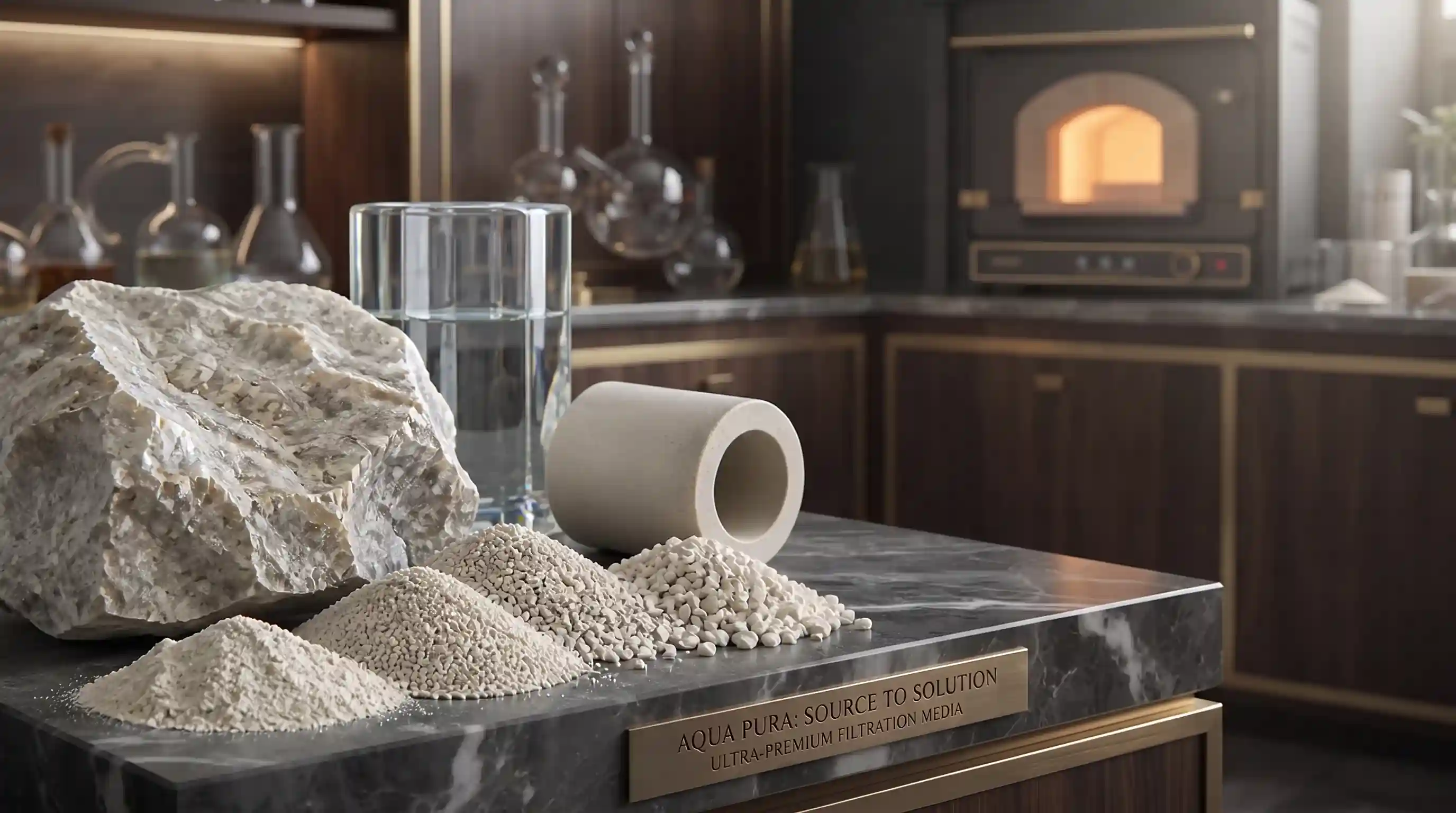
The Role of Dolomite in Improving the Strength and Durability of Concrete and Cement
Concrete and cement, as the main pillars of modern construction, always require improvements in their mechanical and physical properties. Adding dolomite as an active or semi-active mineral filler can help improve densification and increase the compressive and flexural strength of concrete. Proper particle distribution in the 10–40 mesh range helps fill fine capillary pores and prevents the occurrence of early cracks.
The magnesium present in this mineral structure can react under certain conditions with cement hydration phases and create a denser crystalline network. This phenomenon directly impacts improving concrete's resistance to freeze-thaw cycles. Structural engineers are always looking for materials that guarantee the volume stability of concrete in the long run.
Laboratory investigations show that the optimal use of this mineral controls the volumetric shrinkage caused by drying concrete and prevents destructive contractions. This mechanical advantage, coupled with ease of processing, makes it a popular choice among contractors.
To better understand the bonds between minerals and their thermal and strength properties, reviewing articles such as The Role of Kaolin in Improving the Thermal Resistance of Refractory Materials also provides valuable complementary perspectives on the behavior of mineral materials under harsh thermal and mechanical conditions.
Application of Dolomite in Glass and Ceramic Products Industries
In addition to the construction industry, dolomite has a very important place in glass manufacturing and ceramic product industries. In the glass production process, the magnesium and calcium present in this material act as fluxing agents that lower the melting point of raw materials and optimize furnace energy consumption. Additionally, the presence of magnesium increases the chemical stability of glass against corrosion and environmental factors.
In the ceramics industry, this mineral is also used to control firing shrinkage, improve body color, and increase the mechanical strength of tiles and ceramics. The 10 to 40 mesh granulation makes it possible for materials to easily mix with other clays and feldspars during ceramic body preparation stages and create suitable homogeneity.
Precise control of the chemical composition and purity of this mineral rock in the Kani Sang Amiran project has enabled ceramic and glass industries to operate with the lowest amount of impurities and the highest efficiency. High quality of raw materials has a direct impact on reducing production waste.
This mineral is recognized as a sustainable source for supplying magnesium oxide in industrial formulations and is economically justifiable due to its relative abundance, making it an unrivaled choice in modern production lines.

Examining Side Applications of Dolomite in Paint, Resin, and Coatings Industries
The unique physical properties of dolomite have caused its applications not to be limited only to the construction and glass industries, but also to play a prominent role in the production of various paints, resins, and industrial coatings. Light stability, suitable gloss, and excellent dispersibility are features that this material adds to coating systems.
For a more specialized study regarding these applications, you can read the article Examining the Application of Dolomite in Paint and Resin Industries, which analyzes in detail the various dimensions of using this mineral powder in the formulation of architectural and industrial paints.
In the paint manufacturing industry, fillers must have appropriate particle size distribution and standard refractive index to maximize paint coverage. Granulations processed in industrial complexes comply with quality standards and well meet these needs.
The use of this mineral in the formulation of putties and primers also increases the adhesion of paint layers to the concrete or cement substrate and guarantees the overall integrity of the coating system.
Standards and Technical Specifications of the 10 to 40 Mesh Range in Engineering Applications
Selecting the appropriate mesh range for any industrial application requires a precise understanding of mesh sizing standards. The 10–40 mesh range defined for the dolomite product of the Kani Sang Amiran collection falls into the medium granulation category. This range contains both coarser particles to create a skeleton and finer particles to fill voids.
In civil projects requiring special mortars or concretes with continuous granulation, using this mesh range helps designers implement the most unique granulation curves (such as Fuller or Faury curves). This directly impacts reducing void space and increasing ultimate strength.
Granulation quality control in production lines requires advanced screening and separation equipment to ensure that no undesirable or out-of-range particles enter the final product. This precision in the production process guarantees the stability of the quality of consumer products.
Consulting engineers and quality control officers can ensure its full compliance with their project's technical specifications by reviewing the granulation and chemical composition analyses of this product and put it on their agenda with complete peace of mind.

Economic and Environmental Benefits of Using Dolomite in the Construction Industry
In today's world, economic justification alongside environmental compatibility are among the main pillars of sustainable development in the construction industry. Using dolomite as an indigenous and available mineral significantly reduces raw material procurement costs while upgrading the final quality of cement products.
From an environmental perspective, replacing a portion of Portland cement with natural minerals like this one reduces greenhouse gas emissions, including carbon dioxide resulting from the clinker burning process. This approach helps builders obtain green building certifications (such as LEED) more easily.
The Kani Sang Amiran project, utilizing optimal extraction and processing techniques, strives to cause minimal damage to the environment while maintaining the highest possible purity in the final product. This commitment to environmental principles has doubled the credibility of this collection's products.
Reducing energy consumption in cement and glass firing furnaces due to the presence of this mineral also plays a significant share in national energy conservation and is highly significant from a macro-economic perspective.
Conclusion and Future Outlook of Dolomite Application in Materials Engineering
Based on the investigations conducted in this article, it became clear that the mineral dolomite plays a key and undeniable role in improving the strength, durability, and stability of concrete, cement, glass, and ceramics. The chemical properties of this mineral along with its standard 10 to 40 mesh range make it one of the most practical raw materials in industrial and construction projects.
Advancing developments in nano and micro technologies paint a bright outlook for the more optimal use of mineral powders and granulations. Researchers are constantly striving to provide newer formulations for ultra-dense concretes and advanced refractory materials by gaining a more precise understanding of the crystalline structure of these materials.
Relying on up-to-date technical knowledge and rich mines, the Kani Sang Amiran collection is ready to provide services and supply various industries with this high-quality mineral. Continuous communication with scientific and industrial centers can lead to the further development of the applications of this valuable mineral in the future.
We hope this comprehensive article has been able to clarify the various dimensions of this product's application and serve as a useful guide for engineers, researchers, and active participants in the construction and manufacturing industry to utilize mineral materials with complete awareness.

| Question |
Answer |
| What is dolomite and what is its composition? |
It is a double carbonate mineral of calcium and magnesium with a specific chemical formula that has abundant applications in construction, glass, and ceramic industries. |
| What is the mesh range of the Amiran dolomite product? |
This product is processed and supplied in the 10 to 40 mesh range, which is highly suitable for various industrial and construction uses. |
| What are the main applications of dolomite in industry? |
The main applications of this material are summarized in glass manufacturing, ceramic products, building materials, and paint and resin industries. |
| How does dolomite help improve concrete strength? |
By filling capillary pores, creating greater density, and reducing permeability, it increases the compressive strength and durability of concrete. |
| Does this material have an impact on the glass manufacturing industry? |
Yes, it acts as a flux, lowers the melting point, and improves the chemical stability of glass. |
| What is the role of magnesium present in dolomite within cement? |
Magnesium helps create denser crystalline networks and guarantees the volume stability and durability of the structure in the long run. |
| Is the use of dolomite economically justifiable? |
Yes, as an abundant and indigenous mineral, it reduces raw material procurement costs and optimizes energy consumption. |
| What is the connection of dolomite with green building standards? |
By reducing the need for cement clinker and lowering carbon emissions, it helps obtain green building certifications. |
| How can this product be procured from Kani Sang Amiran? |
For more information and to place an order, you can visit the official product page on the Kani Sang Amiran website. |
| Is this material also used in paint and resin industries? |
Yes, it is used as a filler with excellent dispersibility in the formulation of paints, putties, and industrial coatings. |
Specialized geological and mineral information reference of Kani Sang Amiran (ksamiran.ir)
:: برچسبها:
Dolomite ,
Reviewing the Application of Dolomite in Improving Concrete and Cement Strength ,
:: بازدید از این مطلب : 0
|
امتیاز مطلب : 0
|
تعداد امتیازدهندگان : 0
|
مجموع امتیاز : 0


 عضو شوید
 عضویت سریع
 آمار مطالب
 آمار بازدید


