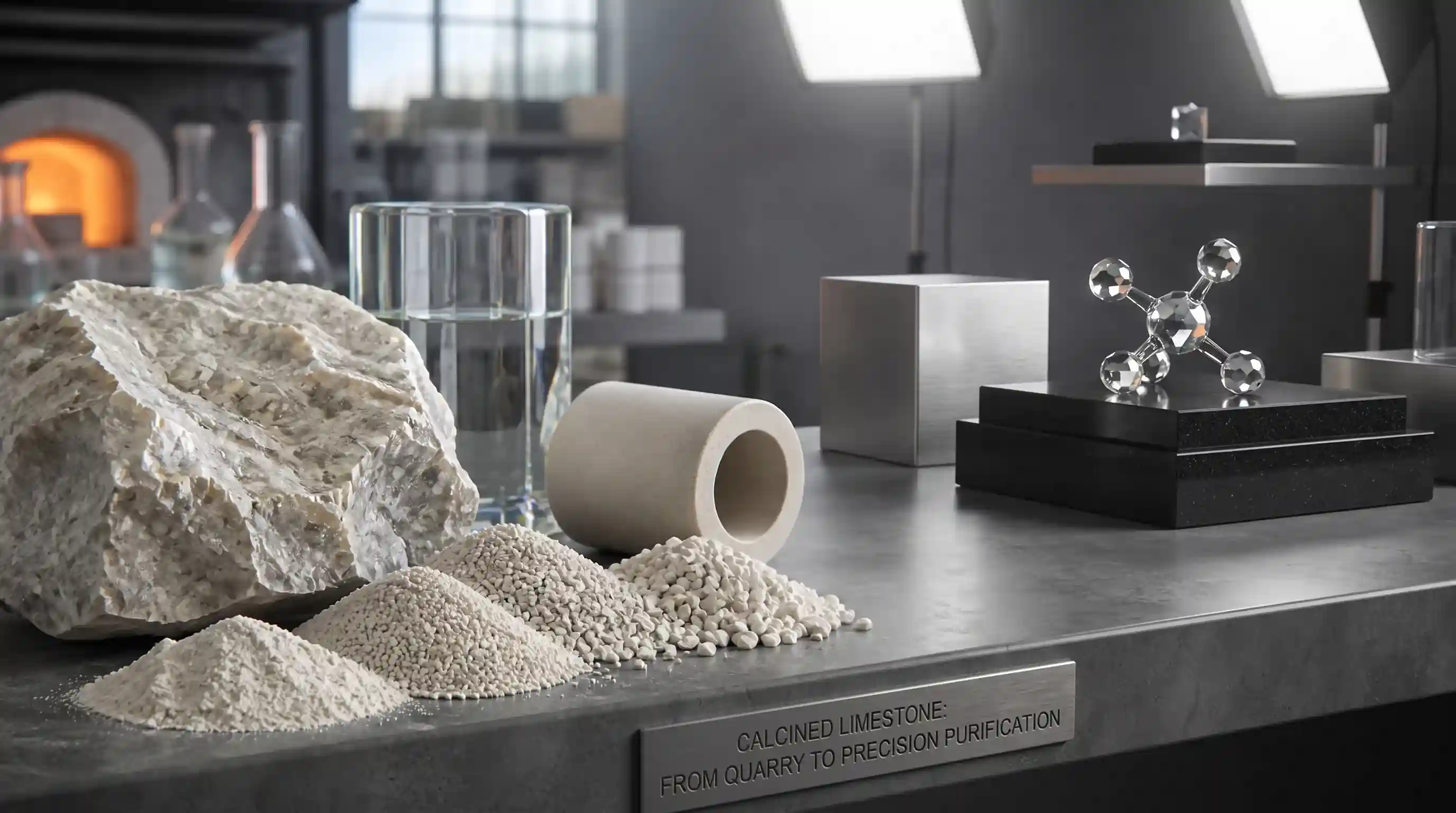
Reviewing the Application of Dolomite in the Paint and Resin Industries
Introduction to the Application of Dolomite in Various Industries
Mineral materials play a very key role in the development and advancement of various industries. Among these materials, dolomite, as a double carbonate rock of calcium and magnesium, holds a special place. The Kani Sang Amiran project, as a mineral producer, supplies this valuable material for various industrial uses. Accurate knowledge of the physical and chemical properties of this material helps it to be utilized in the best possible way across different industries.
Although general knowledge of minerals is limited, a closer examination shows that this material has abundant applications in foundational industries such as glassmaking, ceramics, and building materials. For more information about the capabilities of this mineral, you can visit the dolomite page and review the complete product details.
In this article, we intend to examine the various dimensions of using this mineral in industrial and manufacturing sectors and analyze its technical aspects so that industrial activists have a comprehensive perspective regarding it.
Understanding the Chemical and Physical Structure of Dolomite
To better understand the performance of dolomite in industrial processes, we need to take a look at its chemical structure. This mineral is known by the chemical formula CaMg(CO3)2, which is actually a combination of calcium carbonate and magnesium carbonate. The presence of the element magnesium in the structure of this rock creates a major difference between it and ordinary limestone.
Physically, this material has suitable hardness and resistance, and depending on crushing and granulation processes, it is supplied in the range of 10 to 40 mesh. This particle size is very suitable for specific industrial applications and facilitates the mixing and melting processes in related industries.
Mineral producers such as Kani Sang Amiran, with careful consideration in extraction and processing, offer a uniform and high-quality product to the market that provides the necessary standards for consumer industries.

The Vital Role of Dolomite in the Glassmaking Industry
The glass industry is considered one of the primary consumer sectors of dolomite. In the glass production process, adding magnesium and calcium oxide derived from this mineral significantly helps improve the physical and chemical properties of molten glass.
The presence of magnesium in the glass composition increases resistance to thermal shocks, lowers the melting point of the initial mixture, and also improves the chemical stability of the final product. For this reason, selecting raw materials with appropriate purity and standard granulation is of utmost importance in the quality of the produced glass.
Glass manufacturers are always looking for reliable suppliers who can continuously supply high-quality minerals with stable technical specifications so that industrial production lines can continue operating without interruption.
Widespread Applications of Dolomite in Ceramic Products
The ceramic and tile manufacturing industry is also considered another major consumer of dolomite. In the production of ceramic bodies and glazes, this material acts as a flux that helps melt other compounds at high temperatures and increases the structural integrity of the product.
Using this mineral in the formulation of ceramic bodies controls firing shrinkage and prevents products from warping. It also improves the final color of the ceramic body and increases the mechanical strength of tiles and ceramics.
Given the importance of raw material quality in the ceramic industry, the precise selection of the appropriate mesh granulation plays a decisive role in the quality of the final product, and experts in this field always emphasize the use of standard materials.

Application of Dolomite in Building and Civil Construction Materials
The construction industry is one of the most traditional yet largest consumers of dolomite. This material is used in the production of various building materials, and for a more detailed examination of this field, reading the comprehensive article What are the important applications of dolomite in construction and manufacturing industries? will be very enlightening.
This material is used in the production of mortars, concrete, asphalt, and construction fillers. The presence of high-quality mineral particles in building materials increases durability, stability against weather conditions, and improves the mechanical properties of engineering structures.
The Kani Sang Amiran project, by providing standard mineral products, covers the needs of the civil and construction sectors in the best possible way and provides high-quality materials to various projects.
Standards and Technical Specifications of Meshing in Mineral Products
One of the most important parameters in the quality and efficiency of mineral materials is particle size and their meshing range. The mesh range of our products varies between 10 and 40 mesh, which is very desirable for the mentioned industrial applications. To better understand industrial standards in this field, reading the article Reviewing mesh grading standards in various coated calcium carbonates provides useful supplementary information.
Precise control of meshing helps mineral materials to be uniformly distributed in the final formulation and chemical and physical reactions to be carried out with higher efficiency. This directly affects the quality of the final product.
Leading manufacturers, using modern granulation and screening equipment, always strive to offer products with appropriate and standard dimensional distribution to the market in order to satisfy industrial consumers.

Comparing Dolomite with Other Industrial Minerals
In the plastics, rubber, and polymer industries, mineral fillers also hold a special place; for example, to get acquainted with the applications of common fillers, reading the article Getting to know the application of coated calcium carbonate in the plastics industry is recommended. However, dolomite has unique characteristics due to its magnesium and calcium composition that distinguish it from pure calcium carbonate.
The presence of magnesium in the structure of this mineral causes its thermal resistance and chemical stability to be higher in certain specific industrial processes. These features have led glass and ceramic industries to specially replace other carbonate rocks with this material.
Choosing between these materials depends on the technical requirements of the production process, and materials engineers select the best option by thoroughly examining the properties of each.
Market Outlook and the Future Consumption of Dolomite in Industry
With the rapid development of manufacturing industries and the need for higher-quality materials and raw materials, the demand for standard mineral products, including dolomite, is constantly growing. Principled extraction and precise processing of this mineral rock can create high added value for the country's industrial economy.
The Kani Sang Amiran project, focusing on the extraction and qualitative processing of minerals, has taken firm steps towards supplying the needs of the glass, ceramic, and construction material industries and is always looking to improve its production standards.
Ultimately, the future of the mineral industry depends on innovation in processing processes, reduction of production costs, and the provision of products with precise technical specifications that can meet the complex needs of modern industries.

| Question |
Answer |
| What is dolomite? |
It is a double carbonate rock of calcium and magnesium used in various industries. |
| What is the chemical formula of dolomite? |
Its chemical formula is CaMg(CO3)2. |
| What is the meshing range of the products? |
Products are supplied in the range of 10 to 40 mesh. |
| What are the main applications of dolomite? |
Glass, ceramic products, and building materials are its main applications. |
| Is it used in the glassmaking industry? |
Yes, it is used as a source of magnesium and calcium oxide in glassmaking. |
| What is its role in the ceramic industry? |
It acts as a flux and improves the quality of the ceramic body. |
| Which entity produces this product? |
The Kani Sang Amiran project produces these mineral materials. |
| How can the product be ordered? |
You can proceed by visiting the product page on the Kani Sang Amiran website. |
| What is the difference between it and calcium carbonate? |
Dolomite has magnesium in its structure, which creates different thermal properties. |
| Is it used in building materials? |
Yes, it is used in the production of concrete, mortar, and building materials. |
Reference: Kani Sang Amiran Project - Industrial Mineral Production (https://ksamiran.ir/products/dolomite/)
:: برچسبها:
Dolomite ,
Reviewing the Application of Dolomite in the Paint and Resin Industries ,
:: بازدید از این مطلب : 0
|
امتیاز مطلب : 0
|
تعداد امتیازدهندگان : 0
|
مجموع امتیاز : 0

 عضو شوید
 عضویت سریع
 منوی کاربری

 آمار مطالب
 آمار بازدید


