
Specialized Application of Red Iron Oxide (Ochre) in Plastic Manufacturing
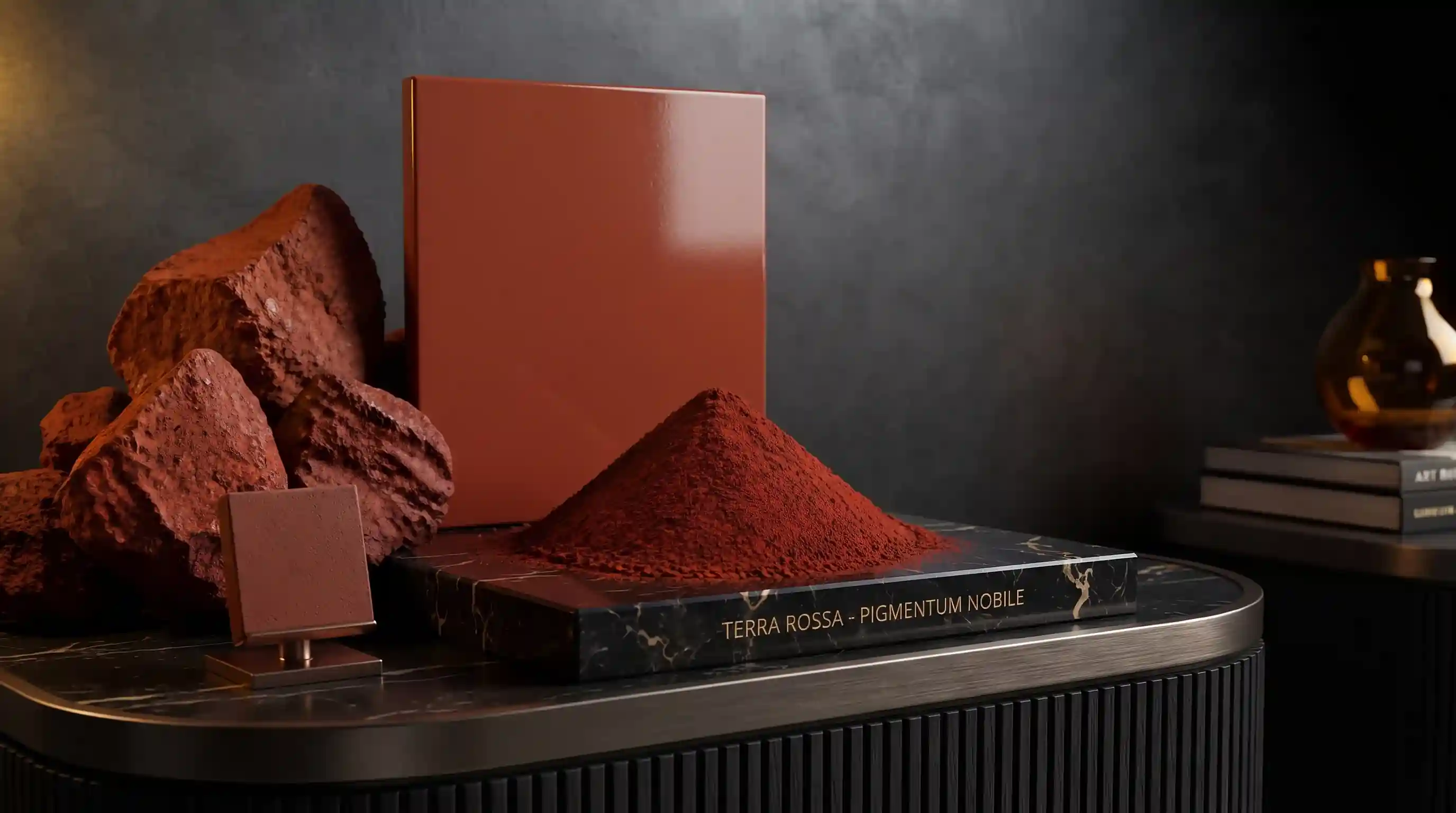
Specialized Application of Red Iron Oxide (Ochre) in Plastic Manufacturing
Introduction to Red Iron Oxide (Ochre) and Its Importance in Polymer Industries
Red iron oxide (ochre) mineral is recognized as one of the most important mineral pigments in various industries, having wide applications due to its stable chemical characteristics and excellent coloring properties. This valuable material has found a special place not only in paint, cement, and ceramic industries but also in plastic manufacturing. Industrial projects are constantly looking for high-quality raw materials to guarantee the durability and beauty of their final products. In this article, we intend to examine the specialized application of this mineral in the plastic industry and analyze its various dimensions.
Polymer industries require high-quality mineral pigments to achieve stable colors resistant to weather conditions. Red iron oxide (ochre), with its stable structure, is considered an ideal choice for this purpose. For more information about the characteristics of this product, you can visit the Red Iron Oxide (Ochre) page and review its technical specifications.
In addition to plastics, understanding other functional minerals in related industries helps advance technical knowledge. For example, in insulation discussions, studying the article Application of Industrial Barite in Sound and Thermal Insulation Production provides useful information for engineers. Also, in the field of prefabricated building materials, familiarity with the Application of Limonite Oxide (Yellow Ochre) in Prefabricated Materials is very instructive. Finally, examining the Role of Calcium Carbonate in Plastic Pipe Manufacturing will complete the knowledge chain of polymer product manufacturing.
Physical and Chemical Characteristics of Red Iron Oxide (Ochre)
Precise knowledge of the physical and chemical properties of red iron oxide (ochre) is of high importance for engineers and designers of polymer formulations. Due to its stable crystal structure, this material exhibits very high resistance against sunlight and oxidizing agents. Among the most important specifications of this material is its mesh range, which lies between 450 and 1500 mesh. This fine particle size allows for the uniform distribution of the pigment within the plastic matrix.
Proper dispersibility in polymeric materials is heavily influenced by granulation and particle size distribution. Red iron oxide (ochre), with the aforementioned mesh range, has the lowest amount of caking and easily disperses in various thermoplastic and thermoset polymers. This feature prevents the creation of structural weak points in final plastic parts and enhances the surface quality of the product.
Thermal stability is another key feature of this pigment. In plastic manufacturing processes, which are usually accompanied by high temperatures in extruders and injection molding machines, red iron oxide (ochre) maintains its structure without undergoing color change or thermal degradation. This stability ensures that the final product does not suffer from a drop in color quality during the manufacturing process.
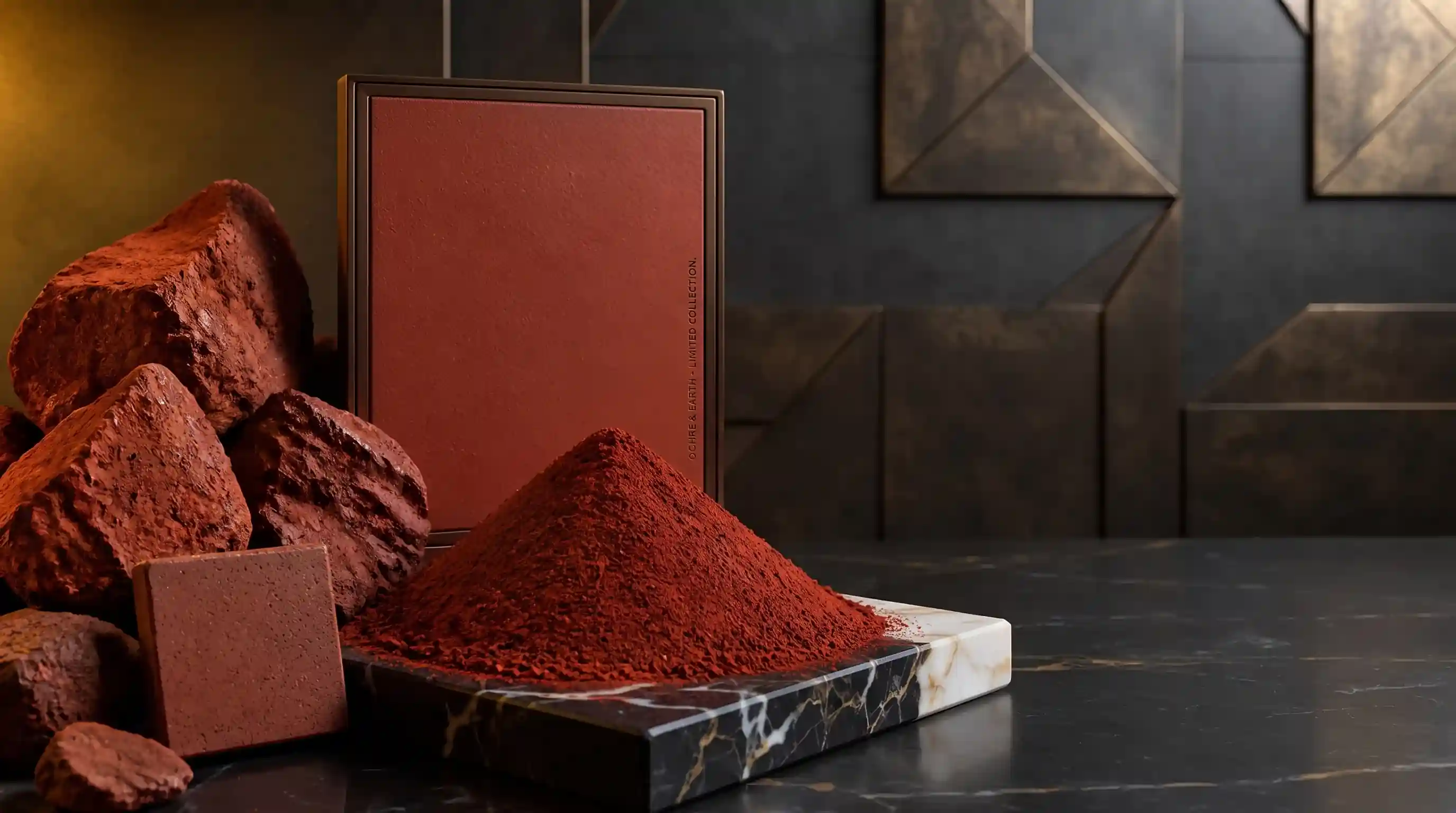
The Role of Red Iron Oxide (Ochre) as a Pigment in the Plastic Industry
The use of pigments in the plastic industry is not limited only to aesthetic aspects and coloring, but also includes the improvement of mechanical and protective properties of the polymer. Red iron oxide (ochre), as a powerful mineral pigment, has extraordinary coloring power that allows manufacturers to achieve their desired color shade with minimal consumption. This material covers a spectrum from dark red to light brown colors.
One of the main challenges in coloring plastics is the uniform distribution of the pigment and preventing the formation of color streaks. Micronized particles of red iron oxide (ochre) with a mesh range of 450 to 1500 penetrate well into the polymer matrix and create a completely homogeneous and uniform surface. This uniformity is of double importance in thin-walled plastic products and polymer sheets.
In addition to visual beauty, using this mineral pigment as a base colorant in plastic products increases the light stability of the product. Due to their inherent chemical structure, mineral pigments are more resistant to ultraviolet (UV) radiation than organic pigments and prevent premature degradation of the polymer.
Coating and Protection of Plastic Surfaces with Red Iron Oxide
In many industrial applications, plastic parts are exposed to harsh environmental conditions, moisture, chemicals, and direct sunlight. Adding standard mineral pigments such as red iron oxide (ochre) to plastic coating layers significantly increases surface resistance. This material acts as a protective shield and prevents the penetration of destructive agents into underlying layers.
Plastic coatings colored with red iron oxide (ochre) have shown higher durability against abrasion and environmental corrosion. The 450 to 1500 mesh range of this pigment causes the very fine pigment particles to fill the microscopic pores of the polymer surface, creating a denser structure. This density prevents water and gases from penetrating inside the plastic part.
Furthermore, in the manufacturing processes of plastic coatings and composites, the compatibility of the mineral with base resins is of great importance. Due to its appropriate purity, red iron oxide (ochre) does not create undesirable side reactions with polymers and guarantees the long-term stability of the coating, which reduces maintenance and part replacement costs.
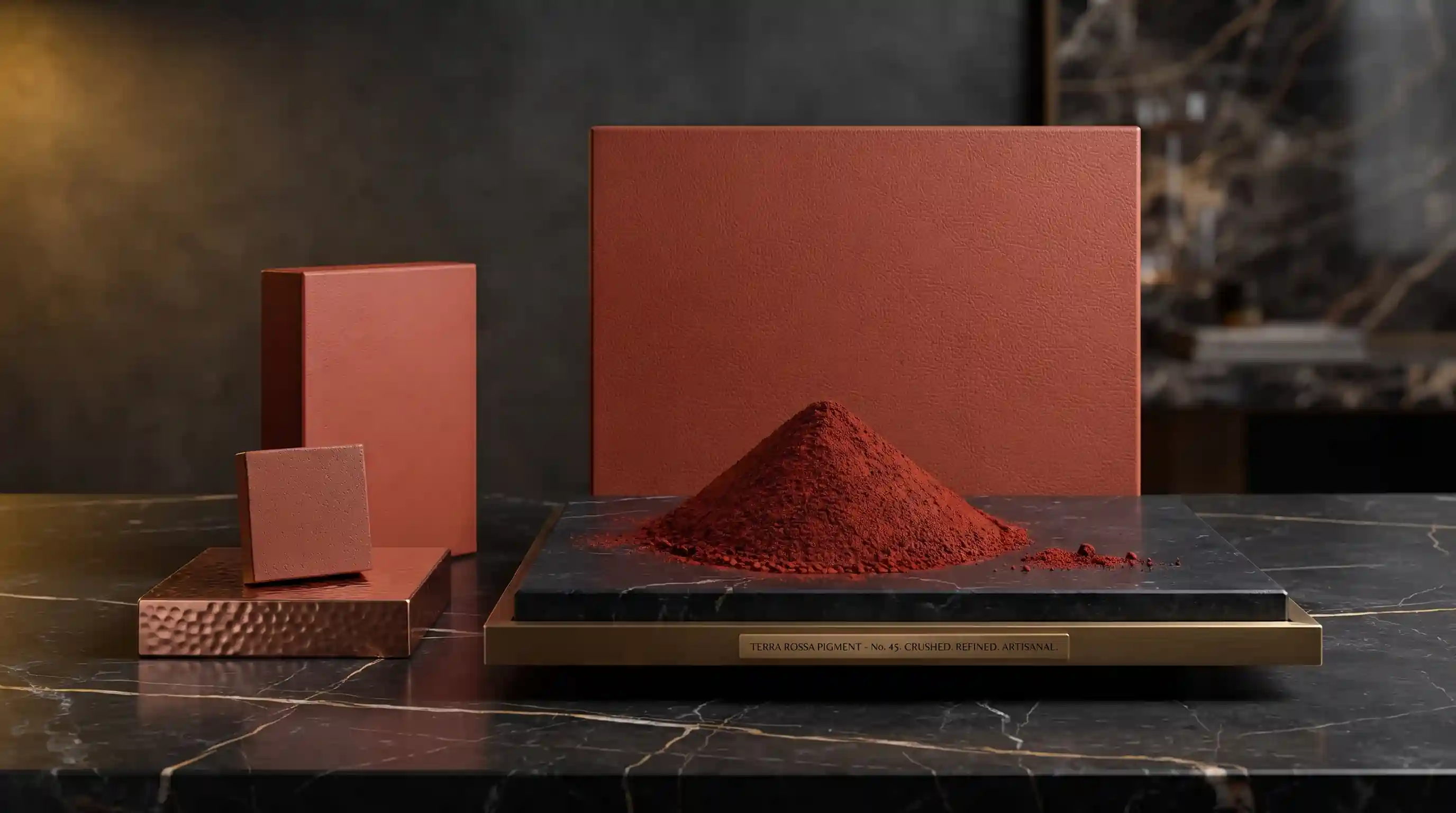
Traditional and Complementary Industrial Applications: Cement and Ceramic Products
Although the main focus of this article is on the plastic industry, examining the application roots of red iron oxide (ochre) in industries such as cement and ceramic products helps to better understand the value of this mineral. In the cement industry, this material is used as a colorant for colored concrete, concrete flooring, and facing bricks to enhance the visual beauty of structures without reducing the compressive strength of the cement.
In ceramic products as well, red iron oxide (ochre) plays a key role in the structure of glazes and tile bodies. This pigment remains completely stable at high firing temperatures in the pottery kiln and creates consistent, beautiful colors. The experience gained from the successful application of this material in ceramics and cement demonstrates its high structural quality, which has also been transferred to the plastic industry.
The variety of applications of red iron oxide (ochre) in the fields of pigment, coating, cement, and ceramic products is a testament to the flexibility and unique properties of this mineral. Plastic manufacturers can rely on the consistent standards of this product in the mineral industries to develop reliable formulations and ensure the optimal performance of the final product.
Optimizing Polymer Formulation with a Mesh Range of 450 to 1500
The particle size of fillers and pigments in the plastic industry has a direct impact on mechanical properties such as tensile strength, impact resistance, and modulus of elasticity. Red iron oxide (ochre), with a mesh range of 450 to 1500, provides a wide spectrum of micronized particle sizes for formulators to choose the appropriate mesh based on the exact requirements of the production process.
The use of higher meshes (finer particles) is applied in the production of thin plastic films and sensitive injection-molded parts to prevent the creation of stress points and tearing. Conversely, lower meshes may be used in thicker applications that require higher volumetric loading. Precision in choosing the mesh of red iron oxide (ochre) is the key to achieving a balance between mechanical properties and production cost.
Homogeneous dispersion of particles in extruder machines requires precise control of thermal and shear parameters. Red iron oxide (ochre) particles, with a suitable size distribution, easily undergo mechanical shearing and their potential agglomerates are broken down. This leads to improved surface quality, reduced production errors, and increased productivity of plastic production lines.
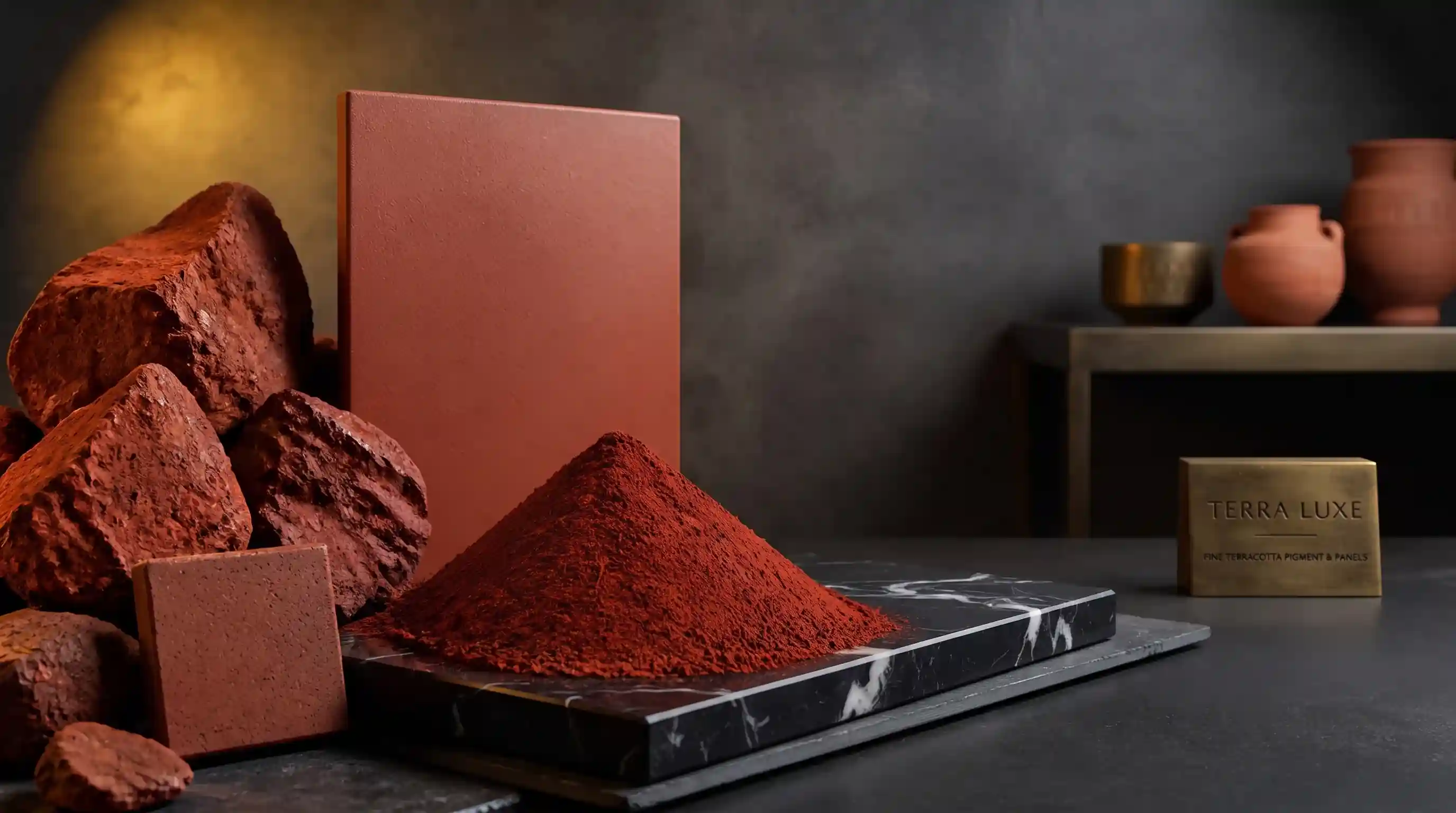
Challenges and Technical Tips in Using Mineral Pigments in Plastics
The application of mineral pigments such as red iron oxide (ochre) in polymer matrices is always accompanied by technical challenges that require precise engineering knowledge. One of these challenges is the phenomenon of particle agglomeration or caking, which if not properly controlled, can cause a drop in the polymer's mechanical properties and create unwanted color spots in the final product.
To overcome this problem, the use of dispersing agents and high-quality masterbatches is recommended. Red iron oxide (ochre) with a mesh range of 450 to 1500, due to its standard granulation, reacts well with these additives and maintains dispersion stability during the polymer melting and injection process. This guarantees the structural quality of plastic parts.
Another technical point is controlling the moisture content present in the mineral powder before entering the extruder. The presence of moisture in the pigment can cause air bubbles in the final plastic part and reduce its mechanical resistance. Therefore, proper storage and pre-consumption drying of red iron oxide (ochre) are among the essential measures in plastic production units.
Conclusion and Future Outlook of Red Iron Oxide Application in Polymer Industries
The growing trend of using processed minerals in advanced industries has made the importance of high-quality pigments more apparent than ever. Red iron oxide (ochre), with its prominent features such as excellent thermal stability, high coloring power, UV resistance, and a mesh range of 450 to 1500, has solidified its position as a strategic raw material in the plastic industry.
The variety of primary applications of this product in pigment, coating, cement, and ceramic product fields demonstrates its reliability and high quality. Engineers and manufacturers of plastic products, by utilizing the properties of this mineral, can produce more durable, beautiful, and environmentally resistant products that meet the stringent demands of today's market.
Ultimately, continuous research and development in improving dispersion methods and novel polymer formulations will pave the way for newer applications of red iron oxide (ochre). Investing in standard and high-quality minerals will be the key to the sustainable success of production units in industrial competition.

| Question | Answer |
|---|---|
| What is red iron oxide (ochre)? | It is a natural and industrial mineral pigment with high stability used in paint, plastic, cement, and ceramic industries. |
| What is the mesh range of red iron oxide (ochre)? | This product is supplied in the mesh range of 450 to 1500. |
| What are the main applications of red iron oxide? | Main applications include pigment, coating, cement, and ceramic products. |
| Why is red iron oxide used in plastics? | Due to its high coloring power, thermal stability, and UV resistance. |
| Is this pigment resistant to heat? | Yes, its mineral structure is completely stable at high temperatures of the plastic process. |
| How can pigment caking be prevented? | By using appropriate granulation (mesh 450 to 1500) and standard dispersing additives. |
| What is the role of this material in the cement industry? | It is used to produce colored concrete, flooring, and decorative materials. |
| Is red iron oxide used in ceramics? | Yes, it is used as a colorant in tile and ceramic glazes and bodies. |
| How can this product be procured? | It can be ordered through the dedicated product page on the Kani Sang Amiran website. |
| Does particle size affect the final quality of plastic? | Yes, a finer mesh range causes more uniform distribution and improved mechanical properties. |
Kani Sang Amiran Project — Mineral and Industrial Materials Production















ورود کاربران
خوش آمدید! لطفا وارد حساب خود شوید