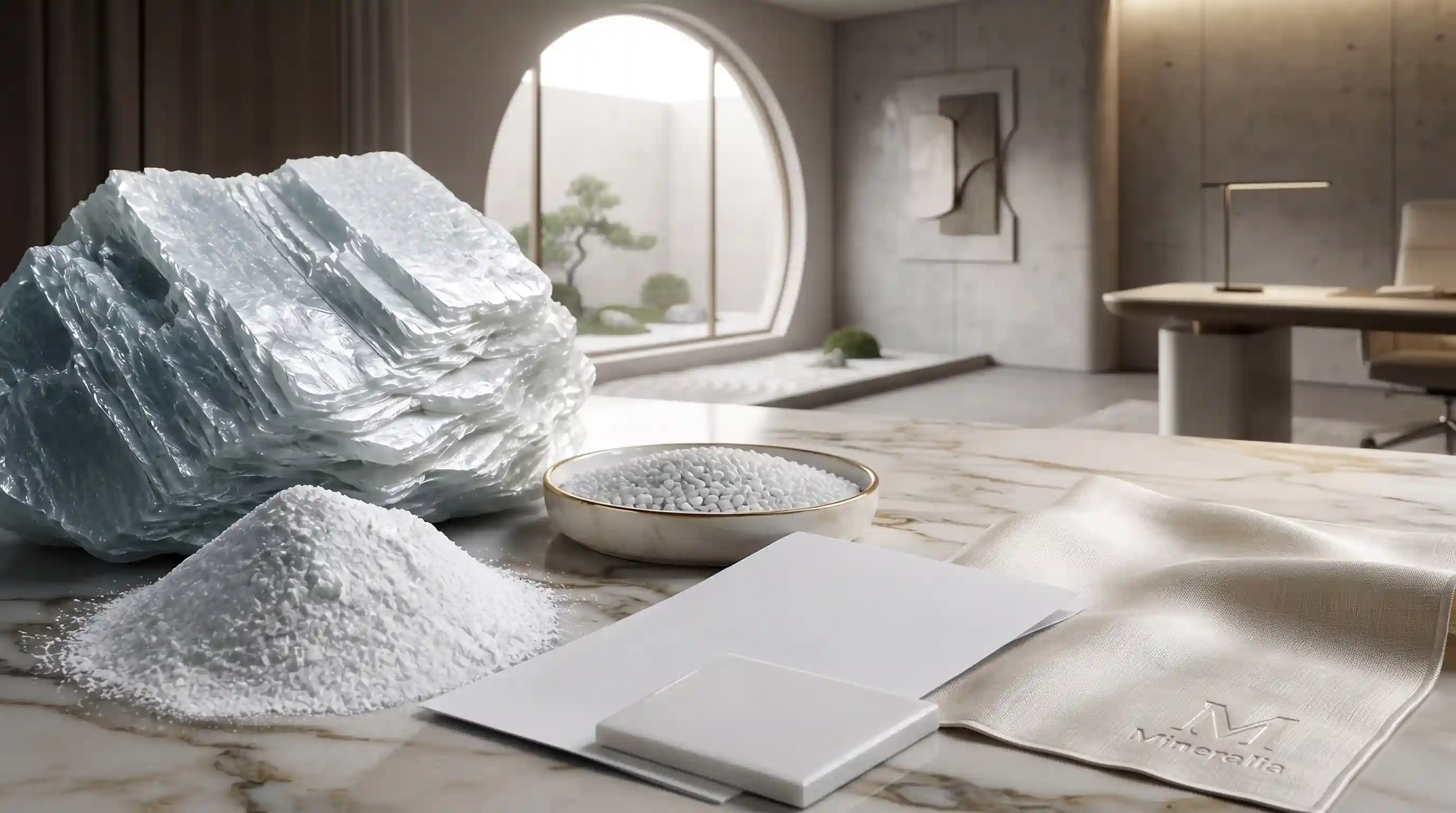
The Impact of White Talc on Increasing the Lifespan of Polymer Parts
Introduction to the Role of Minerals in Polymer Industries and the Importance of White Talc
Polymer industries are nowadays considered one of the most dynamic and extensive industrial fields in the world. With technological advancements and the increasing demand for high-quality and durable polymer parts, materials engineers and manufacturers are constantly seeking solutions to improve the mechanical, thermal, and dimensional properties of polymers. Amidst this, the use of mineral fillers has found a special place. One of the most effective and widely used mineral materials is white talc, which is recognized as a strategic additive in various formulations.
Kani Sang Amiran Project, as one of the leading producers in the field of minerals, plays an important role in the supply chain of various industries by supplying and processing this high-quality mineral material. The unique physical and chemical characteristics of this substance have caused its presence in the polymer structure to create a significant improvement in the lifespan and stability of final parts. On the other hand, familiarizing oneself with reviewing the technical benefits of using micronized white talc helps industrialists utilize this material with maximum efficiency.
In this comprehensive article, we thoroughly examine the mechanisms of white talc's impact on increasing the lifespan of polymer parts. We investigate how this mineral powder with its lamellar structure can transform the tensile properties, heat resistance, and dimensional stability of polymer parts, and why choosing a high-quality white talc is a necessity for manufacturing units.
What is White Talc and What Are Its Technical Specifications?
Talc is a hydrated magnesium silicate that is extracted in nature as mineral rocks and then prepared for use through crushing and micronization processes. The white type of this material has sensitive applications in advanced industries due to its high purity and the absence of color impurities such as iron. Thoroughly understanding the technical specifications of this material is of high importance for polymer engineers.
One of the most important parameters in the specifications of this material is its mesh size range. This product is usually processed and supplied in the 450 to 2500 mesh range. This variety in mesh sizing allows manufacturers to choose the appropriate particle size based on their processing needs. Also, for further familiarity with the economic details of this material, reading the article reviewing the price of white talc and the factors affecting its valuation is recommended.
The crystalline structure of this material is lamellar, which is the key to many of its mechanical and thermal behaviors within the polymer matrix. Unlike many granular fillers, the lamellar-shaped particles of talc lie parallel to each other in the polymer matrix and create a compact network, the mechanism of whose impact on part lifespan we will discuss in detail in subsequent sections.
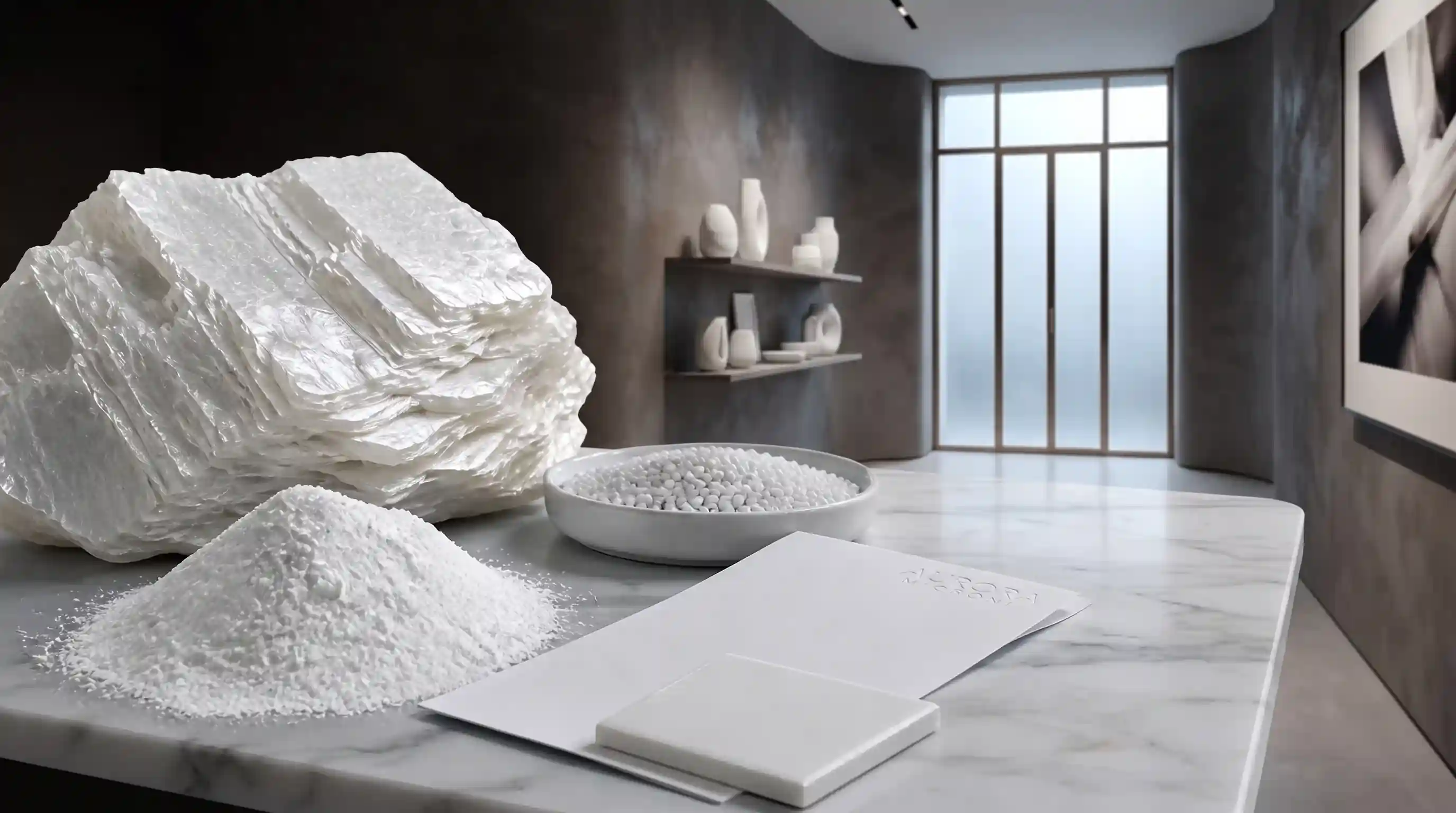
The Role of White Talc's Lamellar Structure in Improving Polymer Mechanical Properties
One of the primary reasons leading to the increased lifespan of polymer parts is the improvement of their mechanical properties after adding filler. The lamellar structure of this mineral material plays a very decisive role in this regard. When the micronized powder is mixed and compounded with molten polymer, the talc flakes orient in the direction of molding or extrusion flow.
This lamellar orientation leads to an increase in the flexural modulus and hardness of the polymer part. As a result, the part shows greater resistance against external forces, bending, and deformation. In addition, the uniform distribution of these fine particles in the 450 to 2500 mesh range significantly helps fill microscopic voids and reduce internal stresses.
On the other hand, a more detailed examination of the role of white talc in improving the appearance quality of polymeric products shows that in addition to mechanical strength, surface quality, controlled glossiness, and the absence of peeling in the final parts are also drastically improved by this mineral additive, and this overall guarantees the long-term durability of the part.
Increasing Dimensional Stability and Heat Resistance of Polymer Parts
Polymer parts face numerous thermal challenges throughout their lifecycle. Temperature changes can cause shrinkage, expansion, and ultimately warping of the part. The presence of white talc in polymer compound formulations significantly reduces the coefficient of linear thermal expansion (CLTE).
A lower thermal expansion coefficient means that the polymer part well maintains its dimensions and does not deform when exposed to temperature fluctuations. This feature is of paramount importance for automotive parts, home appliances, and industrial equipment where dimensional accuracy is vital. Talc mineral flakes act as thermal barriers and control heat transfer within the polymer matrix.
By providing this high-quality material for applications such as masterbatch and compounds, the Kani Sang Amiran Project helps industrial manufacturers produce products with higher heat resistance. This thermal and dimensional stability has the most direct impact on increasing the useful life of the part under harsh and long-term operating conditions.

Main Applications of White Talc in Masterbatch, Compound, and Paint
The applications of this mineral material are very diverse and it is recognized as a key raw material in various industries. In the masterbatch industry and the production of polymer compounds, this powder acts as a multi-purpose filler that, in addition to reducing the final cost, enhances the final product properties.
In the paint manufacturing industry, using this material as a filler and matting agent creates a notable improvement in coverage, color stability against weathering, and the resistance of the paint film. The lamellar structure of talc in paint creates a barrier against moisture and oxygen penetration, preventing the degradation of underlying layers.
The 450 to 2500 mesh range of this product enables optimal use in various industries including specialized masterbatch production, engineering plastic compounds, and paint systems. A thorough understanding of each application's characteristics allows industrialists to get the best productivity out of this valuable material.
The Role of White Talc in the Paper and Ceramic Products Industries
In addition to the polymer and paint industries, this mineral material holds a special place in the papermaking industry and the production of ceramic products. In the paper industry, this material is used as a coating and filler to improve whiteness, surface smoothness, opacity, and the printability of paper.
In ceramic products, this material is used as a source of magnesium and silica in ceramic body and glaze compositions. Its presence in ceramic formulations leads to lowered firing temperatures, improved thermal shock resistance, and increased mechanical strength of ceramic parts after firing.
By supplying high-quality standards for this product, the Kani Sang Amiran Project has met the needs of the paper and ceramic industries for a homogeneous and high-quality mineral material. This breadth of application demonstrates the fundamental importance of this mineral powder in enhancing the quality and durability of various products.
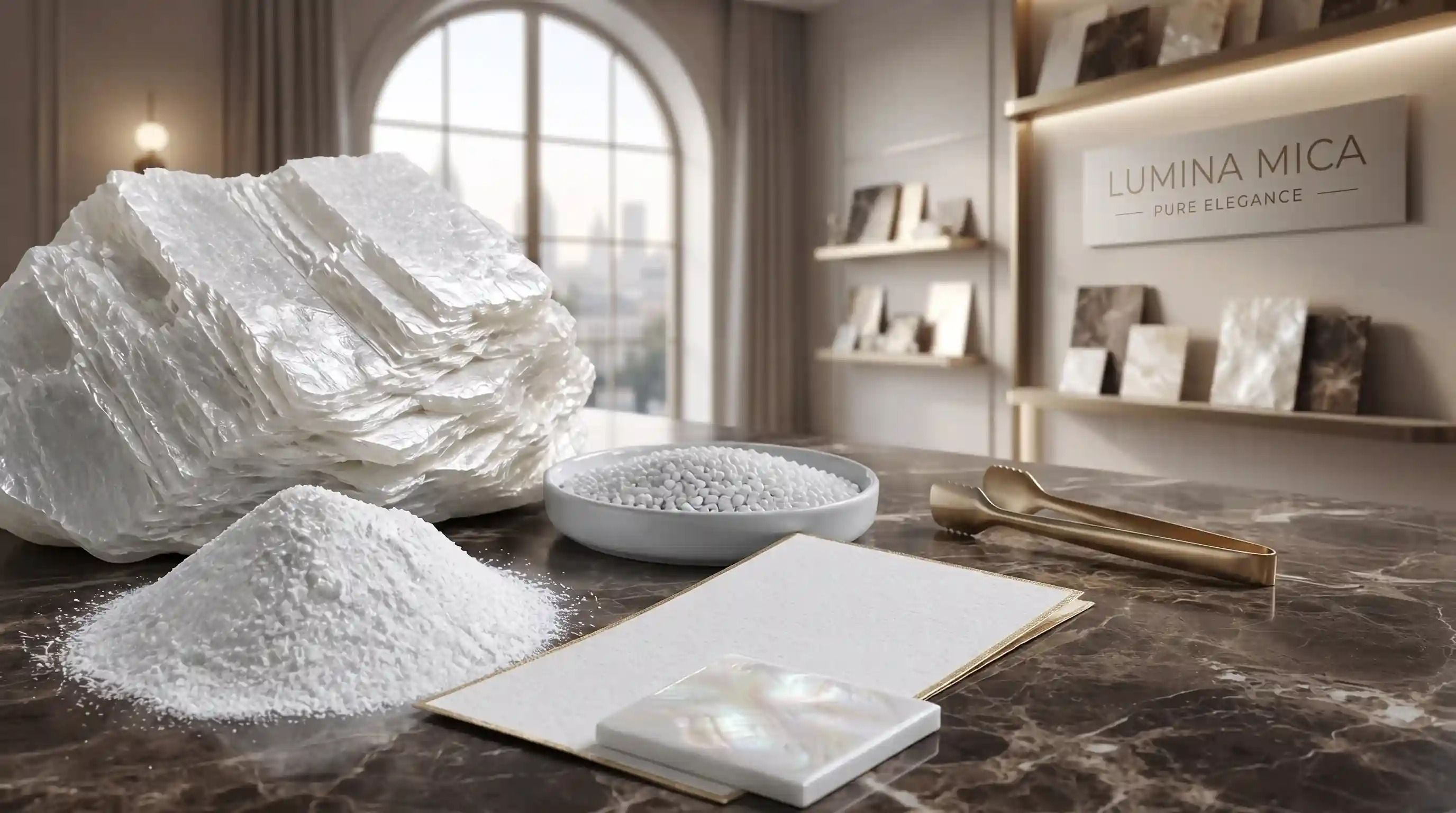
Mechanisms of Preventing Degradation and Increasing the Useful Life of Parts
To deeply understand how this material increases the lifespan of polymer parts, one must point to its inhibitory mechanisms against environmental degradation factors. The main destructive factors include ultraviolet (UV) rays, moisture, oxygen, and continuous mechanical stresses.
Talc mineral particles resist the penetration of gases and moisture into the polymer structure by creating a tortuous path. This longer path that aggressive molecules must travel drastically reduces the rate of oxidative degradation and penetration. As a result, the protected polymer will have a longer lifespan in open-air spaces and unfavorable weather conditions.
Also, by improving stress distribution throughout the part with the help of micronized particles, the likelihood of micro-crack growth and sudden failure (fatigue failure) is minimized. These combined mechanisms cause parts manufactured with compounds containing this filler to show extraordinary durability.
Conclusion and Outlook of Using White Talc in Industry
In this article, we comprehensively examined the impact of white talc on increasing the lifespan of polymer parts. It became clear that this mineral material, with its unique lamellar structure, appropriate mesh sizing range from 450 to 2500, and stable chemical properties, plays an irreplaceable role in improving the mechanical properties, thermal stability, and dimensional stability of polymers.
Focusing on the production and supply of high-quality minerals for the masterbatch, compound, paint, paper, and ceramic industries, the Kani Sang Amiran Project has provided a suitable platform for upgrading the quality of domestic production. The correct selection and principled use of this powder not only optimizes production costs but also dramatically increases the quality and lifespan of final products.
The future outlook of polymer industries indicates that the tendency towards using engineered mineral fillers is increasing day by day, and this material will remain one of the main pillars for developing high-quality and durable polymer products.
| Question |
Answer |
| What is white talc and what are its applications? |
It is a hydrated magnesium silicate used in masterbatches, compounds, paints, paper, and ceramics. |
| What values does the mesh sizing range of this product have? |
This product is processed and supplied within the 450 to 2500 mesh range. |
| How does this material increase the lifespan of polymer parts? |
By having a lamellar structure, improving mechanical properties, reducing the coefficient of thermal expansion, and creating a barrier against the penetration of destructive environmental factors. |
| Is this material also used in the paint industry? |
Yes, it is used as a filler, matting agent, and enhancer of paint film resistance against moisture. |
| What is the role of this material in the papermaking industry? |
It is used to improve the whiteness, surface smoothness, opacity, and printability of paper. |
| What is the application of this material in ceramic products? |
It is used as a source of magnesium and silica to reduce firing temperature and improve thermal shock resistance. |
| What effect does the lamellar structure of this material have on the compound? |
It leads to an increase in the flexural modulus, hardness, and dimensional stability of the polymer part. |
| Which company is the main manufacturer of this product in Iran? |
Kani Sang Amiran Project operates as a mineral producer. |
| How can more technical information be obtained? |
By reading specialized articles regarding the technical benefits of this mineral material on the Kani Sang Amiran website. |
| Is this material effective in reducing the shrinkage of polymer parts? |
Yes, by reducing the coefficient of linear thermal expansion, it prevents the part from warping. |
Kani Sang Amiran Project — Mineral production and specialized processing of white talc.
:: برچسبها:
White Talc ,
The Impact of White Talc on Increasing the Lifespan of Polymer Parts ,
:: بازدید از این مطلب : 0
|
امتیاز مطلب : 0
|
تعداد امتیازدهندگان : 0
|
مجموع امتیاز : 0


 عضو شوید
 عضویت سریع
 آمار مطالب
 آمار بازدید


