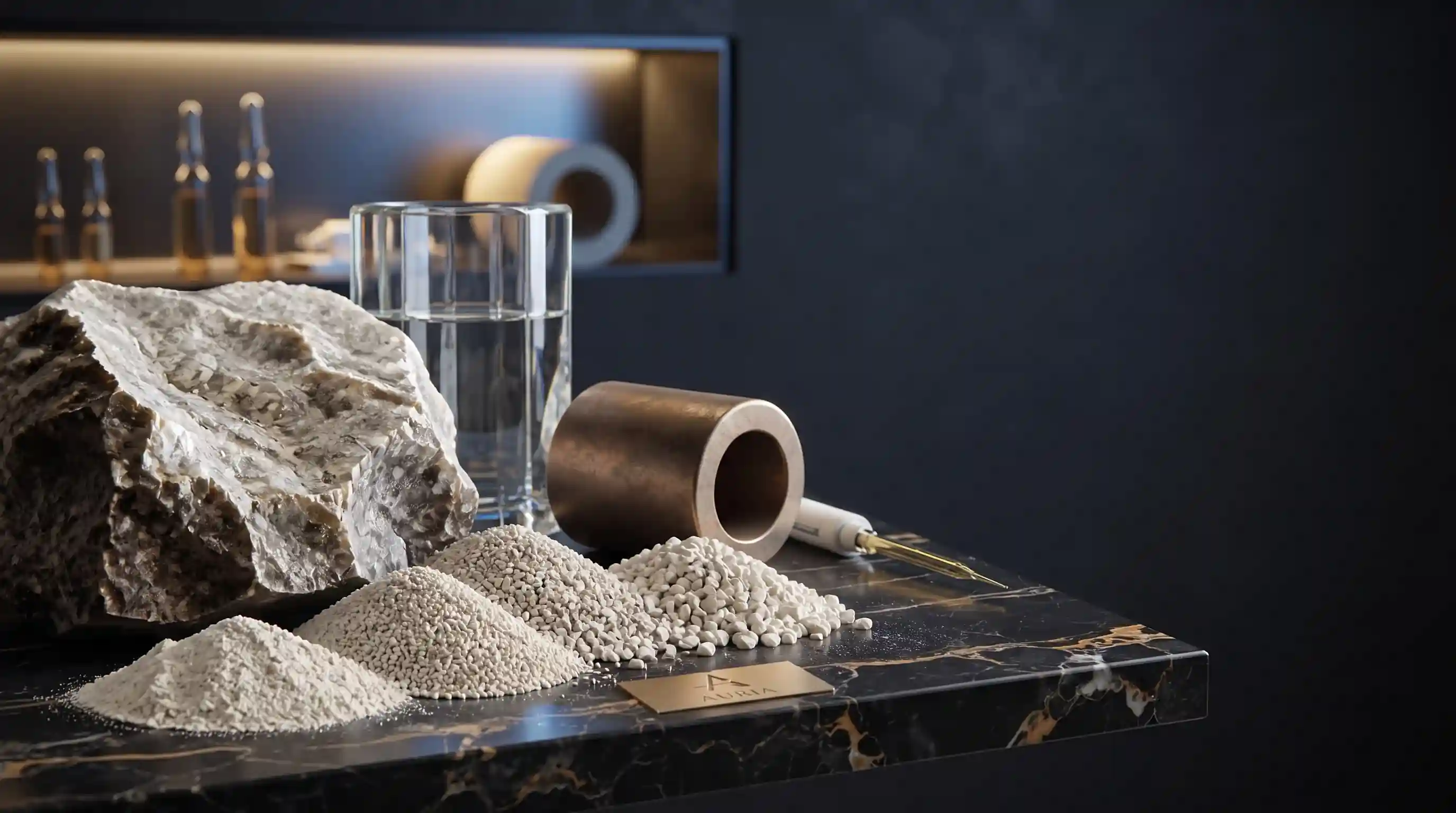
The Vital Role of Dolomite in Water Treatment and Environmental Industries
Introduction to the Importance of Minerals in Modern Industries and Introduction to Dolomite
Minerals play a fundamental role in industrial development, improving product quality, and engineering processes. Among these materials, carbonate minerals hold a special place and are recognized as vital raw materials in various production sectors. Precise understanding of the structure and characteristics of these materials can pave the way for optimizing consumption.
One of the most widely used of these compounds is dolomite, which is known as a double carbonate of calcium and magnesium. With a balanced composition of key elements, this mineral exhibits unmatched efficiency in various industries, including glass production, ceramics, and building materials, helping engineers achieve high quality standards.
The Amiran Stone Mineral Project, as a reputable mineral producer, supplies this valuable material with standard technical specifications. To examine the features in more detail and order this material, you can visit the dedicated dolomite page and obtain more complete information.
In addition to traditional applications, examining the role of companion minerals such as bentonite in optimizing engineering processes is important. For further reading in this area, the specialized article The Role of Bentonite in Water and Industrial Wastewater Treatment is recommended, which explores the technical dimensions of treatment.
Understanding the Chemical and Physical Structure of Dolomite in Industrial Applications
Examining the chemical structure and physical characteristics of any mineral is the main key to determining its field of application in industry. With a specific chemical formula, this material contains appropriate proportions of calcium carbonate and magnesium carbonate, which imparts high thermal and mechanical stability to it.
In the context of industrial processing, granulation and mesh size are of utmost importance. This mineral is produced and supplied in a mesh range of 10 to 40 mesh, and this optimal granulation allows for its uniform distribution across various industrial matrices, maximizing reaction efficiency.
In addition to physical properties, the favorable reactivity of this material at high temperatures makes it an ideal choice for heat-intensive industries. Precise control of particle dimensions within the mentioned mesh range helps ensure that melting and firing processes are carried out with the lowest level of impurities and the highest quality.
The combination of calcium and magnesium properties in this mineral structure significantly enhances the resistance of final products against environmental factors and thermal stresses, improving the overall performance of structures or ceramic products.

The Key Role of Dolomite in the Glass and Crystal Manufacturing Industry
The glassmaking industry is a major consumer of high-quality minerals, where the purity and chemical composition of raw materials have a direct impact on the transparency and durability of the final product. Meanwhile, the use of this mineral as a source supplying magnesium and calcium oxide has become widespread.
The presence of this material in the glass batch (raw material mixture) reduces the melting point of the compound, improves the efficiency of melting furnaces, and increases the chemical resistance of glass against corrosive agents. Its standard granulation plays an important role in complete dissolution within the melt.
To better understand the role of mineral additives in this industry, reading the specialized article The Role of Red Iron Oxide (Ochre) in Glass Manufacturing Industries provides valuable information on improving the optical and color properties of glass.
The precise integration of this material with other glassmaking raw materials prevents the formation of stones and structural defects in the glass, providing a uniform, transparent, and high-quality product for architectural applications and kitchenware.
Application of Dolomite in the Ceramics Industry and High-Quality Tile Manufacturing
The ceramics and tile-making industry requires raw materials that maintain their dimensional stability at high temperatures and create a dense, strong ceramic body. This mineral acts as a strong flux in the ceramic body and glaze, helping to significantly reduce the firing temperature.
The presence of magnesium and calcium ions in the structure of this material improves sintering properties and controls thermal shrinkage to a standard limit. This prevents warping of ceramic products during the firing process.
Using the appropriate granulation of 10 to 40 mesh in certain specialized ceramic formulations helps create a controlled porous structure that improves glaze adhesion to the body and ensures the final beauty of the product.
Furthermore, the stability of supply sources for this mineral by the Amiran Stone Mineral Project has made it possible for ceramic factories to continue production without a drop in quality, optimizing final production costs.
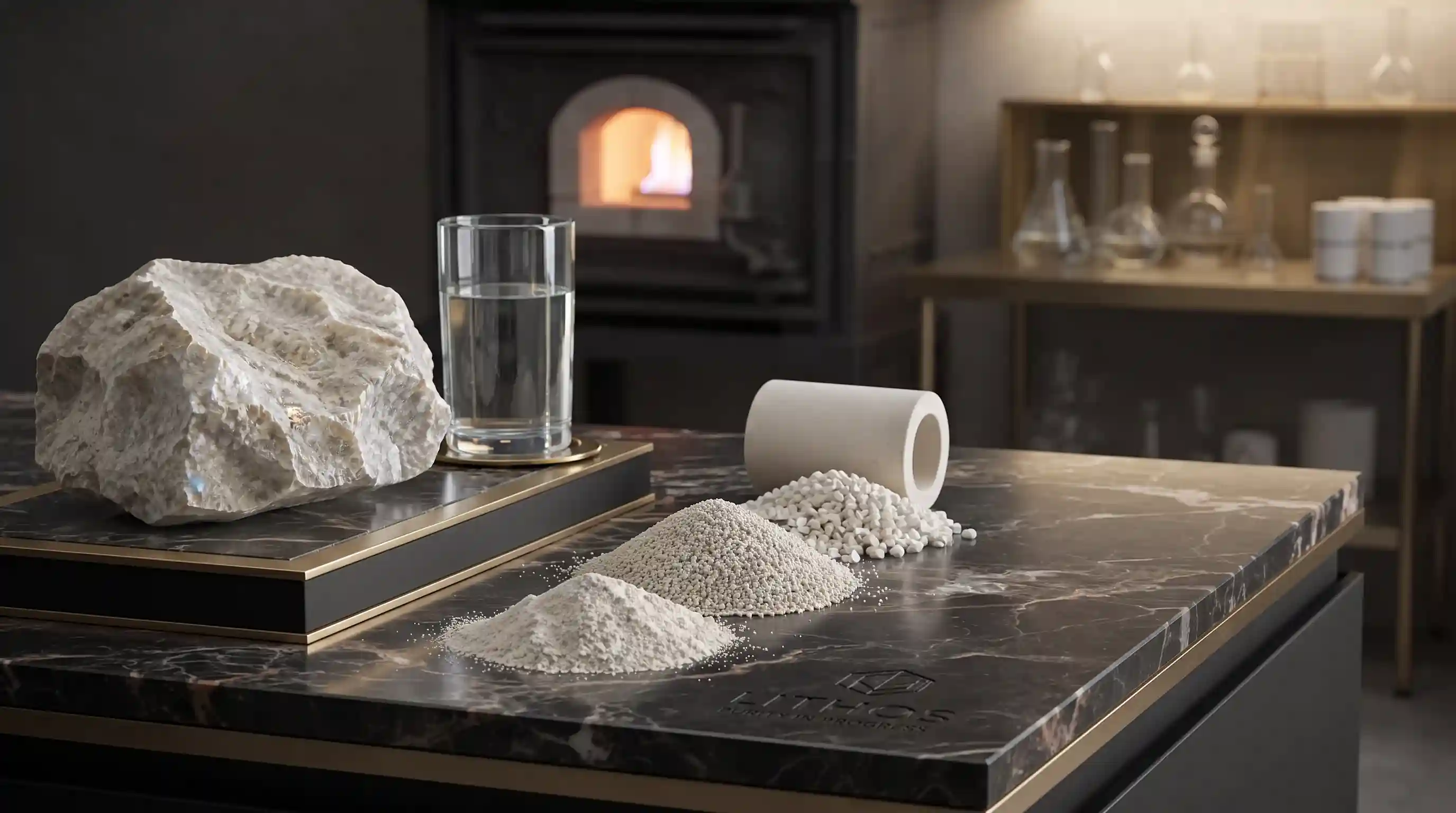
Application of Dolomite in Construction Materials and Civil Engineering
The civil engineering and construction materials sector has long been a primary consumer of rocks and mineral powders. Due to its suitable hardness, chemical stability, and resistance to weather conditions, this material holds a special place in this field.
In the production of asphalt, specialized concretes, and foundational materials, the use of various granulations of this material helps improve the density and compressive strength of structures. The particles of this material effectively fill the empty spaces between other grains, creating a dense structure.
In addition, in the production of cement and gypsum-based products, the presence of this mineral can improve setting times and the mechanical properties of mortar. Resistance to freeze-thaw cycles is another advantage of using it in exterior building materials.
Compliance with production standards and precise granulation within the specified mesh range guarantees the uniform performance of construction materials containing this material in major civil and infrastructural projects across the country.
Examining Environmental Impacts and Sustainability in Mineral Resource Exploitation
Environmental protection and sustainable development are core pillars of modern mining activities. The extraction and processing of minerals must be carried out with the least amount of damage to the regional ecosystem and with the highest energy efficiency to preserve resources for future generations.
During the production and processing of this mineral, tailing management, dust emission reduction, and water consumption optimization in crushing and sizing units are of high importance. Modern technologies play a significant role in pollutant control.
Examining the impact of minerals on environmental remediation is also important; for example, reading the article The Role of Red Iron Oxide (Ochre) in Paper Manufacturing Industries shows how optimizing industrial processes can help reduce the ecological footprint.
By adhering to responsible extraction principles and strict quality control, the Amiran Stone Mineral Project strives to supply the minerals needed by industries with the lowest environmental burden and to comply with sustainable development standards at all stages of production.
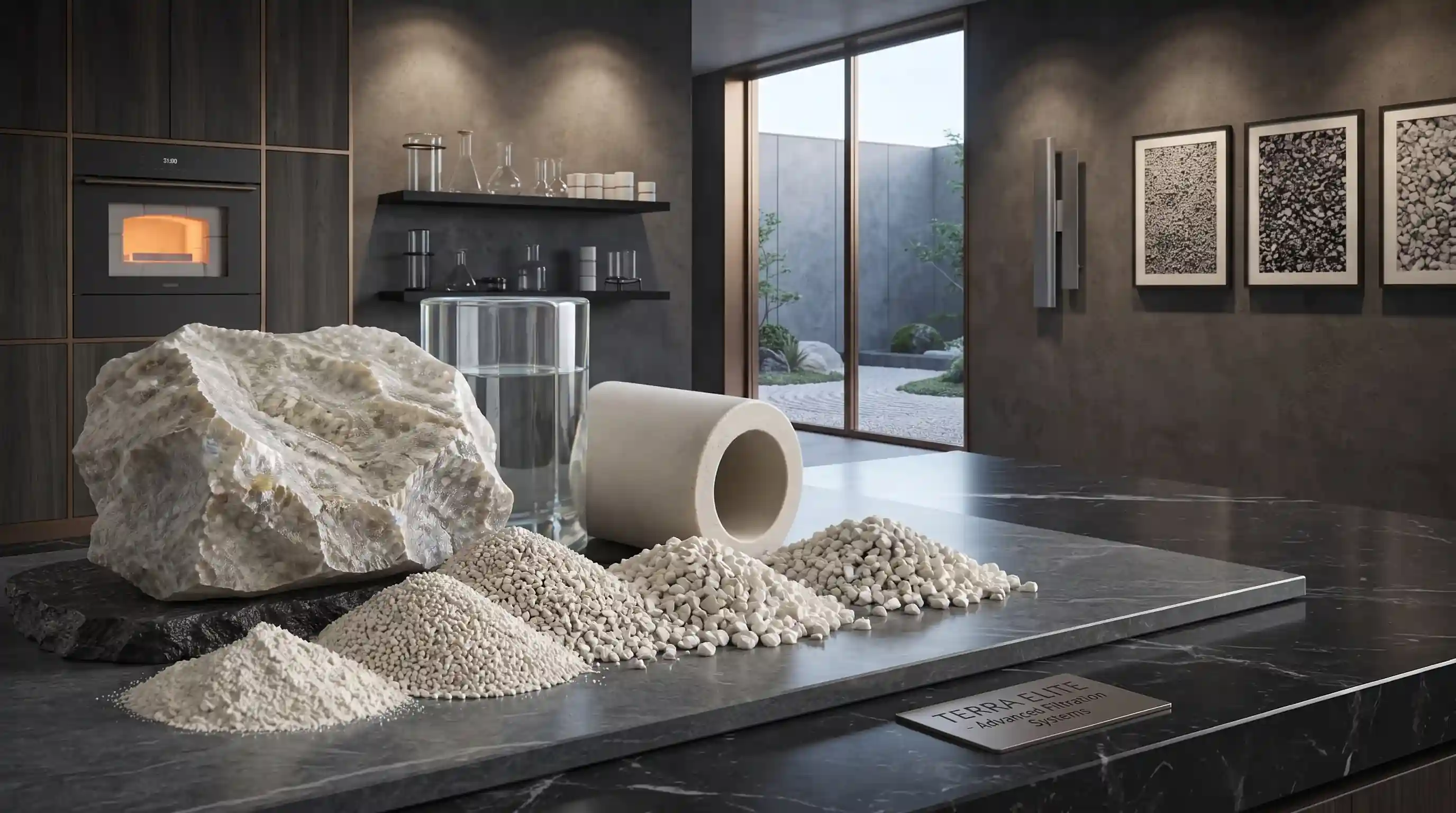
Quality Control, Standardization, and Advanced Processing of Dolomite
Ensuring the quality of minerals delivered to various industries requires the establishment of strict quality control systems and precise laboratory analyses. Chemical purity and the absence of harmful impurities, such as excess iron oxide, are considered vital factors in the acceptance of raw materials.
The production process includes primary crushing, secondary crushing, and precise granulation to achieve the 10 to 40 mesh range with the highest separation accuracy. The use of modern screening equipment and industrial dust collectors guarantees the uniformity of the final product.
By conducting XRF and XRD tests, quality control laboratories periodically evaluate the mineral composition and the percentage of calcium and magnesium carbonate to ensure that the mineral is supplied exactly according to the needs of the glass, ceramics, and construction industries.
This continuous monitoring has earned the trust of major consumer industries and demonstrates the producers' commitment to offering high-standard mineral products that are competitive in domestic and regional markets.
Future Market Outlook and Optimization of Dolomite Consumption in Industry
With the rapid growth of industrial technologies and the need for higher quality materials, the demand for premium mineral raw materials has taken an upward trajectory. Due to its numerous economic and technical advantages, this mineral will remain the first choice of many engineers and industrial designers.
The development of novel processing methods, improved thermal recovery in furnaces, and reduced energy consumption in glass and ceramic production units require a deeper understanding of the physicochemical properties of this material. Research in this field is continuously ongoing.
By monitoring market needs and upgrading its production lines, the Amiran Stone Mineral Project is fully prepared to meet the requirements of various industries for this mineral. Focusing on sustainable quality and timely delivery is the core strategy of this organization in the market.
Ultimately, awareness of the technical specifications and precise applications of this mineral helps industrialists make smart choices to maximize the efficiency of their production lines and successfully navigate the path of sustainable development.

| Question |
Answer |
| What is dolomite? |
It is a double carbonate mineral of calcium and magnesium. |
| What is the mesh range of this product? |
The mesh range is 10 to 40 mesh. |
| What are the main applications of dolomite? |
Glass industries, ceramic products, and construction materials. |
| Who is the producer of this product? |
Amiran Stone Mineral Project. |
| Does this material play a role in the glass industry? |
Yes, it is used as a source of magnesium and calcium oxide and to reduce the melting point. |
| Why is it used in ceramics? |
It acts as a flux and improves sintering properties. |
| What is its role in construction materials? |
Improving density, compressive strength, and resistance to weathering agents. |
| How can the product be ordered? |
Through the dedicated product page on the Amiran Stone Mineral website. |
| Is product quality controlled? |
Yes, with precise laboratory tests and granulation control. |
| What is its environmental advantage? |
Sustainable development and compliance with responsible mining standards. |
Amiran Stone Mineral Project — Reference for the production and supply of industrial minerals.
:: برچسبها:
Dolomite ,
The Vital Role of Dolomite in Water Treatment and Environmental Industries ,
:: بازدید از این مطلب : 0
|
امتیاز مطلب : 0
|
تعداد امتیازدهندگان : 0
|
مجموع امتیاز : 0


 عضو شوید
 عضویت سریع
 آمار مطالب
 آمار بازدید


