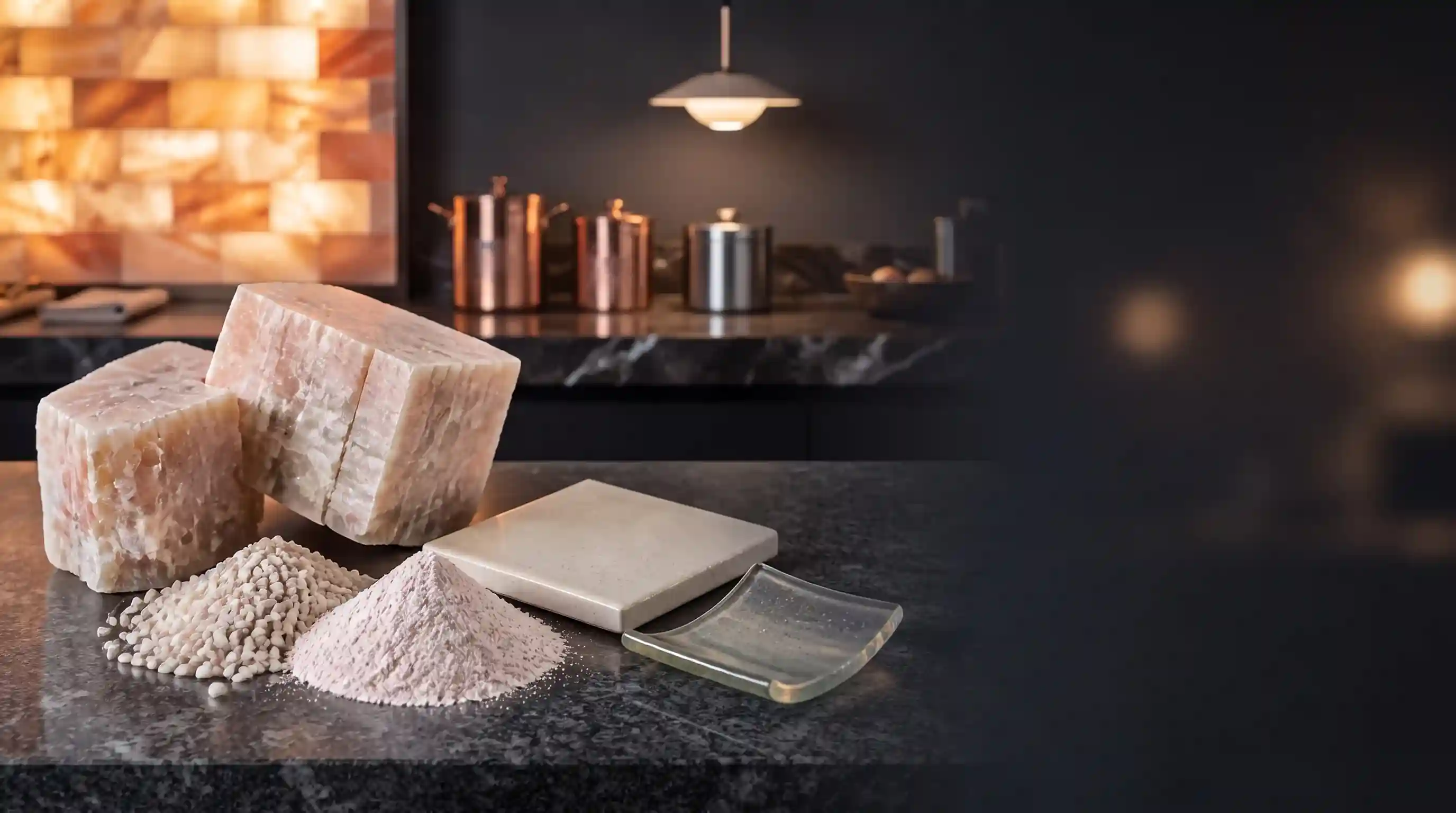
The Vital Role of Feldspar in the Modern Glazing Industry
An Introduction to the Vital Role of Feldspar in Mineral Industries
Mineral industries and raw material processing are always recognized as one of the main pillars of industrial development. In this regard, industrial minerals play a decisive role in enhancing the quality of final products. The mineral feldspar, as one of the most abundant rock-forming groups in the Earth's crust, holds a special place in various industries, including glass, tile, ceramic, and glaze production. A precise understanding of the physical and chemical properties of this material paves the way for greater efficiency in production lines.
Kani Sang Amiran Mineral Project company, as an active player in the mineral production field, supplies this valuable material with standard technical specifications. The importance of feldspar in modern industries is such that without its presence, controlling the melting properties, viscosity, and thermal stability of products would be very difficult. Containing a rich composition of silica, alumina, and alkaline oxides, this material acts as a powerful thermal flux.
In examining the mineral supply chain, there is a close connection between the quality of feldspar and other raw materials such as kaolin and talc. For example, in material engineering processes, reviewing applications similar to what is mentioned in the role of kaolin in the pipe-making and concrete products industry helps in better understanding material behavior. Additionally, studying the effects of other minerals such as the key role of industrial talc in improving the quality of manufactured products provides a more comprehensive view of formulation engineering.
The variety of feldspar applications has led different industries to have a strong dependency on the sustainable supply of this material. From the production of flat glass and bottles to the manufacturing of tile bodies and various glossy and matte glazes, all require the presence of this mineral. In the following sections, we will examine more precisely how this material functions in various sectors, particularly in the glazing industry.
Understanding the Structure and Mineral Properties of Feldspar
Feldspars are a group of aluminum-bearing silicate minerals, both potassium and calcium, which constitute the majority of igneous rocks. These minerals are primarily divided into two main categories: potassium-bearing feldspars and plagioclase feldspars (sodium-bearing and calcium-bearing). The presence of these compounds in the mineral structure causes them to exhibit specific thermal behavior.
One of the most important characteristics of feldspar that makes it ideal for industries like glazing and ceramics is its lower melting point compared to pure silica. This material melts at high temperatures and forms a glassy phase that acts as a binder for other refractory particles. For this reason, material engineers always use this feature to reduce firing temperatures and optimize energy consumption in factories.
The precise chemical composition and granulation of this mineral have a direct impact on its efficiency. Mineral products offered in Feldspar are supplied with a very wide mesh range from 10 to 450 mesh, which allows for its use in various formulations. This variety in particle size allows manufacturers to precisely control the speed of chemical reactions in the furnace.
Furthermore, a detailed examination of the mechanical and structural properties of this material compared to other specialized products doubles its importance. As mentioned in the article the role of feldspar in improving the resistance of porcelain products, the presence of this material increases the density and final strength of ceramic pieces and prevents the formation of thermal micro-cracks.

The Role of Feldspar in the Glass Industry
The glass industry is one of the major consumers of feldspar globally. In the production process of various flat glasses, glassware, and glass fibers, this material is added as a rich source of alumina and alkalis. The alumina present in this mineral significantly helps improve the chemical stability of glass against water, acids, and atmospheric factors.
In addition to alumina, the sodium and potassium oxides present in this mineral structure act as fluxing agents. These elements lower the melting temperature of the glass mixture and cause significant energy savings in melting furnaces. Also, the presence of this material regulates the viscosity of the molten glass and prevents the formation of air bubbles in the final structure.
Choosing the appropriate granulation of feldspar is very critical in the glass industry. Very coarse particles melt slower and may create heterogeneous spots in the glass, while very fine particles cause excessive dust in the factory environment. The industrial mesh range of this material, which varies from 10 to 450 mesh, allows for the precise selection of granulation according to the needs of glass furnaces.
Kani Sang Amiran Project, by supplying this high-quality raw material, helps glass factories produce transparent, resistant, and high-quality products. Precise control of impurity elements, especially iron oxide in the consumed feldspar for glass, prevents the appearance of unwanted colors in the final product and ensures glass purity.
Application of Feldspar in Tile and Ceramic Production
In the tile and ceramic production industry, the body and the glaze are two vital components, each requiring specific raw materials. Feldspar has a major share in the formulation of the tile body (biscuit) and the glaze. In the ceramic body, this material acts as a thermal flux and melts at the furnace firing temperature to create a glassy phase.
The formation of the glassy phase in the ceramic structure causes the empty space between refractory particles such as kaolin and quartz to be filled. This phenomenon minimizes the body's porosity and dramatically increases density, mechanical strength, and frost resistance. Tiles produced with the optimal formulation of this mineral have very low water absorption and long-term durability.
The ratio of potassium feldspars to sodium feldspars in the ceramic body plays a decisive role in the shrinkage of firing and the dimensional stability of the tile. Manufacturers can prevent tile warping during firing in roller kilns by precisely adjusting this ratio. The variety of granulation from 10 mesh to 450 mesh allows formulation engineers to manage the speed of solid and liquid phase reactions completely.
The sustainable supply of this mineral by Kani Sang Amiran Project ensures quality consistency in mass production lines of tiles and ceramics. Precise control of chemical analysis and being free from harmful impurities creates uniform performance in rapid firing kilns and significantly reduces production waste.

Feldspar and Its Vital Position in the Modern Glazing Industry
Glaze is a thin glass layer that melts onto the surface of a ceramic body to provide beauty, gloss, hardness, and impermeability. In the formulation of modern glazes, feldspar is recognized as one of the main and basic components. Due to its silica and alumina combined with alkalis, this material provides a suitable substrate for the melting of other glaze compounds.
The main function of this mineral in glazing includes lowering the glaze melting temperature, controlling melt viscosity at firing temperature, and improving the coefficient of thermal expansion. Matching the coefficient of thermal expansion of the glaze with the ceramic body prevents the phenomenon of crazing or chipping of the glaze edge. The presence of this material ensures the chemical stability of the glaze against thermal shocks and chemicals.
In modern glazing, the use of micronized powders with high mesh is of great importance. Fine feldspar particles blend well with other colored and mineral oxides and create a surface that is completely smooth, uniform, and free of pinholes. The range of mesh for products offered allows factories producing glaze to have access to fine and uniform grains.
Therefore, the role of this material in the glazing industry goes beyond a mere melting facilitator and acts as a key factor in the visual quality and engineering durability of the final product. Technical knowledge in the use of this material is the key to success in producing high-quality glazes.
Technical Specifications and Granulation Standards (10 to 450 Mesh)
The technical specifications of minerals determine their industrial application. Feldspar, with a wide mesh range from 10 to 450 mesh, meets the various needs of the glass, tile, ceramic, and glaze industries. The granulation of minerals directly affects the speed of reaction, the contact surface of particles, and the homogenization of the melt.
In glassmaking applications, medium meshes (such as 30 to 100 mesh) are usually used to prevent excessive dust and ensure complete melting. Conversely, for the glazing and advanced ceramics industries, finer meshes (such as 200 to 450 mesh) are preferred so that surface reactions occur with higher speed and quality.
Quality control of granulation in the production lines of Kani Sang Amiran Project is carried out using modern screening and milling equipment so that the particle size distribution is completely standard and in accordance with customer needs. Precision at this stage prevents the occurrence of structural defects in the final product.
In addition to granulation, the percentage of main oxides including silica, alumina, sodium oxide, potassium oxide, and the percentage of iron oxide impurity are measured and reported precisely. This technical transparency allows factory engineers to adjust their formulation with the highest accuracy.
Economic Benefits and Optimization of Production Processes with Feldspar
The use of high-quality minerals, in addition to enhancing technical quality, has a direct impact on economic indicators and the reduction of production costs. Feldspar, due to having a lower melting point compared to pure quartz, causes a reduction in the operating temperature of firing kilns in the glass, tile, and ceramic industries.
Reducing firing temperature means less consumption of fuel and electrical energy, which significantly reduces production overhead costs. Also, increasing the melting speed and higher reactivity of raw materials increases the efficiency of production lines and shortens the firing cycle time.
Reducing waste and production drops are other economic advantages of using this standard material. When the ceramic body and glaze have a complete thermal match and are free from excess porosity, the amount of defective parts in final quality control is minimized. This increases the overall efficiency of the factory.
By providing this high-quality mineral at a competitive price, Kani Sang Amiran Project helps industrialists bring their final products to the market with the highest economic efficiency and quality standards, maintaining their competitive advantage.
Conclusion and Future Outlook of Feldspar-Dependent Industries
In today's world, the development of the glass, tile, ceramic, and glaze industries has an undeniable dependency on the sustainable supply of high-quality raw materials. As a strategic mineral, feldspar plays an unparalleled role in improving the thermal, mechanical, and visual properties of engineered products, and its presence in modern formulations is essential.
Advances in construction technology and quality control in mineral industries have caused the purity and precision of the granulation of these materials to reach their highest level. The 10 to 450 mesh range has made it possible to meet all the specialized needs of different production lines, and industries can implement the most precise formulas.
Relying on standards for production and direct supply of minerals, the Kani Sang Amiran Project collection plays a valuable role in meeting the needs of domestic industries. Consistency in quality and commitment to technical specifications are the basis of the trust that industrialists have in this collection.
Ultimately, given the ever-increasing demand for advanced ceramic and glass products, the importance of using this high-quality mineral will become more apparent than ever. Investing in the correct selection of raw materials will guarantee the success and sustainability of industries in future competitive markets.

| Question |
Answer |
| What is feldspar? |
It is a group of aluminum-bearing sodium, potassium, and calcium mineral silicates used in the glass, tile, ceramic, and glaze industries. |
| What are the main applications of feldspar? |
Glass, tile, ceramic products, and glaze. |
| What is the mesh range of the offered feldspars? |
Products are offered in the range of 10 to 450 mesh. |
| What is the role of feldspar in the glass industry? |
A source of alumina and alkalis to reduce melting temperature and improve the chemical stability of glass. |
| Why is feldspar used in glazing? |
To lower the glaze melting temperature, control viscosity, and create thermal compatibility with the ceramic body. |
| What is the economic advantage of using feldspar? |
Reducing kiln firing temperature, decreasing energy consumption, and increasing production line efficiency. |
| Does feldspar have an impact on the tile body? |
Yes, it acts as a thermal flux, reducing body porosity and increasing strength. |
| Who is the supplier of this mineral? |
Kani Sang Amiran Project — mineral production. |
| How can one choose the appropriate feldspar? |
Based on chemical analysis and the required granulation (mesh) according to the type of industry. |
| Is the feldspar product page available on the website? |
Yes, it is accessible in the products section of the Kani Sang Amiran website. |
Specialized reference for mineral and industrial materials, Kani Sang Amiran.
:: برچسبها:
Feldspar ,
The Vital Role of Feldspar in the Modern Glazing Industry ,
:: بازدید از این مطلب : 0
|
امتیاز مطلب : 0
|
تعداد امتیازدهندگان : 0
|
مجموع امتیاز : 0


 عضو شوید
 عضویت سریع
 آمار مطالب
 آمار بازدید


