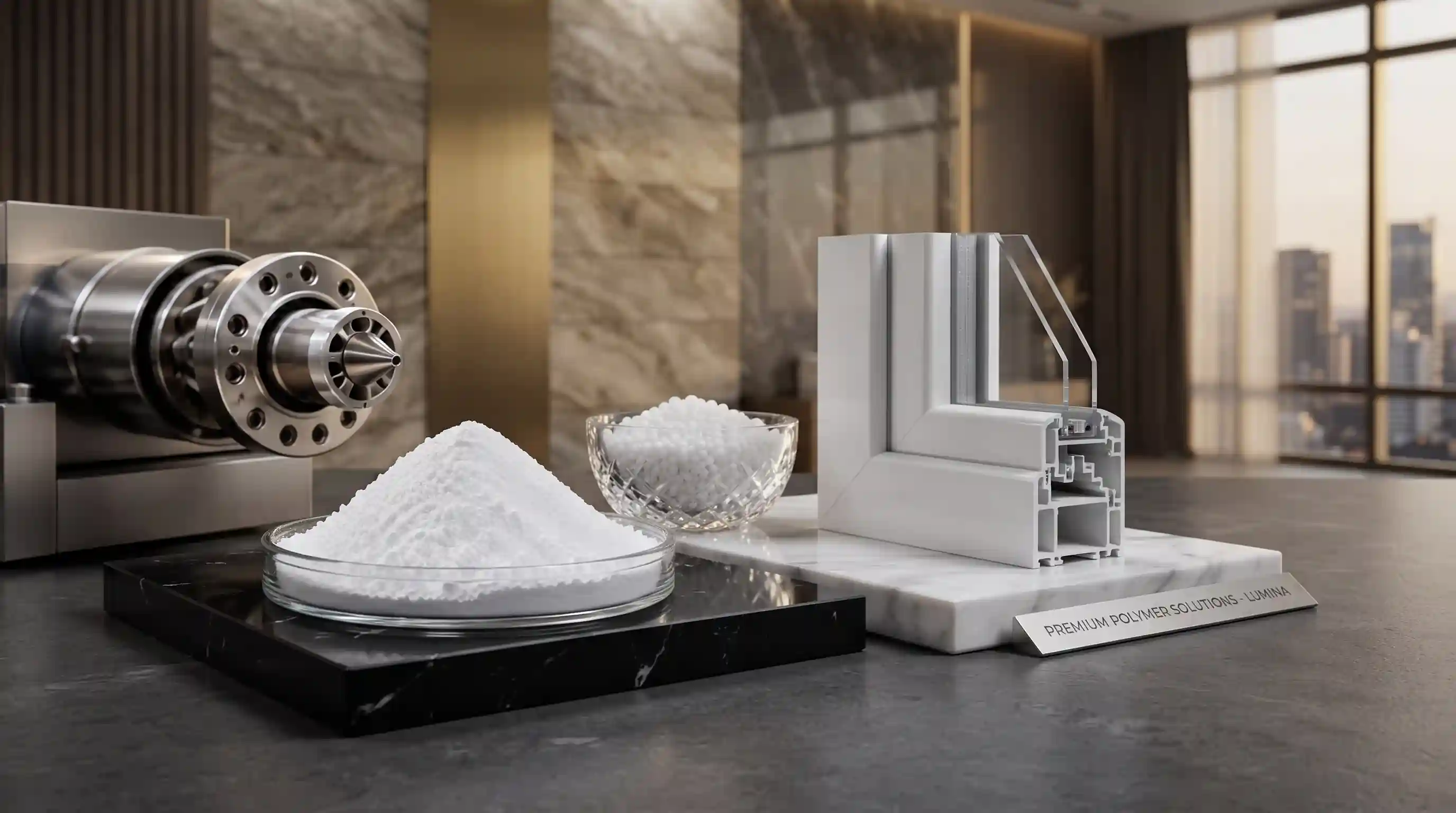
Why Coated Calcium Carbonate is the Best Choice for Adhesive and Resin Industries
Introduction to the Importance of Coated Calcium Carbonate in Advanced Industries
Modern industries rely heavily on modified mineral materials to improve the mechanical, physical, and aesthetic properties of their final products. Meanwhile, coated calcium carbonate has emerged as one of the most advanced additives. With its special surface coating, this material establishes much better interaction with polymer and resin matrices and minimizes the traditional problems of mineral fillers.
In industrial processes such as the production of adhesives and resins, the compatibility of the mineral phase with the base resin is of vital importance. The use of coated calcium carbonate increases dimensional stability, moisture resistance, and the flow properties of materials. In this article, we intend to examine in detail why this material is considered the best choice for the adhesive and resin industries and how it can transform the quality of products such as compounds, granules, and PVC parts.
Kani Sang Amiran Company, focusing on the production of high-quality mineral materials, supplies this product to the market with precise technical specifications. A deep understanding of the characteristics of this material helps engineers and manufacturers achieve more optimal formulations. To learn more details about this product, you can visit the coated calcium carbonate page to obtain complete information about its specifications.
The precise selection of raw materials, such as the appropriate mesh, has a direct impact on improving the final quality. Examining the effect of stearic acid in the production process of this material is the key to understanding why it succeeds in various industries. For further reading on this subject, we suggest reading the specialized article investigating the effect of stearic acid in the coating of coated calcium carbonate to become more familiar with its chemical structure and mechanism of action.
The Essential Role of Coated Calcium Carbonate in Adhesive Formulations
The adhesive industry is constantly looking for fillers that, in addition to reducing the final cost, maintain or enhance the adhesion, viscosity, and durability of the adhesive. Due to its hydrophobic and processed surface, coated calcium carbonate prevents particle agglomeration in the resin bed and creates very suitable homogenization. This feature is doubly important especially in structural and industrial adhesives.
When this material is added to the adhesive formulation, the viscosity of the system is kept under control, preventing the adhesive from sagging. Also, the waterproof property of the particles' surface coating significantly increases the adhesive's resistance against the penetration of moisture and environmental factors. This guarantees the service life of the adhesive bond in harsh weather conditions.
By using appropriate meshes, manufacturers can adjust the rate of resin absorption and reach the optimal point in the formulation. Due to the absence of undesirable reactions with other adhesive components, this material also improves the storage stability of the product and prevents heavy particles from settling at the bottom of the container.
In addition to the adhesive industry, formulation engineers can also benefit from the diverse applications of this material in other chemical sectors. For example, similar principles govern paint and coating-related industries; for a better understanding of this, you can take a look at the comprehensive guide to using coated calcium carbonate in paint making to better understand the application domains of this technology.

Improving Resin Properties Using Coated Calcium Carbonate
Polyester, epoxy, and polyurethane resins are among the main bases in the composite and coating industries. Adding coated calcium carbonate to these resins reduces curing shrinkage and improves the dimensional stability of the final part. Unlike the uncoated type, the coated type disperses well in the resin and keeps the viscosity of the mixture in a controllable manner.
The stearic acid coating on the calcium carbonate particles reduces surface energy and consequently improves wetting by the resin. This high interfacial compatibility optimizes stress transfer within the composite structure and increases the impact and tensile strength of the resin. Therefore, parts produced with this combination will exhibit much better mechanical performance.
Additionally, the presence of this high-quality mineral filler in the resin matrix improves the thermal properties of the part and reduces the coefficient of thermal expansion. This feature is considered a major competitive advantage for industries whose parts are exposed to severe temperature changes.
The selection of the type of mineral material and its purity has always been a challenge in various industries. Alongside calcium carbonate, other mineral materials are also used, and getting to know them is certainly worthwhile. For example, studying the article why Kani Sang Amiran dolomite is the industry's best choice can provide you with a comprehensive perspective on other mineral options available in Kani Sang Amiran's product portfolio.
Mesh Range and Its Role in the Final Performance of Compounds and Granules
One of the most important parameters in selecting mineral fillers is the particle size distribution and their mesh range. Coated calcium carbonate is produced and supplied in a mesh range of 450 to 3500. This wide range allows engineers to use fine or coarse meshes depending on the type of application to achieve the best result.
For polymer compound and granule manufacturing industries, choosing the appropriate mesh plays a direct role in the appearance quality of the part, preventing scratches on the extruder surface, and maintaining the polymer's mechanical properties. Higher mesh particles (very fine) create a smoother surface and better mechanical properties, while lower meshes are used to increase volume and reduce costs in less sensitive applications.
The uniform particle size distribution within this mesh range prevents particle agglomeration and ensures the stability of the extrusion process. This advantage significantly helps reduce machinery wear and increases production speed.
By precisely controlling the milling and particle classification parameters, manufacturers offer a homogenous product that exhibits the highest efficiency in sensitive industries such as profile, cable, and PVC part manufacturing.

Application of Coated Calcium Carbonate in Profiles, Cables, and PVC Parts
The PVC industry, door and window profile manufacturing, power cables, and polymer flooring require raw materials that are resistant to weather conditions, heat, and mechanical stresses. Coated calcium carbonate acts as a standard stabilizer and filler in these formulations.
In the production of PVC profiles, the surface coating of the particles helps the polymer melt flow more smoothly and allows molding to be performed with greater precision. This leads to reduced energy consumption by the machine and improved surface quality of the profile. Also, in the wire and cable industry, electrical insulation properties and heat resistance are improved thanks to the presence of this material.
Polymer flooring, which is constantly exposed to wear, also gains higher abrasion resistance and durability with the addition of this mineral material. The homogeneous distribution of the coated particles in the flooring structure prevents structural weak points and increases the useful life of the product.
The high quality of material processing at Kani Sang Amiran Company ensures that this product reaches industrialists without troublesome impurities and delivers the highest efficiency in production lines for profiles and polymer parts.
Economic and Technical Advantages of Replacing Conventional Fillers
Many manufacturers in the adhesive and resin industries still use conventional (uncoated) calcium carbonate and face problems such as caking, non-uniform distribution, and a drop in mechanical properties at high consumption percentages. Replacing these materials with coated calcium carbonate creates a dramatic revolution in cost optimization and quality.
Technically, the coated type allows the filler consumption percentage in the formulation to increase without causing a noticeable drop in impact resistance or tension. This means a dramatic reduction in the consumption of expensive resins and consequently a lower final product cost.
Economically, storage stability, reduced production waste, increased extruder equipment life, and improved production line speed all contribute to greater profitability for industrial units. Investing in high-quality raw materials significantly reduces hidden production costs in the long run.
Due to increasing competition in domestic and foreign markets, using coated calcium carbonate as a proven solution allows manufacturers to offer products with high quality standards and competitive prices to the market.

Key Points in Storage, Maintenance, and Dosing of Coated Calcium Carbonate
Maintaining the quality of processed mineral materials until the time of use requires adherence to strict storage principles. Due to its hydrophobic surface coating, coated calcium carbonate has good resistance to moisture; however, it should be stored in a indoor, dry environment away from direct sunlight.
During dosing and injecting this material into adhesive, resin mixers, or compounding lines, the use of precise measuring equipment (feeders) is important to maintain formulation ratios. The uniform distribution of particles in mixers requires adequate mixing time so that the surface coating combines with the matrix in the best possible way.
Observing safety tips when working with micronized powders, such as using dust collection systems and personal protective equipment by workers, is mandatory to maintain a healthy and safe working environment.
Following these simple yet vital guidelines increases production line productivity and prevents problems resulting from improper dosing or drops in powder quality.
Future Outlook and Conclusion on Amiran Coated Calcium Carbonate
The adhesive, resin, compound, and polymer part industries are moving toward becoming more specialized and increasing quality standards day by day. Along this path, choosing engineered mineral additives such as coated calcium carbonate is no longer a luxury option, but rather a technical and economic necessity.
Relying on technical knowledge, strict quality control, and supplying the appropriate mesh range (450 to 3500 mesh), the Kani Sang Amiran project has been able to meet the demanding requirements of various industries. By creating an unmatched balance between price, quality, and physical properties, this product has solidified its position as the best choice.
Ultimately, investing in standard raw materials will guarantee brand credibility and final customer satisfaction. Today's smart choice will shape tomorrow's competitive advantage in the high-pressure market of polymer and chemical industries.

| Question |
Answer |
| What is coated calcium carbonate? |
It is a type of mineral powder processed with stearic acid whose surface has been made hydrophobic and has high compatibility with polymers and resins. |
| What is the mesh range of this product? |
This product is produced in a mesh range of 450 to 3500 according to the needs of various industries. |
| What are the main applications of this material? |
Compounds, polymer granules, profiles, cables, flooring, and PVC parts. |
| Why is the coated type better for adhesives and resins? |
Because it prevents caking, controls viscosity, and increases moisture resistance. |
| Does this material reduce costs? |
Yes, by allowing an increase in the filler consumption percentage, it reduces the need to consume expensive resin. |
| What is the role of the stearic acid coating? |
Reducing surface energy, improving wetting, and increasing homogeneity in the polymer matrix. |
| How can this product be obtained? |
It can be ordered through the dedicated product page on the Kani Sang Amiran website. |
| What are the storage conditions for this powder? |
It must be stored in a dry, indoor environment away from severe moisture. |
| Is it also used in the paint-making industry? |
Yes, it is used as a filler and to improve coating properties. |
| What is the difference from the conventional type? |
The coated type has much better compatibility with organic materials and resins. |
Kani Sang Amiran Project — Reference for specialized production and supply of industrial mineral materials.
:: برچسبها:
Coated Calcium Carbonate ,
Why Coated Calcium Carbonate is the Best Choice for Adhesive and Resin Industries ,
:: بازدید از این مطلب : 0
|
امتیاز مطلب : 0
|
تعداد امتیازدهندگان : 0
|
مجموع امتیاز : 0


 عضو شوید
 عضویت سریع
 آمار مطالب
 آمار بازدید


