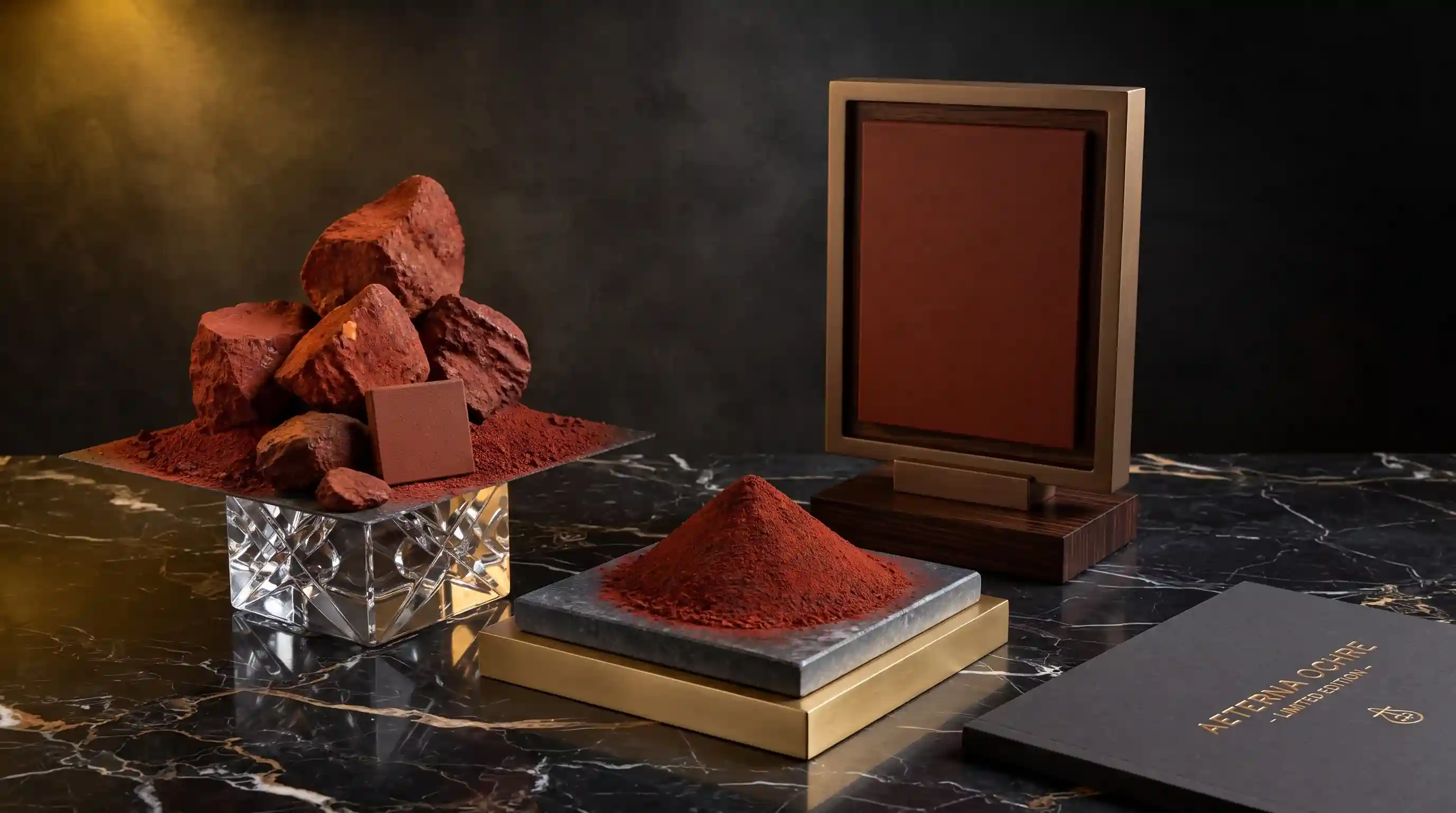
The Role of Red Iron Oxide (Ochre) in Epoxy Flooring Production
Introduction to Red Iron Oxide (Ochre) and Its Place in the Mineral Industry
The mineral red iron oxide, known in the market as ochre, is one of the most important and widely used mineral pigments and additives in various industries. Due to its unique chemical and physical properties, this material holds a special place in the production of coatings, pigments, building materials, and ceramic products. As an active unit in the production of mineral materials, Kani Sang Amiran Project supplies this product to the market with the highest quality and within a standard mesh range. A precise understanding of the properties of this mineral paves the way for better efficiency in dependent industries.
In modern industries, choosing the right pigment has a direct impact on the longevity, visual appeal, and final durability of the product. With its stable color and high resistance to atmospheric and chemical agents, red iron oxide (ochre) is considered an ideal choice for engineers and manufacturers. This natural or synthetic mineral compound has gained widespread popularity globally due to its non-toxicity and environmental compatibility. Furthermore, the diverse applications of this material, ranging from coating industries to cement materials, double the importance of its technical evaluation.
An examination of the chemical and physical structure of this pigment shows that its particles possess high thermal and optical stability. These features ensure that the final color of the products does not suffer a drop in quality under continuous sunlight exposure or severe temperature changes. The presence of this material in industrial formulations, in addition to improving aesthetic aspects, significantly helps in enhancing mechanical and coating properties. In this article, we will thoroughly examine the role of this material in the production of epoxy flooring and other related applications.
Continuing with specialized mineral discussions, it is interesting to note that the processing of other minerals also plays a vital role in modern industries; for example, for further reading regarding mineral applications, you can refer to the article on the application of industrial barite in the production of sound and thermal insulation. However, the main focus of this writing is to examine the various dimensions of using red iron oxide (ochre) in coating industries and especially epoxy flooring, which will be discussed in detail in the following sections.
Technical Specifications and Mesh Range of Red Iron Oxide (Ochre)
The physical specifications and particle sizing of mineral materials are among the primary parameters that design engineers consider in their product formulations. The mesh range for red iron oxide (ochre) lies between 450 and 1500 mesh. This wide range of mesh sizing indicates high precision in the micronization and production process of this mineral powder, making it possible to use it in various industries with different requirements.
Particles with a higher mesh (for example, close to 1500 mesh) have a smoother surface and a very fine particle size distribution, which is of great importance for creating uniform and glossy coatings in the paint and epoxy flooring industries. On the other hand, lower meshes (such as 450 mesh) may be utilized in applications requiring higher filler content and presence in a larger volume of cement or ceramic products. This flexibility in particle sizing creates a competitive advantage for manufacturers.
Utilizing advanced crushing and particle classification equipment, Kani Sang Amiran Company processes and supplies a homogeneous and high-quality product. More complete information regarding the specifications of this material can be viewed directly on the Red Iron Oxide (Ochre) page. Precision in particle size distribution prevents agglomeration (caking) during mixing with resins and cement.
Strict quality control of the 450–1500 mesh range ensures that the final product has the lowest amount of impurities and that the moisture absorbed by the powder is kept to a minimum. These technical specifications help formulators use this mineral pigment in sensitive industries with greater peace of mind. In the following sections, we will scientifically examine the impact of these properties on the final performance of epoxy flooring.
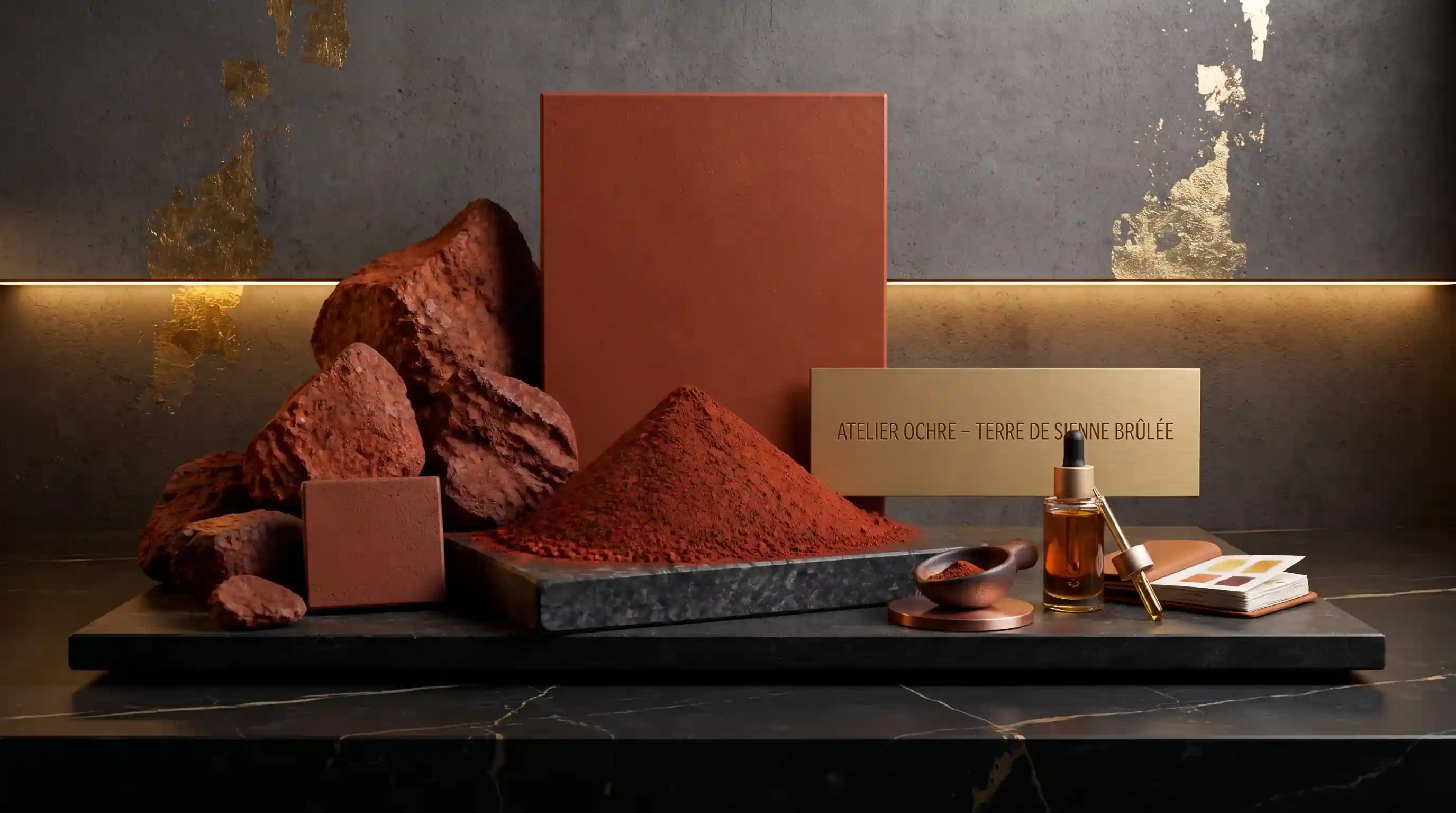
The Role of Red Iron Oxide (Ochre) in the Formulation and Production of Epoxy Flooring
Epoxy floors have wide applications in factories, hospitals, parking lots, and industrial warehouses due to their high mechanical resistance, glossy appearance, and easy cleanability. The color and appearance of these floors play an important role in the safety and beauty of the work environment. Red iron oxide (ochre), as one of the primary mineral pigments, is responsible for creating a stable and attractive red color in these polymer systems.
When this mineral powder is combined with epoxy resin and hardener, it must be properly dispersed within the polymer matrix. Due to the suitable mesh range (450–1500), the ochre particles easily penetrate the liquid phase of the resin and do not cause any premature sedimentation or graininess. This results in the final surface of the flooring being produced completely smooth, without bumps, and with complete color coverage.
In addition to coloring properties, the presence of red iron oxide (ochre) as a mineral filler also helps improve the mechanical properties of the epoxy layer. This pigment can adjust the modulus of elasticity of the flooring and increase its resistance to abrasion caused by the traffic of people and light and heavy vehicles. The chemical stability of this material against industrial detergents and weak acids also adds to the lifespan of epoxy flooring.
In the production and materials engineering process, the use of complementary minerals is also common; for example, to get acquainted with the engineering applications of plastics and polymeric materials, you can take a look at the article The Role of Calcium Carbonate in Plastic Pipe Manufacturing. However, in the field of epoxy flooring, ochre is still recognized as a specialized and unrivaled pigment that showcases the combination of color-making art and polymer science.
Practical Benefits of Red Iron Oxide in the Coatings and Industrial Paints Industry
The coatings and industrial paints industry is constantly looking for pigments that, in addition to high coloring power, are resistant to harsh environmental conditions. Red iron oxide (ochre) is one of the oldest and yet most efficient options in this industry. Due to its non-reactivity with various resins such as epoxy, polyurethane, and alkyd, this material exhibits exceptional stability over time.
One of the prominent advantages of this pigment is its excellent opacity (covering power). Even in low thicknesses of the paint layer, the presence of ochre particles prevents light from passing through and the underlying surface from being seen. This feature optimizes paint consumption and reduces production costs for industrial coating manufacturers. Furthermore, the optical stability of this material is such that it does not change color under the sun's ultraviolet (UV) rays and does not chalk.
Corrosion resistance is another key feature of this material in anti-rust paints and industrial primers. When red iron oxide (ochre) is used in the primer layer or intermediate layer of industrial coatings, it acts as a physical barrier against the penetration of moisture and oxygen to the metal surface and delays the rusting process. This protective property is vital for metal structures, tanks, and bridges.
Alongside paint-making applications, examining other industrial processes is also important; for instance, in the field of purification and processing, studying the article The Role of Bentonite in Water and Industrial Wastewater Treatment provides useful information. However, our main focus remains on the flawless performance of ochre in coating industries and epoxy flooring, which demands high quality standards.
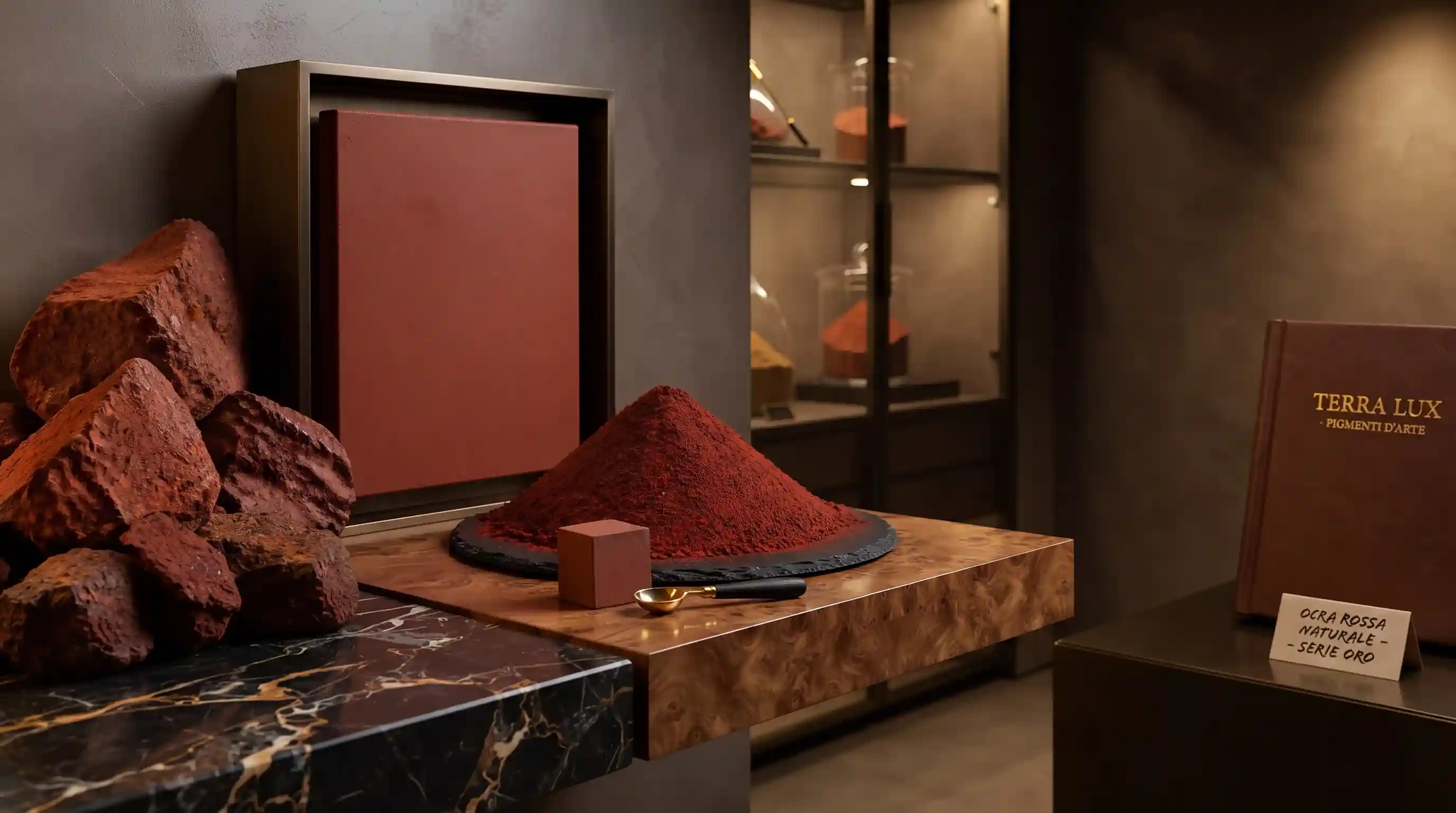
Application of Red Iron Oxide in the Cement Industry and Building Materials
In addition to coating and epoxy industries, red iron oxide (ochre) has a brilliant history in the cement and concrete industry. This mineral pigment is widely used for producing colored cement, colored concrete blocks, mosaics, artificial stones, and facade bricks. The natural and attractive red color of this material allows architects and designers to create concrete structures with distinct visual effects.
An important point in using this pigment in cement environments is its chemical stability in the alkaline environments of cement. Many organic dyes experience color change or decomposition in the vicinity of free lime and the alkaline environment of cement, but red iron oxide, due to its mineral and oxide nature, is completely stable against bases and retains its color for years.
The suitable particle sizing of this product in the 450–1500 mesh range causes the pigment particles to spread homogeneously among the cement particles and aggregates. This uniform distribution prevents the creation of unwanted color spots, and the final color of the block or mosaic will be completely uniform. Additionally, this pigment has no negative impact on the compressive strength of concrete, and standard percentages of it can even help improve the density of the cement matrix.
Building material manufacturers, by utilizing high-quality raw materials provided by the Kani Sang Amiran Project, can offer products of high quality that comply with market standards. The durability of color in building facades and sidewalk concrete pavements exposed to direct sunlight and precipitation is a testament to the high efficiency of this mineral pigment.
Application of Red Iron Oxide in the Production of Ceramic Products and Glazes
The ceramic and tile manufacturing industry is another major consuming sector of red iron oxide (ochre). In this industry, mineral pigments are used for coloring ceramic bodies, floor and wall tiles, as well as for making glazes and decorative colors. High thermal stability is one of the main requirements of raw materials in this industry, as ceramic firing kilns experience very high temperatures.
Due to its stable structure, red iron oxide (ochre) has the ability to withstand high firing temperatures in ceramic kilns without losing its color properties. At high temperatures, this material reacts with other oxides present in the ceramic body, creating beautiful color spectra ranging from dark red to brown and brick red. Precise control of the mesh size of this powder (450–1500 mesh) helps its better melting and reaction in the glaze structure.
The use of micronized and homogeneous powders in ceramic production reduces pinholes and improves the smoothness of the glaze surface. For this reason, choosing a product with precise particle sizing is of high importance. By processing this mineral, Kani Sang Amiran Company has met the needs of ceramic manufacturing plants for a reliable and high-quality raw material.
Materials engineers and tile designers, by precisely adjusting the amount of this pigment in the body or glaze, can produce diverse products with high color stability that are resistant to wear, chemicals, and household detergents. These features create high added value for ceramic products.
Technical and Safety Tips in Warehousing, Dispersion, and Usage of Ochre Pigment
Proper warehousing management and the practical principles of pigment dispersion play a decisive role in the quality of the final product. Despite its high stability, red iron oxide (ochre) requires standard storage conditions. This mineral powder must be stored in a dry, covered environment away from direct moisture to prevent particle agglomeration. Proper packaging prevents the absorption of air moisture by very fine micronized particles.
In the production process of epoxy flooring or industrial paints, the stage of dispersion or spreading of particles is of vital importance. Using appropriate stirring equipment (such as dissolvers) and wetting and dispersing agents helps the particles in the 450–1500 mesh range to properly separate from one another and immerse in the resin or solvent phase. Improper dispersion can lead to a drop in covering power and the creation of scratches in the final layer.
From a workshop safety perspective, working with micronized powders requires compliance with protective measures. Inhaling the dust from these powders during bag emptying can irritate the respiratory tracts; therefore, the use of dust masks, safety goggles, and proper ventilation systems in production halls is mandatory. This material lacks hazardous chemical toxicity, but observing the safety principles of working with powders is always recommended.
By providing necessary technical guidance and a standard product, the Kani Sang Amiran Project strives to facilitate the process of using this mineral for industrialists. Paying attention to these technical points will enhance the efficiency of production lines and improve the quality of final products.
Conclusion and Market Outlook of Red Iron Oxide in the Mineral and Polymer Industries
As a strategic mineral pigment and additive, red iron oxide (ochre) plays an undeniable role in various industries, including the production of epoxy flooring, industrial coatings, cement, and ceramic products. The combination of features such as high optical and chemical stability, excellent covering power, non-toxicity, and the standard 450–1500 mesh range makes this material a priority choice for engineers and manufacturers.
The growth of the construction industry, urban development, and the increasing demand for high-quality and durable industrial flooring have raised the demand for premium raw materials like ochre. Meanwhile, companies that can supply a homogeneous product with precise particle sizing and stable quality to the market will capture a larger market share. By maintaining production quality, the Kani Sang Amiran Project has managed to establish a firm foothold in supplying the needs of dependent industries.
The future market outlook of this product indicates that with the advancement of polymer formulation and paint-making technologies, the importance of micronized minerals will become more apparent than ever. Improving processing procedures, achieving higher meshes, and optimizing particle size distribution are ongoing goals in the supply chain of this valuable mineral.
Ultimately, the smart selection of raw materials and collaboration with reputable mineral suppliers will guarantee the quality and durability of final products in the coating, cement, and ceramic industries. Using red iron oxide with standard technical specifications is a firm step towards elevating the quality standards of national production.
| Question |
Answer |
| What are the applications of red iron oxide (ochre)? |
This material is used in the production of pigments, coatings, cement, and ceramic products. |
| What is the mesh range of Amiran's red iron oxide? |
The mesh range of this product is between 450 and 1500 mesh. |
| Is this pigment stable against sunlight? |
Yes, red iron oxide has excellent optical stability and does not change color under UV radiation. |
| What is the role of ochre in epoxy flooring? |
In addition to creating a stable and beautiful red color, it helps improve the coverage and mechanical properties of the epoxy layer. |
| Why is ochre used in the cement industry? |
Due to its excellent stability in alkaline cement environments and no color change in the presence of free lime. |
| Is this material resistant to the heat of ceramic kilns? |
Yes, the high thermal stability of this pigment makes it suitable for firing at high temperatures in ceramics. |
| How can this product be procured? |
It can be ordered through the dedicated product page on the Kani Sang Amiran website. |
| What should the warehousing conditions for red iron oxide be? |
It should be stored in a dry, covered environment away from direct moisture and in appropriate packaging. |
| Is this pigment suitable for anti-rust paints? |
Yes, as a filler and pigment in primers, it helps increase corrosion resistance. |
| What are the safety tips when working with ochre powder? |
Using a dust mask, safety goggles, and proper ventilation during powder emptying and mixing is recommended. |
Specialized reference for mineral materials and industrial products information, Kani Sang Amiran.
:: برچسبها:
Red Iron Oxide (Ochre) ,
The Role of Red Iron Oxide (Ochre) in Epoxy Flooring Production ,
:: بازدید از این مطلب : 2
|
امتیاز مطلب : 0
|
تعداد امتیازدهندگان : 0
|
مجموع امتیاز : 0


 عضو شوید
 عضویت سریع
 آمار مطالب
 آمار بازدید


